Telesis is the student-led journal at the University of Oklahoma Gibbs College of Architecture. The Telesis team is considering the theme of “UNFOLD” in its forthcoming issue (Vol. VII). We invite you to contribute your work–design proposals, essays, stories, poetry, art or other media–to this exciting publication until December 4th, 2024. Contributors may be students, faculty, professionals, or community members from inside and outside the University of Oklahoma.
Telesis Vol. 7 dives into the perspectives of the untold, illuminating the unknown aspects of today, and perhaps prophesying what our future realities may be. UNFOLD highlights the processes, intentions, and the unnoticed, from the tales close to home and far away in hopes of bringing views from out of the woodwork and into the fold.
To develop our Unfolding this year, we have looked back into Telesis’s history and where it all started. In the spirit of the explorative and playful journal from the ‘70s and the sophisticated and award-winning journal of today, we strive to find a hybrid, inviting our peers at the University of Oklahoma to influence our process from the bottom up, as a truly student-run and student-inspired journal. We seek to uncover our school’s hidden facets and personalities, share alumni stories, and strive to set a precedent for future architecture students to carry on in the truest spirit of the word Telesis.
Telesis’s “UNFOLD” (Vol. VII) seeks creators of all backgrounds and disciplines to aid in the deconstruction and restructuring of existing practices that shape the built environment. We ask you to consider the following: What does UNFOLD mean to you and your discipline? How might it change the future of our cities and communities?
Unfold may be considered at different scales–for example, an individual’s practice; the practice within a workplace or firm; within a community or region; or even at the national or global scale. Additionally, contributions might consider novel city planning strategies, new methods for construction management, or new types of community engagement in design processes.
As in past volumes of Telesis, we aim to create a collection of works that evoke a sense of inspiration and urgency around the topic of “UNFOLD.”
You are invited to submit a drawing that embodies the theme of “UNFOLD.”
You are invited to graphically compose a series of original photos in collage format.
You are invited to feature a design project of your own that promotes or identifies with this notion of “UNFOLD” The project should be oriented toward the “UNFOLD” theme. Users are encouraged to rethink or rework an existing project (or an aspect of it, such as a diagram, drawing, rendering, or other) to align with this theme.
You are invited to create a manifesto of your own utopian/dystopian vision of “UNFOLD” as designers.
Additionally, you may submit an image or drawing of your own making to visually represent the manifesto. These must be high-resolution. The dimensions and positioning of this representation are open to negotiation.
You are invited to submit an article that encompasses the idea of “UNFOLD” in the design world. Articles may be theoretical, analytical, critical or historical. Participants are encouraged to explore a range of topics, as Telesis believes that architecture is everything.
You are invited to contribute a creative composition on the topic of “UNFOLD.” This can be a poem, short story, song or other creative composition that is not an article. The narrative could explore an architectonic dystopia/utopia.
You are invited to submit a proposal for the adaptation/transformation/re-imagination of a place that you identify with. The format for this re-imagination is open to the contributor, but the media format used should portray a strong and provocative solution to the space’s current state. This re-imagination can be submitted in any form (a drawing, collage, poem, story or other format). Please refer to the submission details specific to your chosen format.
If you have another idea not listed above, send it in to telesisou@gmail.com. We would like to hear more about it.
To submit, please send an email to telesisou@gmail.com by December 4th, 2024, at 12:00PM, with the following required information:
If you have any questions about the submissions or the format, please email: telesisou@gmail.com or Felipe Flores (ff@ou.edu) or Trey London (treylondon@ou.edu).
Instagram: @telesisou
Telesis is edited by students enrolled in the Fall 2025 course: “Telesis: The Student Journal” (ARCH 4970/ARCH 5970). Telesis is advised by Dr. Angela Person (a@ou.edu), and Ph.D. student Felipe Flores (ff@ou.edu).
Featured Image: Created by Felipe Flores and Trey London, OU Division of Architecture.
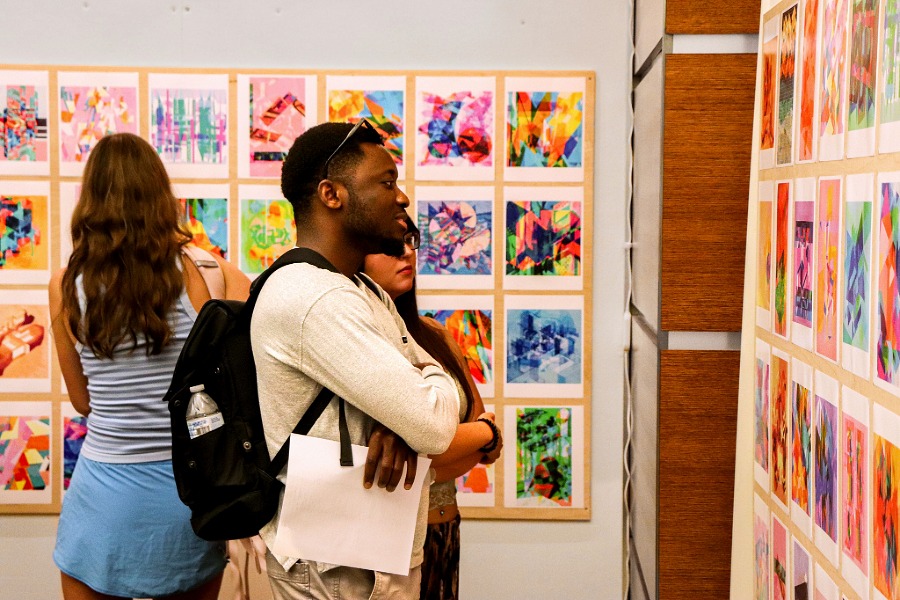
Gibbs College is pleased to present the exhibition 200 Digital Drawings by Professor Tiziana Proietti, currently on display in the Gould Hall Living Room.
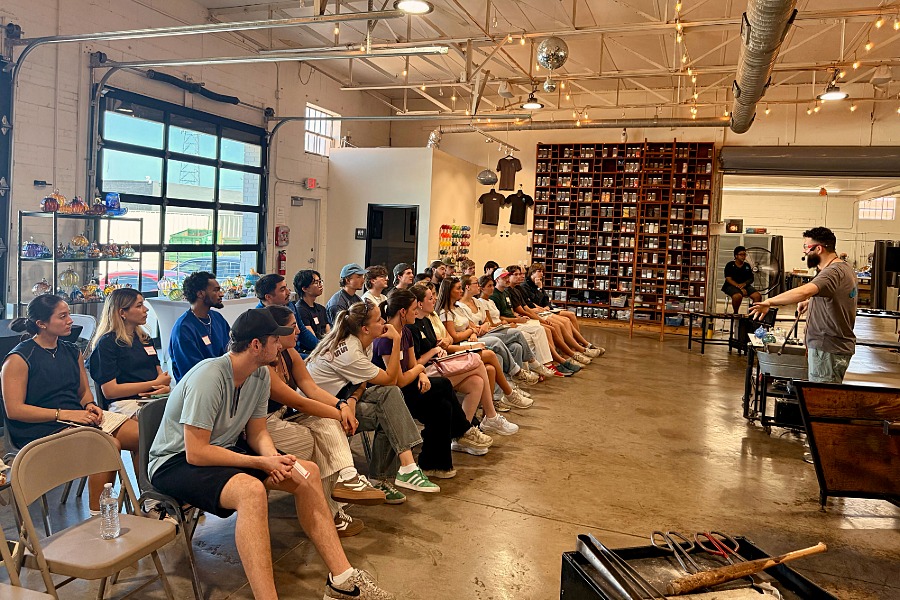
Gibbs College of Architecture Professors Amber Brown and Amy Leveno led 29 students to Dallas, Texas, in September for a learning experience as part of their Design 7 Studio course.
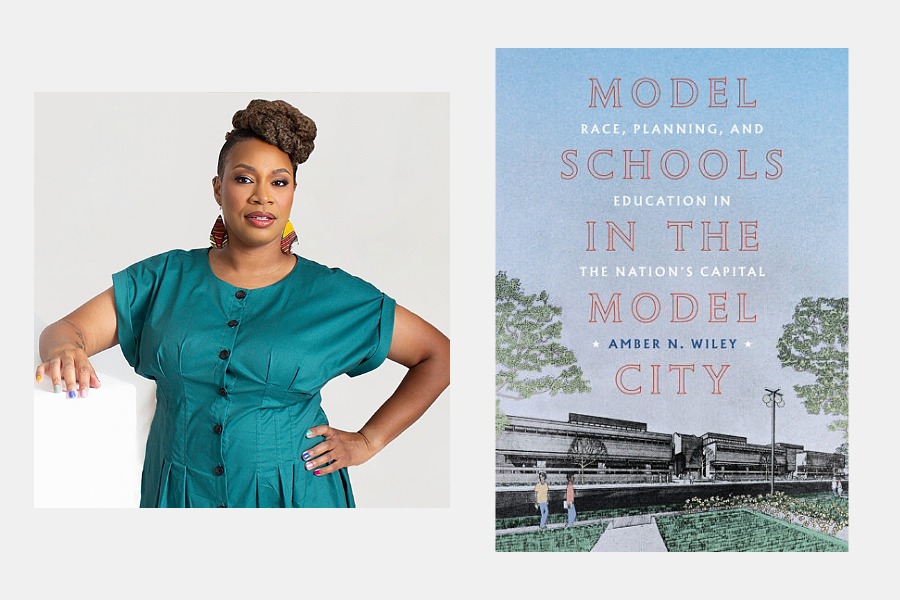
Christopher C. Gibbs College of Architecture professor and Institute for Quality Communities Director Dr. Amber N. Wiley’s book, Model Schools in the Model City: Race, Planning, and Education in the Nation’s Capital, has received two major honors from the Urban History Association.