Dr. Tamar Zinguer, Assistant Professor of Architecture, recently presented at the “Are You a Model?: On an Architectural Medium of Spatial Exploration” conference hosted by the Technical University of Darmstadt, which took place from November 2-4.
Organized in partnership with leading German academic and cultural institutions including the Deutsches Architekturmusem (DAM), this international conference explored the model as an architectural medium of spatial exploration. This exploration included a series of sessions centered around prompts such as “Who made me?,” “Am I the real thing?,” or “Do we look alike?”
Selected from over 100 paper proposals, Zinguer’s presentation “Worlds in a Box: Modeling (inner and outer) Landscapes” was part of the “Give me access” session, a session chaired by Oliver Elser, curator of DAM in Frankfurt. The session focused on models in participatory processes, how they appear to provide easier access for non-experts, “as if models are inherently participatory objects—a simulation toward a more inclusive future,” Elser explained.
In her talk, Zinguer highlighted a section of her in-progress book manuscript, Model Desert: A Cultural History of the Sandbox and focused on landscape models made of sand. She showed tactile model landscapes—representing mountain chains or continents—that were manipulated during the nineteenth century at schools for the blind, as well as at geography departments at the university level, enabling all students to expand their geographical imagination by shaping, as if in play, land formations in sand.
As Zinguer noted, other historical practices thrived in sand-tables. Landscape models in sand have remained strategic tools for the military for over a century, helping soldiers to better envision and navigate war plans. And similarly, since the 1930s, child psychologists laid trays full of sand in front of children prompting them to create a ‘World’, hence unraveling of the inner wars of their psyche. Specifically, Zinguer examined how the intimate models touched by hand were tied to vast landscapes of social change; and how by manipulating model landscapes, the quest for inner resources and the conquest of external territories intersected and overlapped.
She will continue to develop this material for her presentation at the Society of Architectural Historians (SAH) Conference in Montréal, April 12-16 2023.
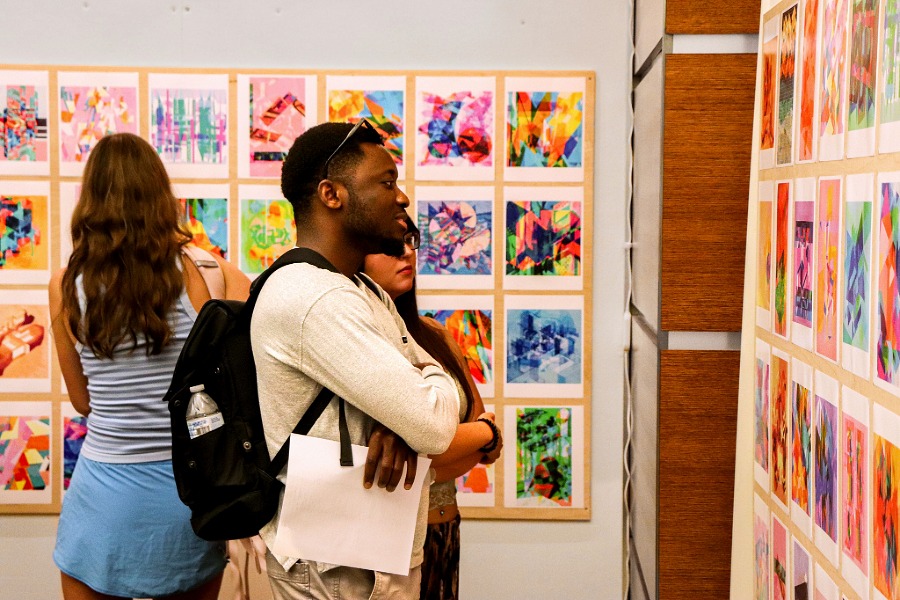
Gibbs College is pleased to present the exhibition 200 Digital Drawings by Professor Tiziana Proietti, currently on display in the Gould Hall Living Room.
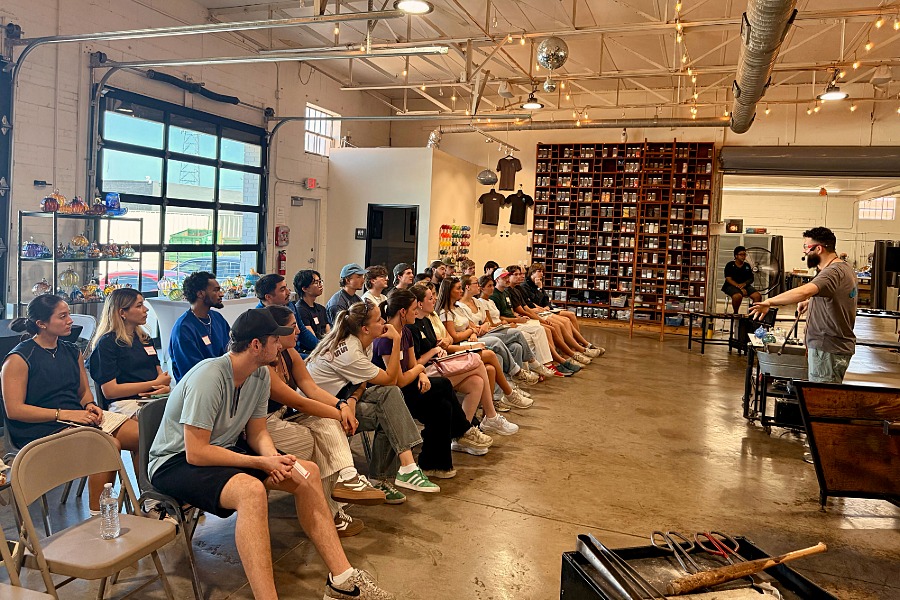
Gibbs College of Architecture Professors Amber Brown and Amy Leveno led 29 students to Dallas, Texas, in September for a learning experience as part of their Design 7 Studio course.
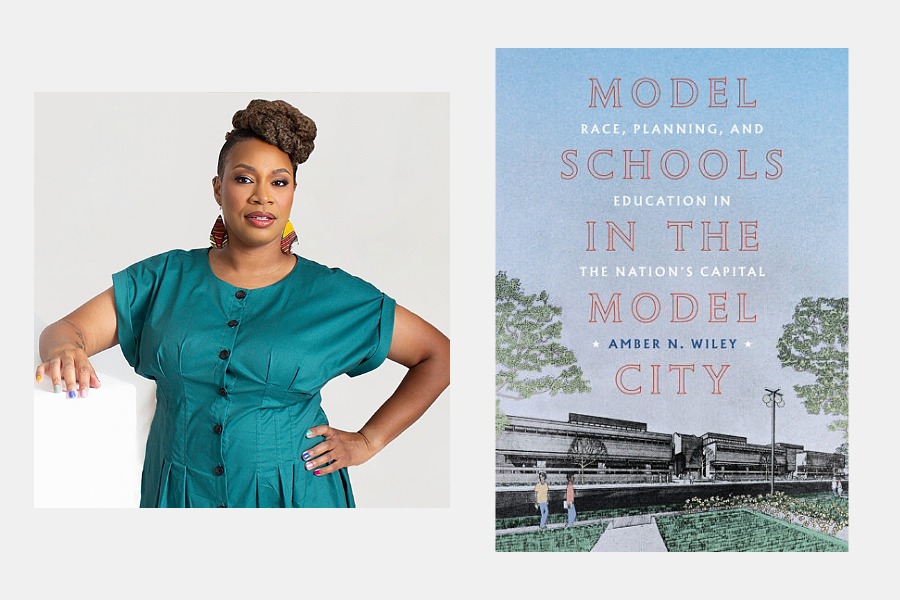
Christopher C. Gibbs College of Architecture professor and Institute for Quality Communities Director Dr. Amber N. Wiley’s book, Model Schools in the Model City: Race, Planning, and Education in the Nation’s Capital, has received two major honors from the Urban History Association.