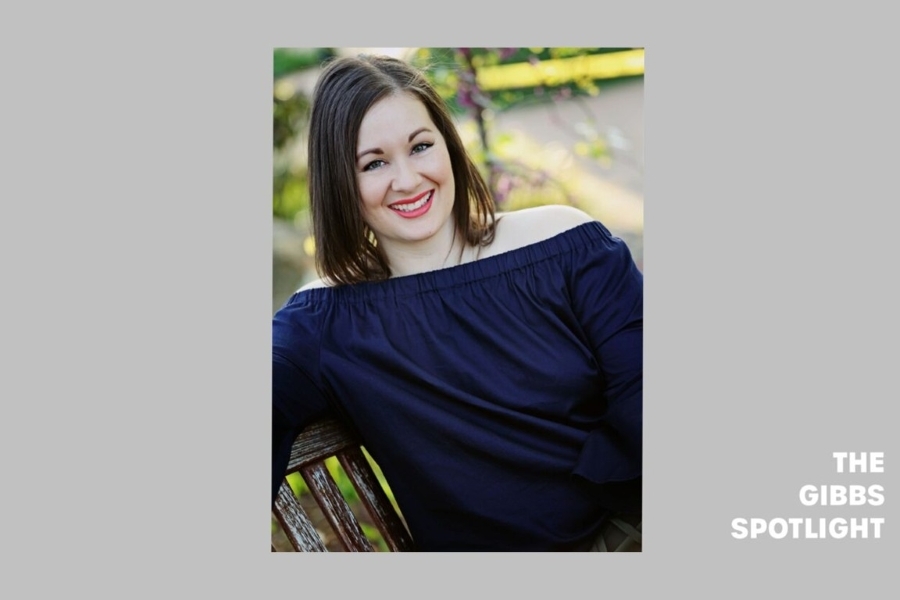
GCA Communications intern Kali Curtis (K) sat down with Rebekah Curry (C), an architecture alumna here at Gibbs! We spoke with Curry to learn about her experiences as a Senior VDC Specialist at JE Dunn. She received her Bachelor of Architecture (2009) from the Gibbs College of Architecture. Read on for highlights or click the link below to access the full podcast.
K: Hello, everyone. Welcome to the Gibbs Spotlight. My name is Kali Curtis, and I am a communications intern at the Gibbs College of Architecture. Today we are talking to Rebekah Curry. Rebekah Curry graduated with her Bachelor of Architecture at the University of Oklahoma in 2009 and she is currently the senior VDC specialist at JE Dunn in Oklahoma City.
So, can you tell me a little bit about yourself and your role as a senior VDC specialist?
C: Sure. So, I graduated from the OU College of Architecture in 2009 with a Bachelor of Architecture. That as you were probably aware was not a good time for our industry. We were still in the downturn, the great crash, if you will. So, I ended up finding a job in Dallas. I practiced there for five years. During that time, I met and married my husband, Jonathan, so we’ve been married for nine years now. And we have two daughters. Everly is five, Quinn is three.
We’re actually back in Oklahoma now. So, we’re in Oklahoma City. I’m a senior virtual construction and design specialist, that’s what VDC stands for, for anybody who doesn’t know. What I do is, I utilize the models from the architects, so Revit models, specifically. I work very closely with our mechanical, electrical, plumbing and fire trade partners. They actually end up modeling their work. That’s like a shop drawing, but it’s a model. So, it’s very technical and specific.
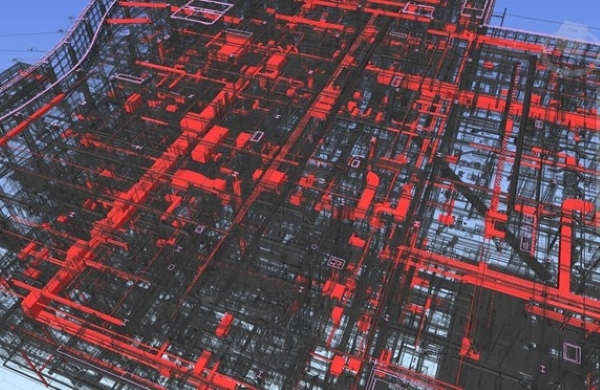
Clash detection in Navisworks (Image Credit: Rebekah Curry)
I compile those models into a program called Navisworks, and I clash it. So, we look for problems, before we are building it, we literally look at ductwork versus electrical, and ductwork versus fire, and against structure and all of those things. We vet the models to find problems before they exist. So that’s really the crux of what I do there.
Also, VDC can support in our pursuits. So, when we’re trying to win work, we can help with something as simple as a logistics plan that we color in Photoshop. So, some of those skills that we got back in the College of Architecture days. Also, sometimes, depending on the client or the job or the requirement, we provide something like a fly through some sort of animation. So again, we use architect’s models a lot to do those things.
We also do some of our own modeling. We use programs such as Lumion if we’re going to get really fancy with it, and maybe Illustrator or Photoshop, sketch up, there’s really a lot that can go on with those. Sometimes we work with our self-perform. So, JE Dunn specifically does self-perform work. And so, we can support those guys by jumping in Revit and creating a model of what they’re going to do. We can find embed plates and things like that. So very nitty gritty construction things, among others. But those are the crux things that we do in the VDC position.
K: Thank you so much. That is really interesting. So, what does your typical day look like?
C: So, I am the only VDC specialist at JE Dunn in Oklahoma City. So, we do have a national team, but I am the Oklahoma team. As such, I tend to get hit with all of the questions. So on a typical day, as I’m working through a project, trying to clash it and work with my trade partners, I’m also getting asked a million questions, “hey, I need CAD files for this,” or “we have a trade partner who needs a model for that” or something like that, or, “Hey, can you show me how to get into the model, I really want to look at the underground plumbing and you know, we’re having a problem with where it’s tying into the existing” or something like that.
So, on a given day, I’ll have a superintendent ask me to help them access the model, or a CAD file request, or just really like a gazillion little things that can pop up, you know that we have all these great technology tools, and some of them are new to it. So, I’m really getting pulled in a million different directions. But a lot of it I get to teach and help other people. And I really enjoy that aspect a lot.
K: Great. Thank you. So, in the United States, women make up around 10% of the construction workforce. Can you share a bit about what it’s like, as a woman working in this area? And do you have any advice for women who are interested in this area?
C: Yeah, that’s a really great question. You know, I don’t tend to focus a whole lot on the fact that I’m a woman surrounded by nine guys for every other woman that’s in the room. I want to focus more on my job and being good at my job. So, if there are women thinking about getting into construction, I personally would say don’t worry about it too much. Don’t borrow troubles. If somebody has a prejudice against you, because you’re a woman, it’s that, it’s their prejudice, right?
So be confident in your job, be competent in your job, and they’re not going to care about what you look like after a certain point. You may have to prove yourself to some people, that happens I’m not going to lie. But if you have a question you don’t know, just ask it. Don’t be afraid. Don’t be afraid to look stupid. Don’t think that they’re going to look down on you.
I just go in there and I do my job and I don’t let the fact that I’m a woman stop me or intimidate me. You know, I get along well with men. Maybe it’s because I have a big family. But I walk into a room of men and I’m fine with it. It’s really not a big deal to me. And also, the women in construction, we do tend to find each other. We actually have a group within J. Dunn. It’s called Moment Connection and it’s for the women at JE Dunn. We get together and we have lunch or we have breakfast or something that we get together, I guess it gives us a little bit of camaraderie in the man’s world. So, you know, we’re intentional about that.
K: I like to hear that there is like a community of women at JE Dunn, that you meet with each other and communicate with each other to gain that sense of camaraderie. That is really cool. So, how does your role act as a bridge between architecture and construction?
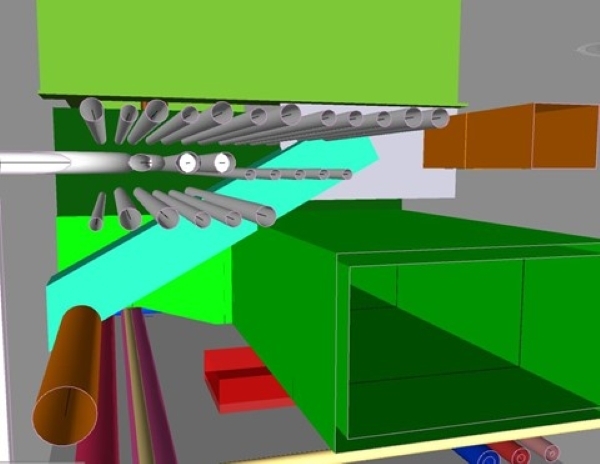
Systems clashing in Navisworks
C: A lot of VDC specialists, we have different backgrounds. Some are engineers, some of us are architects, some came from operations. I will say that mine specifically, because I practice and that’s my background, I am design minded, right? So, I approached my job, knowing what the architect’s intent is a lot of the time, wanting to maintain the integrity of the design. Because let me tell you, a lot of times the construction, they’re like, oh, “there’s an easier way to build it,” or “we don’t need that.” And I’m like, “Yeah, you do. It’s pretty,” right? And so, I understand that, that’s one of them, I get the architect’s perspective.
So, as I’m working through these models, and trying to figure out ways to resolve the issues that we come across, I really am literally in the architect’s model, and I’m in the construction models. So, I’m literally in both worlds at the same time. It’s virtual, you know, it’s a digital platform, but I’m there and I can look at the problems. And I feel like I can help solve them the best way for the project, and to maintain the integrity of the design, because I come from that perspective.
I also obviously read the plans very well and things like that because I used to literally draw them, that was my job. So, I think that I have a pretty unique perspective in this role and I’m able to bridge that chasm sometimes between the architects and the contractors. Sometimes they like to butt heads, and I keep reminding everybody, “we’re on the same team, we’re all building the same project.” So, I think that my background in architecture helps a lot.
K: Great, thank you. So, your background in architecture pretty much makes you have more of a design perspective than, say other VDC specialists from other backgrounds. So, what aspects of the curriculum at Gibbs College have prepared you for collaboration across disciplines?
C: Yeah, that’s a great question. I will say that I graduated in 2009. So VDC was almost unheard of at the time, you know. I do know that right now, there are more elements of the curriculum that bring in VDC, it’s becoming a thing, it’s common, it’s not going away. It’s a really great tool. So, a lot of my experience, the path that I took through the architecture college and then practicing and then moving on, have been very experienced base to get me to where I am.
So certainly, it built upon the technical classes, the systems classes that we had a lot. So those are probably the most that helped me prepare to understand MEP aspects of it, you know, OU is a great design school. And so, a lot of what I had to learn came through just being in an office being mentored by other people. That’s huge for architecture students, you know. There’s so much to what we have to learn that even though we spent six years getting our degrees there, you just don’t know everything. I mean, you can practice for 50 years and not know everything. So, mentorship was huge honestly, in bringing me to where I am now.
K: Thank you. So, the Gibbs College has architecture and construction science students in the same building. Do you think that helped you for your position that you have now?
C: I think that now they might be collaborating more, as we see that we need to work better and have these positions that act as a bridge. So, I’ve talked to a lot of recent OU College of Architecture grads, and they’ve told me “Oh, we’re doing some VDC, I know this program,” and “hey, we had to work with the architecture students to design something.” And I think that’s really great. It really wasn’t there when I was there, but they’re moving in that direction. And I think that’s a great thing. Very needed for our industry.
K: Thank you. So, what advice would you give to current architecture students?
C: Oh, man, I got to tell you, I was just scared when I graduated to join the real world. I just didn’t have a whole lot of confidence in myself and I didn’t necessarily have a good reason why. I had great professors and I walked through the program, I think fairly well, but I just was. I was scared of the real world.
So, I would say, don’t be afraid. Be confident, you’re young. So, you have a lot to learn. Make sure that your posture is reflective of that, you know, have that humility about you, but don’t doubt yourself, you know, you, you’re going to be just fine. You really are.
K: Thank you so much. Can you tell me about one of your favorite projects that you’ve done?
C: Yes. When I left Dallas, I actually went to Kansas City, which is where I was in my very first VDC role, and I was privileged to work on the United Methodist Church of the resurrection. It was a new sanctuary for that church in Leawood, Kansas. it was a $70 million new sanctuary just to put a little perspective around it. This was not a small project; it was a great undertaking.
I ended up working on it for more than a year, not full time, the whole time. But it was a work of art that we built, you know, and there were a lot of intricate moving parts and pieces to that design, I got to know the project team really well. I actually ended up leaving that job before they had finished it. I took some time off when I became a mom.
So, they actually invited me back to the opening of it. And I ran into the architect in the hallway, very crowded, it was a soft opening for this church. But I think every parishioner was there, it was super crowded. But I ran into him. And we had spent so much time going over this building, talking through so many details and issues, we had some sort of relationship together, even though he was in another state. And so, we started in the hallway, we just gave each other a hug, because it felt like the baby was finally here, you know, we waited and worked for so hard and so long. And it was just a really great feeling. It was one of those projects that to see it come together just to know that you were part of something that was really an impressive feat of architecture and construction. It gave us a good sense of pride.
K: Thank you so much. I’m so glad to hear that. So, do you have any other thoughts that you’d like to share today?
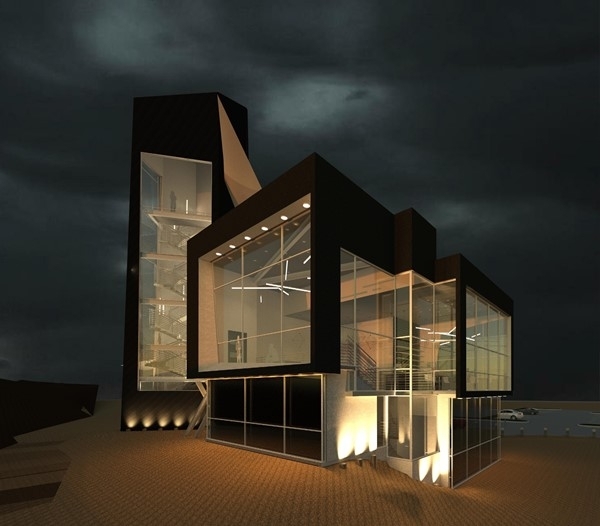
A rendering created for a competition by Rebekah Curry, circa 2020
C: You just never know where life is going to take you. I really have to say that. I think that we like to have everything planned out, you know, step by step in your career. But take it as it comes, you just don’t know what opportunities are going to open up, and be open, be flexible. I think if you’re like me, you’ll come to know fairly soon what you like and what you don’t like, and it’s totally fine. You know, I’m not practicing architecture right now. And that’s okay. Because I’m still in the built environment, I’m still getting buildings built, and I found something that fit my personality type a little bit better. So, I just would say, you know, don’t be afraid, get your feet wet, move around a little bit, ask questions, it’s going to fall together, it just may not fall together exactly as you think it’s going to.
K: Well, thank you so much. That’s really helpful to hear. So, it sounds like you started off practicing architecture. And then you just kind of found your niche and found something a little more tuned to your personality.
C: Yeah, that’s exactly right. And honestly, I fell into VDC by accident. I didn’t seek it out. When my husband and I were moving to Kansas City, I put my resume on the Kansas City AIA website. And I was contacting architecture firms. I fully expected to work for an architecture firm when I got there. All of a sudden, I get an email from this general contractor, and they say, “Hey, we have this role.” I read the description. And I was like, I don’t think I can do that to be honest with you. It doesn’t sound like what I’ve been doing.
But I had a great interview with my supervisor. He also had an architecture background. So, he understood where I was coming from. He knew my skill set. And so, he really walked me through that transition. And I was able to segue fairly easily into the job. So yeah, I mean, I didn’t look forward at all, it was just it was a door that opened, and I decided to walk through it.
And, you know, I’m not going to say I’m never going to look back. I still think about going back and practicing someday. But that’s what’s so great is that I really have the option. I’m still in the industry. And I think that what I’m doing now is only going to make- Oh, I’m 100% sure it would only make me a better architect. Once you see all the issues and you’re the one working through fixing them. It’s going to make you a better architect. So, I think I’m perfectly positioned to stay where I am or practice. I think there’s even still other avenues that I could pursue.
K: Thank you so much. That’s really interesting. It has been so great to talk to you today and hear about your position at JE Dunn.
C: Thank you. It’s so good to talk to you as well. I appreciate it.
K: Thanks again for listening to the Gibbs Spotlight. Tune in next time to hear more stories more the Gibbs College of Architecture.
Editor’s note: This interview has been edited and condensed for clarity.
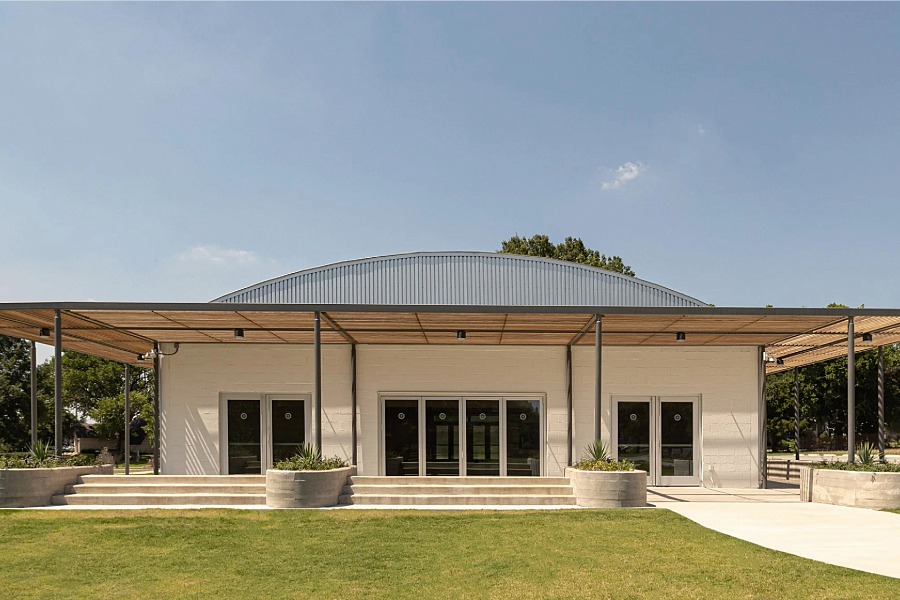
Christopher C. Gibbs College of Architecture assistant professor Amy Leveno and Mark Leveno, co-founders of OFFICIAL Design, have received a 2026 AIA Central States Region Design Award for the firm’s Granger Annex Community Center project in Garland, Texas.
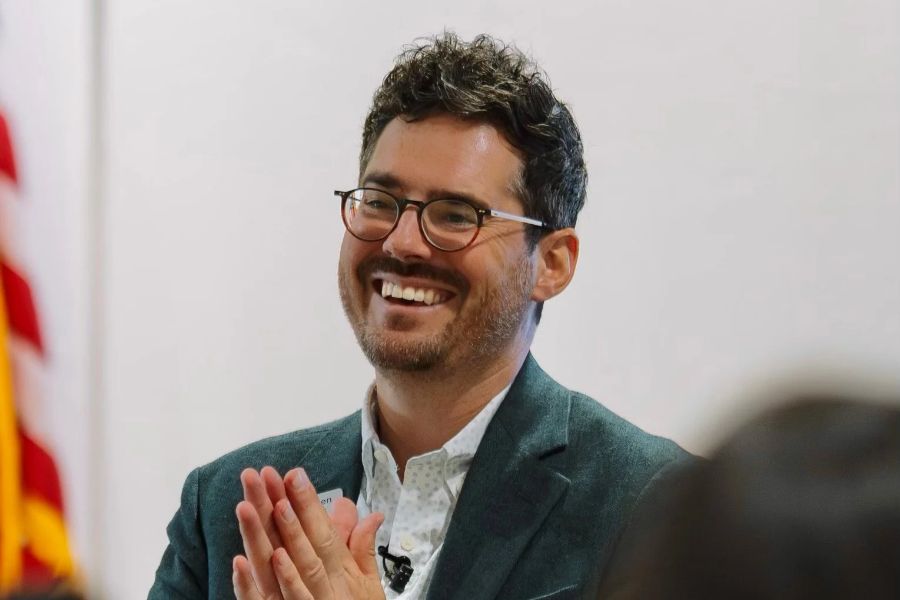
Construction Industry Speaker Series welcomed Stephen Evans from the Oklahoma City National Memorial & Museum to give a lecture on better conversations and relationship building.
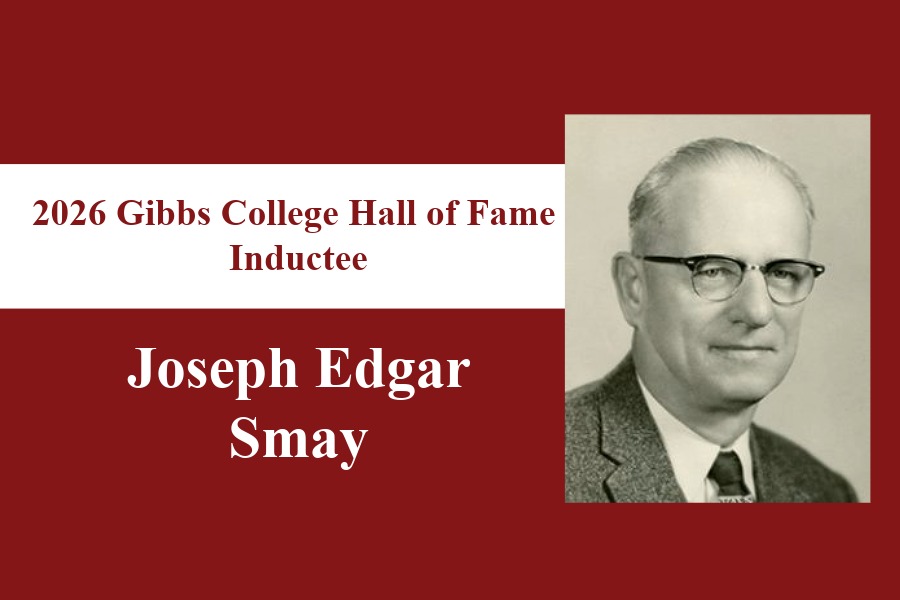
The University of Oklahoma Christopher C. Gibbs College of Architecture Hall of Fame recognizes a select number of high-character individuals who have made a significant and lasting positive impact on Gibbs College, its students, staff, faculty, alumni and/or to communities across the globe. The impact may have been, or continues to be, in the form of service and mentorship, sustained professional excellence, and/or advancement and financial support. Joseph Edgar Smay is part of the 2025 Hall of Fame class.