Date
A small but dedicated group of OU faculty and students in the Christopher C. Gibbs College of Architecture are living out one of the university’s highest aspirations in a very concrete way: to positively impact the state of Oklahoma and its communities through improvements to a main thoroughfare for one under-resourced city while offering students priceless experience in urban design and planning.
The Institute for Quality Communities (IQC) in Gibbs College and the City of Spencer have rekindled a partnership that dates back to the 1960s when the college first consulted on the city’s comprehensive plan, and is now being renewed when the city stands ready to seize on economic development and growth.
IQC and the OU Regional and City Planning (RCPL) program are helping the City of Spencer, located 20 miles east of Oklahoma City, define and implement improvements to its 23rd Street corridor, which serves as its southern border with Midwest City and is key to this growth.
With improvements to lighting, fencing, signage, updated zoning regulations, repair or removal of blighted buildings and crosswalk enhancements on 23rd Street, the City of Spencer hopes to entice commercial development that is already occurring on its eastern border, said Charles G. Warnken, associate professor of regional and city planning, Gibbs College of Architecture.
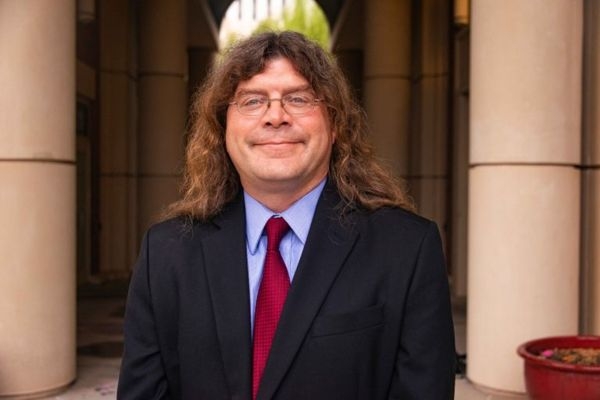
Charles G. Warnken, Ph.D.
“The corridor is really unique – it carries a lot of traffic,” Warnken said. “These things influence growth and development.”
The dilapidated properties, outdated signage, older strip malls mixed with newer strip malls, auto-related businesses and salvage yards lining the main artery are not the first impression that Spencer residents want visitors see, he said.
Shamia Jackson, Spencer city manager, said with the participation of OU RCPL students in the project, residents have a voice in the city’s planning process through the creation of citizen surveys and ongoing conversations with residents.
“They [IQC] have the citizens where they feel they’re finally being heard,” Jackson said. “It’s been a really great partnership.”
It’s not by accident that Spencer residents say they are finally having their concerns about the safety and prosperity of their community taken seriously.
“The biggest skill in design is the listening skill, learning to listen to the community,” Warnken said. “Walking around with them, having them draw a map where they walk, where they feel safe in their community and where they don’t go in their communities.”
Warnken has been heavily involved in the partnership since it began in 2020 and leads the institute’s coordination with the city and its approximate 12 students working within the institute for the past few years.
IQC began at OU in 2008 to help local communities address their unique challenges. It also manages the environmental design degree program for undergraduate students.
But IQC taps faculty and students from across several disciplines in the Gibbs College of Architecture to help solve these challenges.
Students have been involved every step of the way, Warnken said, and have encountered political upheavals, red tape and funding difficulties at city hall – all real-world experiences they’re likely to face in their professional careers.
“You hear a lot about experiential learning and community-engaged partnership,” he said.
“The institute is the university’s strategic way to really be engaged in the community and provide students with these great learning opportunities.”
The unique challenges that Spencer faces is limited funding due to its small population size of approximately 4,000 people and the lower income of most of its residents.
Further, its shared southern border with Midwest City along 23rd Street means that Spencer could implement all of IQC’s recommended improvements to their own north side of the street but can’t require Midwest City to do the same on their side.
“It’s a difficult corridor to have as your gateway to the surrounding communities. It’s difficult to put into action designs plans with two different cities,” Warnken said.
But IQC is engaging with Midwest City planners on behalf of Spencer officials to help make these updates as consistent as possible.
Developments to this main thoroughfare will benefit the residents of Spencer, surrounding communities and the students in Gibbs College, Warnken said.
“I’m big a proponent of using the talent and resources at the university to make a difference in Oklahoma communities and towns,” he said.
Christopher C. Gibbs College of Architecture assistant professor Amy Leveno and Mark Leveno, co-founders of OFFICIAL Design, have received a 2026 AIA Central States Region Design Award for the firm’s Granger Annex Community Center project in Garland, Texas.
Construction Industry Speaker Series welcomed Stephen Evans from the Oklahoma City National Memorial & Museum to give a lecture on better conversations and relationship building.
The University of Oklahoma Christopher C. Gibbs College of Architecture Hall of Fame recognizes a select number of high-character individuals who have made a significant and lasting positive impact on Gibbs College, its students, staff, faculty, alumni and/or to communities across the globe. The impact may have been, or continues to be, in the form of service and mentorship, sustained professional excellence, and/or advancement and financial support. Joseph Edgar Smay is part of the 2025 Hall of Fame class.