Date
The Institute for Quality Communities (IQC) recently completed a year-long project sponsored by the Association for Central Oklahoma Governments (ACOG). ACOG's Community Economic Resiliency Initiative (CERI) allowed the IQC to launch a new Community Engagement Fellowship, in which four Gibbs faculty members and a dozen Gibbs students provided planning services in the cities of El Reno, Guthrie, and Harrah.
In 2021, ACOG initiated the CERI in order to offer municipalities the opportunity to develop plans that model strategic investment, sustainable economic recovery, and long-term resiliency in the wake of the COVID-19 pandemic. ACOG partnered with the University of Oklahoma’s IQC and Oklahoma Main Street Center to collaborate in shaping the program and providing services to communities selected to participate in CERI. Through a competitive application process, three Oklahoma communities were selected to receive urban planning services from the IQC and Gibbs College. These services emphasized community identity and placemaking.
On May 10, the faculty fellows and student team members for all three projects presented their project results at a regional symposium hosted by the Association of Central Oklahoma Governments. The audience at the symposium included local government staff and representatives.
Continue reading to learn about each community's project.

Concept Images from the El Reno Project.
The City of El Reno sought a corridor study of Route 66 west of downtown El Reno, known as Sunset Drive. This included creating plans to capitalize on Route 66 tourism and improve conditions for residents in Sunset Drive neighborhoods. The El Reno team was led by Michael Höffner, an affiliate faculty member with the Division of Architecture and principal of höffnerdesignstudio. The student team included Luci Hunter (Landscape Architecture), Kayarash Karami (Architecture), and Emily Fitzsimmons (Regional + City Planning).

The El Reno Sunset Drive project appeared on the front page of the El Reno Tribune in June.
The IQC El Reno team conducted regular steering committee meetings, stakeholder interviews with local institutions, design workshops for the public and for high school students, and additional research. The process resulted in “three pillars” for Sunset Drive including safety, economic development, and public image. These goals were explored through proposals for new streetscapes and development patterns.
The team conducted a final presentation to its steering committee on April 29. Matt Sandidge, El Reno City Manager, said “The OU Institute for Quality Communities and Michael Höffner did an excellent job with our Route 66/Sunset Drive Corridor study. This is such an amazing vision for the historic corridor. We have a lot of work to do, but this helps us visualize some possible options.”

Concept pictures of the recreation trails planned for "The Elbow."
The City of Guthrie aimed to improve educational and recreational opportunities in the “Noble Park” or “The Elbow” area. Noble Park is a historically Black neighborhood that has a history of severe flooding due to its proximity to the Cottonwood Creek. The IQC team was called upon to collect oral histories and memorabilia from those who have connections to the neighborhood and use this research to develop cultural heritage tourism in the area.
The Guthrie team was led by Dr. Sarah Little, an assistant professor with Landscape Architecture. Camden Crittenden (Construction Science) was the primary student team member. Additional contributing students in the Landscape Architecture studio were Brett Karp, Rajith Kumar Kedarisetty, Peyton Kroh, Emma Mangum, Melisa Seward, and Mickey Walkup. These students contributed public space and connectivity concepts to the project, which they presented to the council. The IQC team created a list of recommendations for cultural and recreational trails in the Elbow, as well as an augmented reality platform for experiencing the Elbow’s history. Additional urban design recommendations were also proposed to tie the recreational area to downtown Guthrie and beyond.
Over the summer, the City of Guthrie won a $300,000 Recreational Trails Program (RTP) grant (administered through the Oklahoma Department of Tourism & Recreation) to begin construction of a trail and pedestrian bridge that will bring people in to experience the history and heritage of the Elbow area.
Justin Fortney, Guthrie Tourism Director, said the grant, “will begin the physical infrastructure portion of the objectives started with the Guthrie CERI project. It’s exciting to see this come to life.”

Concept image for Sweeney's Switch that includes public art, a playground, and the historic lumberyard.
Harrah’s town leaders hoped to improve Harrah’s downtown area, called Sweeney’s Switch. The IQC team aimed to build upon past development, including a community garden and the redevelopment of a historic lumberyard into a restaurant and venue. The project team looked into ways for the downtown area to both be a source of economic growth as well as a placemaking opportunity that embraces the history of Harrah.
The Harrah IQC team was led by Shawn Schaefer, director of OU-Tulsa Urban Design Studio and Dave Boeck, associate professor with the Division of Architecture. The student team included Urban Design students Courtney Graham, Roshita Taylor, Jeremy Banes, and Soujanya Malla - as well as Architectural Studies student Mas Mojnezi.
In addition to research and data collection, the team conducted monthly steering committee meetings and attended two local festivals to engage with residents. The process resulted in “five big moves” to advance Sweeney Switch, covering urban design, development, and parking strategies. They conducted a final presentation to Harrah community members and leaders on Saturday, May 7.
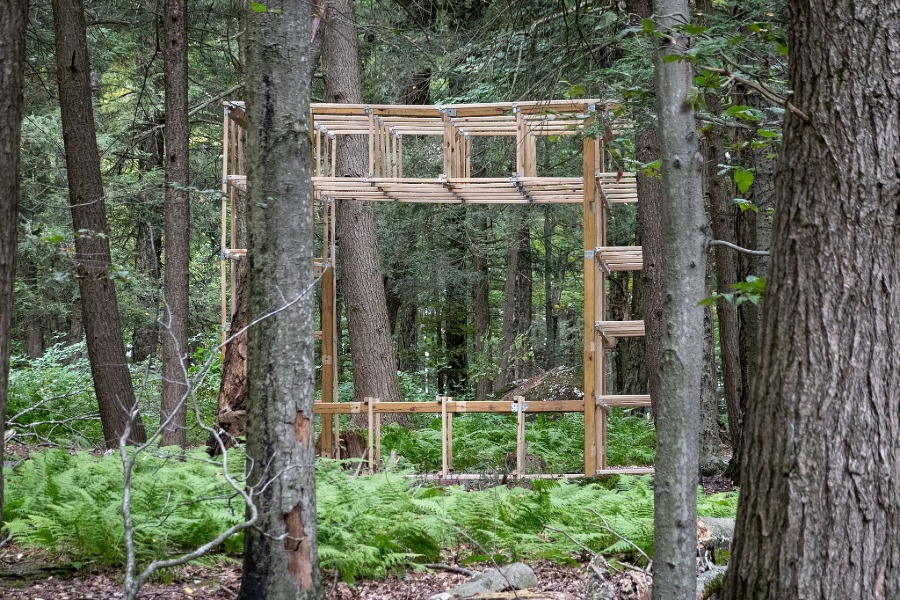
A project designed by Gibbs College of Architecture faculty member Austin Lightle has been selected for BuildFest 2026, a national art and architecture festival held at the Bethel Woods Center for the Arts in New York, on the historic grounds of the 1969 Woodstock Music Festival.
Two Christopher C. Gibbs College of Architecture alumni are helping shape recommendations that could influence affordable housing design and construction across Oklahoma.
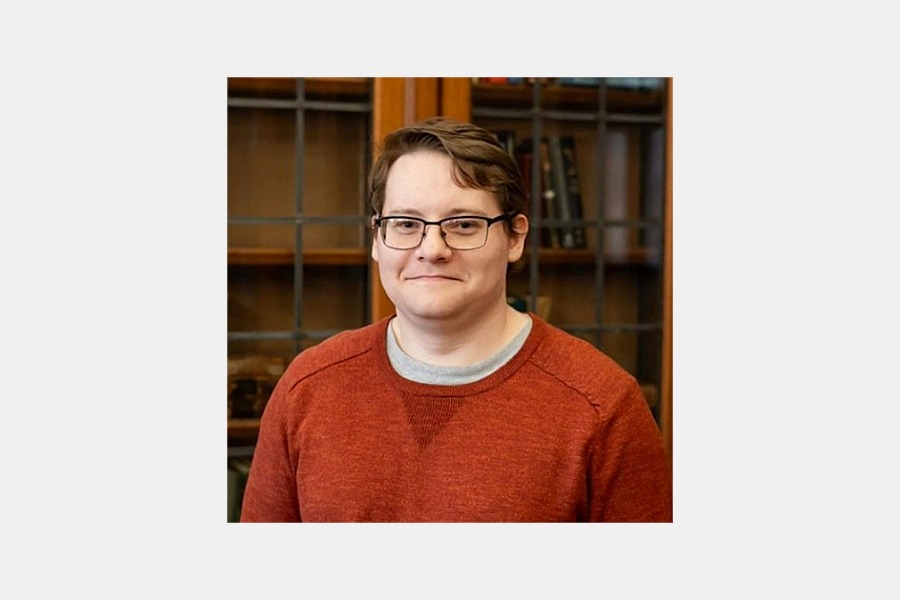
The University of Oklahoma Libraries recently welcomed Carl Siegel as an Architecture Librarian and Archivist and Assistant Professor. In his role, Siegel supports students, faculty and staff across the Gibbs College of Architecture while also serving as archivist for the American School of Architecture Archives.