NEWS


NORMAN, Okla. – What kind of building works for both bats and chimney swifts? University of Oklahoma architecture and construction science students designed and built one for WildCare Oklahoma in Noble, creating separate spaces where injured and orphaned animals can recover before returning to the wild.
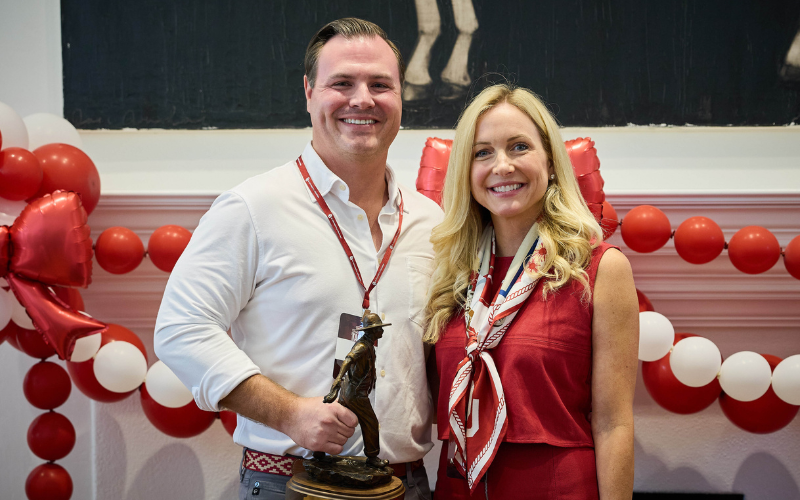
Their project, called C.O.M.M.A., or Conservation of Oklahoma’s Mammals and Migratory Avians, received the inaugural Architecture-Design Award at the Kirkpatrick ANIMAL Conference on Sept. 19.
WildCare approached OU’s American School Design-Build program with a specific challenge. Bats need room to fly as they recover; chimney swifts need places to roost. The students’ answer was a building with an outer ring for bats to fly in and an inner space for the birds, with access for WildCare staff to care for both areas.
Chloe Bys, a Dallas native who graduated in spring 2026 with a bachelor’s degree in architecture and a minor in construction science, said visiting WildCare helped the students understand how their design and materials would affect the animals.
“It was important to use materials like mesh to protect their wings, yet let their primary food source in, like bugs,” Bys said.
About 20 students worked on the project over two semesters, said Bryan Bloom, an assistant professor and director of the American School Design-Build program in OU’s Christopher C. Gibbs College of Architecture. Architecture and construction science students developed the design together, then divided responsibilities for tasks such as framing, concrete, roof and siding. They also built the structure themselves.
“Once we get to a site, the cool thing is, you don’t know who a design student is and you don’t know who a construction student is,” Bloom said. “Everybody’s building.”
Bys said the curved shape presented one of the team’s biggest construction challenges. Because bats would perch in corners, the students needed a curved raceway where the animals could practice flying. That required a circular foundation and studs positioned at the correct angle while remaining plumb. Preparing the foundation took about two months, with students testing forms through off-site mockups.
“Once we got on site, it was much different than studio,” Bys said. “We really had to learn the order of construction and understand how it would be built.”
Bloom, who has a background in construction management and sustainable construction, said building for a client gives students an experience they cannot get from a hypothetical design. The program, joined by assistant professor Ken Marold, has also worked with SunHive Collective in Norman, and Oklahoma Contemporary and John Rex Charter School, both in Oklahoma City.
The partnership started at a SunHive open house, where Inger Giuffrida, executive director of WildCare, saw the OU students’ work and later contacted Bloom about a possible project with their wildlife rehabilitation center. Bloom said the Architecture-Design Award recognizes both the students’ effort and the care WildCare puts into rehabilitating wildlife.
“You’re around people that are doing interesting and good work,” he said. “You are inspired by what they are doing, so you want to do good work for them.”
“We made the strategic decision to launch a design-build program in 2017 to enrich the hands-on learning experiences of our students,” said Hans E. Butzer, dean of the Christopher C. Gibbs College of Architecture. “This recognition from the well-respected Kirkpatrick Foundation, a leading advocate for animal welfare, proves we can also positively impact communities across Oklahoma.”
OU’s Christopher C. Gibbs College of Architecture prepares students for careers in architecture, construction science, interior design, landscape architecture, and other design and planning fields. For more information, visit ou.edu/gibbs or call 405-325-2444.

About the University of Oklahoma
Founded in 1890, the University of Oklahoma is a public research university located in Norman, Oklahoma. As the state’s flagship university, OU serves the educational, cultural, economic and healthcare needs of the state, region and nation. For more information about the university, visit www.ou.edu.
The University of Oklahoma has received a transformative gift from Jon and Shannon McCartney, which will name the McCartney Family Tunnel of Champions, the McCartney Family Gate of the Gaylord Family - Oklahoma Memorial Stadium and the McCartney Family Grand Lecture Hall in the Michael F. Price College of Business. The gift will also support the Inspiring Champions and the Athletic Director’s Discretionary Fund, in addition to establishing the McCartney DFW Career Trek program at Price College.
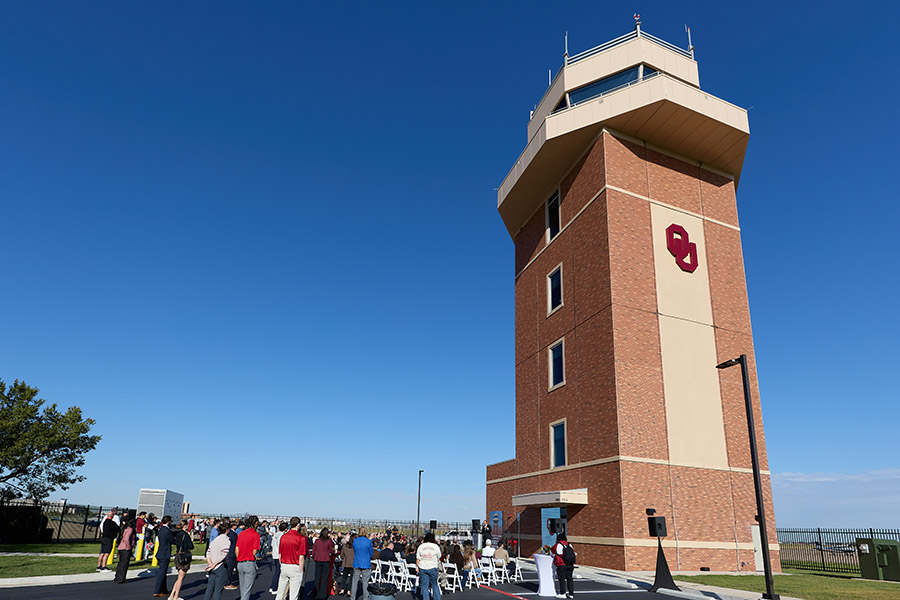
The University of Oklahoma today celebrated the opening of a new air traffic control tower at the OU Max Westheimer Airport. Standing 106 feet tall, more than double the current 52-foot facility, the new tower will modernize air traffic control operations and improve safety for pilots and students operating in the airspace.
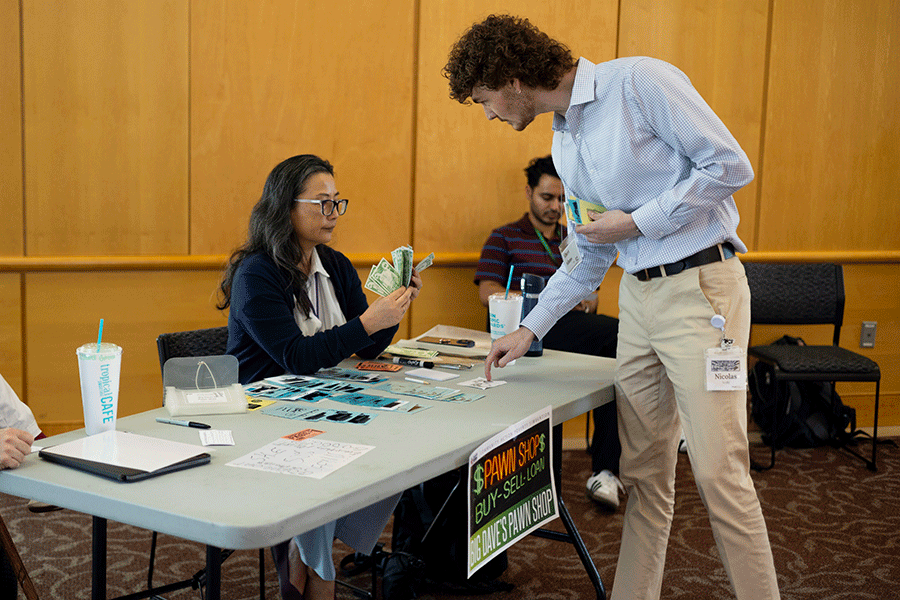
Do I buy groceries or pay the electric bill? Should I pawn some of my belongings to afford my prescription? My child is sick, so I will have to miss work to take care of him. Those are just a few of the difficult choices that OU-Tulsa health professional students confronted during the Community Access to Resources Experience. The role-playing activity challenged students to navigate the financial, family and other pressures that can affect a person’s health and ability to follow medical advice. Held annually during the SCM Institute orientation week, the experience is designed to generate understanding and build empathy.