NEWS

NORMAN, OKLA. – The Native Nations Center for Tribal Policy Research at the University of Oklahoma will launch its first Sovereign Policy Intensive in September, a new program designed for elected tribal officials that focuses on understanding broadly relevant federal systems grounded in departmental structures, legislation and appropriations, and legal frameworks.
The one-day program, set for Sept. 25, is structured as an objective, nonpartisan orientation to support tribal leaders’ understanding of how federal systems, institutions and processes interact with tribal governance and tribal sovereignty, said Tana Fitzpatrick, J.D., associate vice president in the Office of Tribal Relations at OU. “Navigating federal structures can be complex,” she said, “and this program is intended to provide a practical foundation.”
Participants will explore 13 topics, including foundational concepts such as sovereign authority, jurisdiction and the federal budget process, as well as focus areas such as healthcare, land and natural resources, agriculture, energy, education, housing and public safety.
After spending time researching similar programs, Fitzpatrick said the program fills a unique gap. “We didn’t want to duplicate efforts,” she said. “A primary objective of the Sovereign Policy Intensive is to orient tribal leaders to federal structures. Important tribal leadership trainings and technical certifications already exist across the United States. Our intent is to complement these efforts by addressing a gap that has not been covered before, at least not in this way.”
The day will include a schedule of policy briefings, legal frameworks and networking opportunities. Fitzpatrick said the Native Nations Center has already confirmed six outside speakers, many from national tribal organizations, to provide specialized support on key topics in the program. Ultimately, she hopes the center can build enough in-house expertise to expand its own research support for tribal governments.
The Native Nations Center provides tribal governance decision support through its research and does not advocate for or prescribe policy positions. “Our goal is to operate as a service for tribes,” Fitzpatrick said. “We produce research to support their decision-making by explaining federal actions. We do not give recommendations. For us, it’s all about respecting sovereign authority and helping in any way that we can through our research. The Sovereign Policy Intensive is an extension of that service.”
Building on that model, the Native Nations Center provides authoritative, neutral and nonpartisan analysis of the federal policy landscape. The Sovereign Policy Intensive aims to help participants gain greater confidence in navigating the federal government and understanding federal Indian law and policy. Participants will also leave knowing who to turn to for trusted policy research when new issues arise.
The program is geared primarily toward newly elected tribal officials, though it is open to any tribal leaders interested in participating.
“One of the great things about the policy intensive is the networking,” Fitzpatrick said. “I sometimes hear from tribal leaders that elected leadership can be isolating. Even if seasoned leaders understand the information covered, participants still get to connect with others doing the same work in their own communities.”
The pilot cohort is limited to 25 participants, with a cost of $450 per participant. Apply at ou.edu/nativenationscenter/spi. For more information, contact (405) 325-2806 or email nnc@ou.edu.
About the University of Oklahoma
Founded in 1890, the University of Oklahoma is a public research university located in Norman, Oklahoma. As the state’s flagship university, OU serves the educational, cultural, economic and health care needs of the state, region and nation. For more information about the university, visit www.ou.edu.
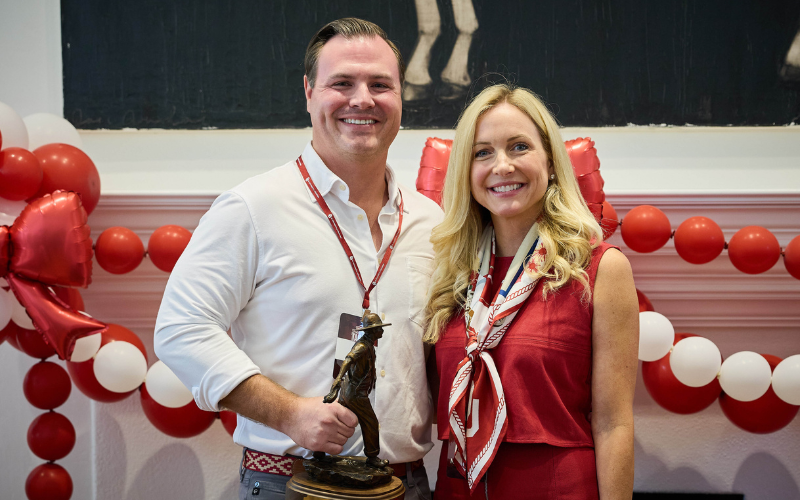
The University of Oklahoma has received a transformative gift from Jon and Shannon McCartney, which will name the McCartney Family Tunnel of Champions, the McCartney Family Gate of the Gaylord Family - Oklahoma Memorial Stadium and the McCartney Family Grand Lecture Hall in the Michael F. Price College of Business. The gift will also support the Inspiring Champions and the Athletic Director’s Discretionary Fund, in addition to establishing the McCartney DFW Career Trek program at Price College.
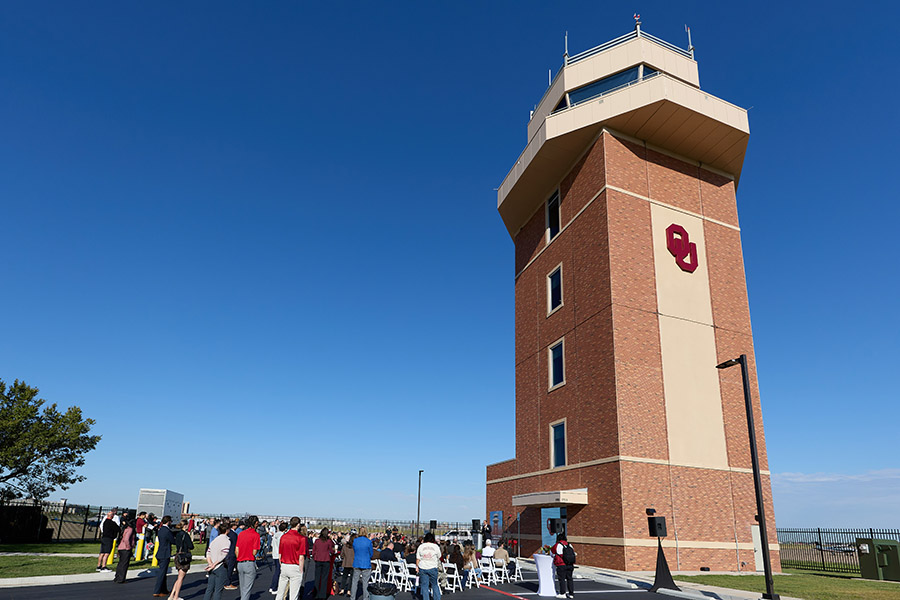
The University of Oklahoma today celebrated the opening of a new air traffic control tower at the OU Max Westheimer Airport. Standing 106 feet tall, more than double the current 52-foot facility, the new tower will modernize air traffic control operations and improve safety for pilots and students operating in the airspace.
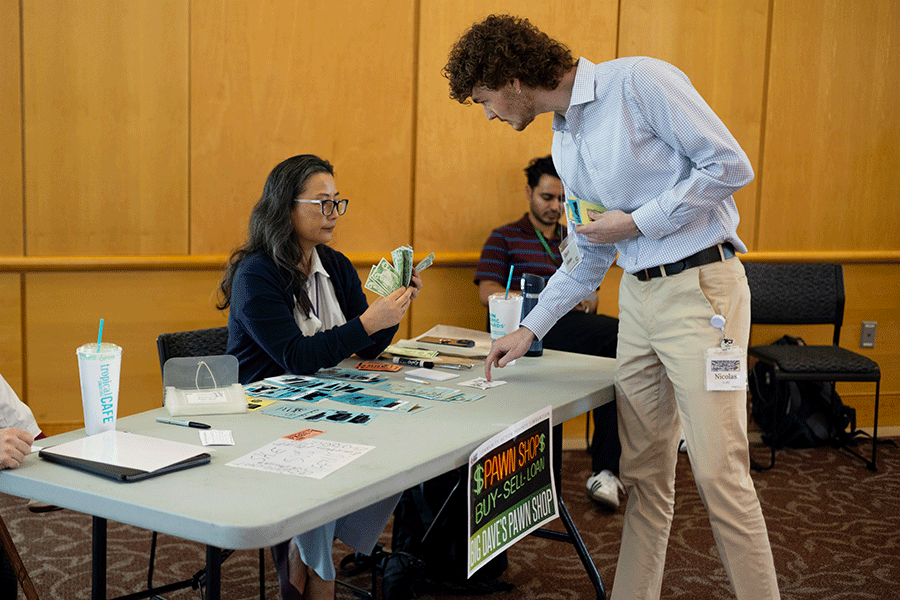
Do I buy groceries or pay the electric bill? Should I pawn some of my belongings to afford my prescription? My child is sick, so I will have to miss work to take care of him. Those are just a few of the difficult choices that OU-Tulsa health professional students confronted during the Community Access to Resources Experience. The role-playing activity challenged students to navigate the financial, family and other pressures that can affect a person’s health and ability to follow medical advice. Held annually during the SCM Institute orientation week, the experience is designed to generate understanding and build empathy.