NEWS


NORMAN, OKLA. – When the Oklahoma Department of Veterans Affairs needed help tackling complex design challenges at three veterans’ homes, it didn’t turn to a consulting firm. Instead, it partnered with the University of Oklahoma’s Institute for Quality Communities.
Over the course of a year, 64 students from OU’s architecture, interior design, planning and sustainable energy programs worked alongside faculty to develop planning and design recommendations for veterans’ homes in Ardmore, Claremore and Sulphur. The work could help guide future renovations, improve residents’ quality of life and support future funding requests.
The project was coordinated by the institute in OU’s Christopher C. Gibbs College of Architecture, which matched the ODVA’s needs with faculty whose courses could address site-specific challenges.
“We thought we would take on one project,” said Amber Wiley, Ph.D., the institute’s director. “Instead, we found faculty across multiple disciplines whose courses aligned with different needs, allowing us to work on all three veterans’ homes.”
Nanneeusha Young, ODVA director of facilities and logistics, said the undertaking gave the agency access to expertise it otherwise would not have had.
“The Oklahoma Department of Veterans Affairs was proud to join with the University of Oklahoma’s Institute for Quality Communities. The collaboration combined the creativity and expertise of the university’s architectural students and faculty, aligning with our commitment to serving Oklahoma’s veterans. As a result, we received thoughtful and innovative design concepts for three of our seven veterans’ homes: Ardmore, Claremore and Sulphur,” Young said.
The recommendations provide a valuable foundation as ODVA plans for the future of the state’s veteran home system, Young said.
“We are dedicated to ensuring that our investments focus on what matters most: enhancing the quality of life for the veterans who reside in our homes. We are grateful to the Institute for Quality Communities for their partnership and for helping us advance our veteran-first mission through meaningful, community-focused design,” she said.
The initiative ultimately involved four university courses taught across two colleges. Interior design students developed recommendations for lighting, technology and interior environments at the Claremore and Sulphur veterans’ homes. Regional and city planning students studied long-term redevelopment options for the Ardmore facility, while sustainable energy students evaluated the feasibility of solar energy improvements at Sulphur. Students visited the facilities, interviewed staff and presented recommendations based on current standards and site conditions.
More than 240,000 veterans live in Oklahoma, according to the U.S. Census Bureau. For Wiley, the project also carried a personal connection. She has family who previously received care at the Sulphur Veterans Center, one of the facilities included in the initiative. “For our students and faculty, it really brought home the need to address veteran care,” she said.
For senior environmental design student Adam Lodrigueza, the experience quickly became about more than architecture. At the Ardmore Veterans Home, his team discovered that changing standards for long-term care, accessibility and resident capacity made renovating the existing building increasingly difficult. Rather than proposing cosmetic improvements, students evaluated whether the facility could realistically meet today’s expectations for veteran care.
“We really wanted to focus on human-centered design for the veterans and the healthcare workers,” Lodrigueza said. “We wanted to create a more inviting environment that wasn’t so institutional.”
The recommendations extended beyond building systems and floor plans. Students examined access to daylight, privacy, staff workspaces, gathering areas, energy efficiency and connections to nature –elements intended to support residents’ dignity while improving conditions for caregivers.
Visiting the facilities left a lasting impression on faculty and staff.
“One of the biggest surprises for me was learning residents often shared rooms,” said Molly O’Connor, the institute’s program manager. “Then you see the spaces and just how problematic they are. It really reinforced how important dignity and privacy are in the design.”
O’Connor said the experience also changed the team’s view of veterans’ homes.
“What came through in a lot of the design work was creating a space where people felt dignified,” she said. “You saw students thinking not only about the veterans but also the people who work there every day.”
The work provides the ODVA with planning and design concepts it can use as it evaluates future renovations, capital improvements and funding requests.
Wiley said the partnership shows how universities can help public agencies address complex planning and design challenges.
“I cannot imagine any student who worked on these projects not becoming an advocate for veterans after going through that class and working on these projects,” Wiley said.
To learn more about the Institute for Quality Communities in OU’s Christopher C. Gibbs College of Architecture, visit iqc.ou.edu.
About the University of Oklahoma
Founded in 1890, the University of Oklahoma is a public research university located in Norman, Oklahoma. As the state’s flagship university, OU serves the educational, cultural, economic and health care needs of the state, region and nation. For more information about the university, visit www.ou.edu.
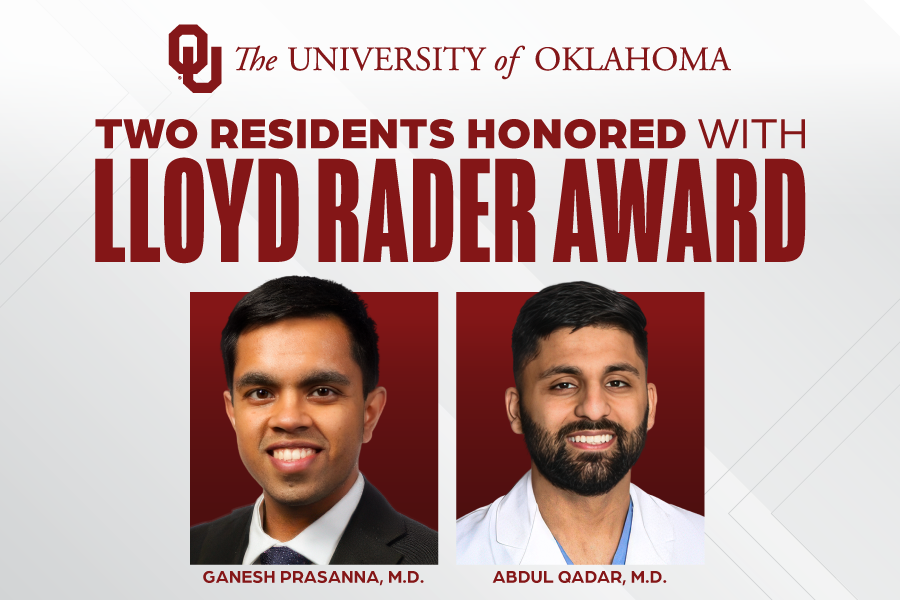
The University of Oklahoma College of Medicine has honored two residents with the Lloyd Rader Award, which recognizes outstanding clinical and research achievements in residency.
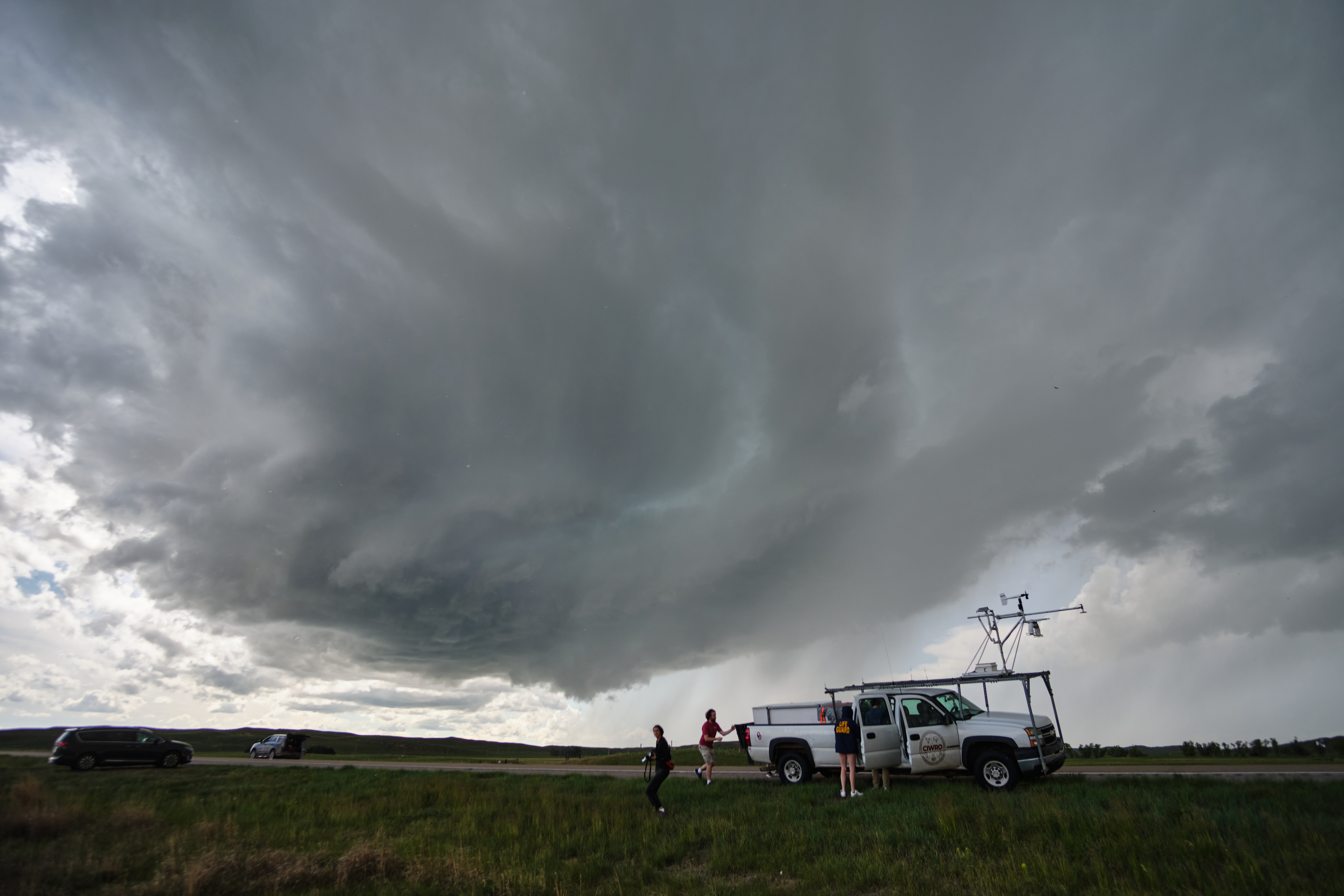
The University of Oklahoma will receive up to $220 million over five years from the U.S. Department of Commerce and the National Oceanic and Atmospheric Administration to continue the life-saving weather research led by the OU-NOAA Cooperative Institute for Severe and High-Impact Weather Research and Operations, extending a nearly 50-year partnership that has helped give Americans earlier, more accurate weather warnings
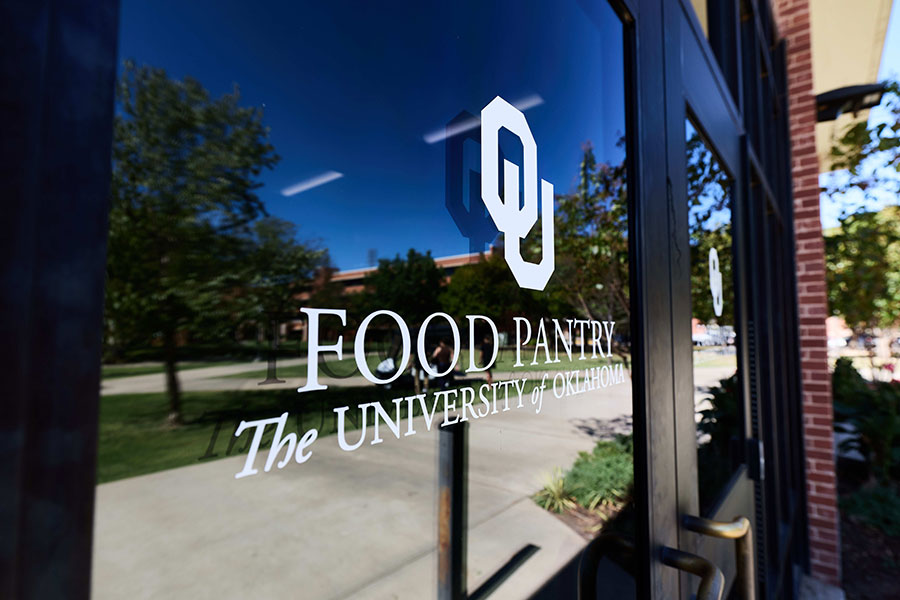
The OU Food Pantry won the annual Red River Food Fight, collecting 31,815.9 pounds of shelf-stable food and drinks to top UT Outpost’s 22,567 pounds. OU has won the competition four years in a row.