NEWS

NORMAN, Okla. – A new study tracking soil microbial communities across six years of experimental drought in a tallgrass prairie finds that prolonged water stress diminishes biodiversity, pushing communities toward less predictable, harder-to-reverse configurations.
The findings, published in the Proceedings of the National Academy of Sciences, fill a knowledge gap that has posed an obstacle to adaptation and conservation policy.
“We've known for a long time that aboveground plant communities respond to drought, but what's been happening belowground has been much harder to see,” said Jizhong Zhou, director of the Institute for Environmental Genomics at the University of Oklahoma, George Lynn Cross Research Professor in the School of Biological Sciences and senior author. “Now that we have six years of continuous data, what we're finding is that soil communities don't just stress under drought; they drift, and the further they drift, the less certain recovery becomes.”
Soil microbes underpin nearly every major ecosystem process, from decomposing organic matter to cycling carbon, nitrogen and sulfur through the soil. Despite their importance, scientists have had little data on how these communities change over time under sustained stress like warming and drought, largely because continuous, multi-year field experiments are rare.
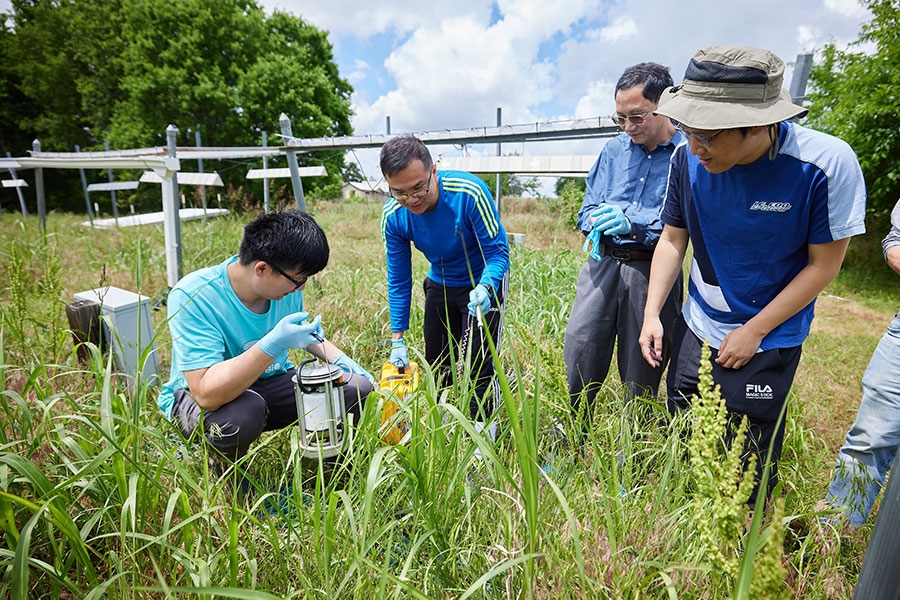
The research team conducted annual ecosystem surveys and soil sampling at a tallgrass prairie site over six years, comparing plots subjected to experimental drought against controls. The results showed a consistent, progressive decline in microbial biodiversity across all three major kingdoms — bacteria, fungi and protists — a cross-kingdom pattern not previously documented in drought research.
Beyond species loss, the communities themselves grew increasingly dissimilar over time. Drought accelerated the natural process of ecological succession, pushing microbial communities toward more divergent configurations. At the same time, it strengthened deterministic environmental filtering, essentially narrowing the range of organisms that could survive, paradoxically reducing variability and locking communities into altered states.
The ecological costs appear to be both functional and compositional. As biodiversity declined, so did the relative abundance of genes responsible for key nutrient cycling processes. Statistical modeling confirmed that these functional shifts connect to measurable changes in soil nutrient storage and broader ecosystem health.
The researchers caution that sustained drought may weaken the microbial foundation on which ecosystems rely, reducing their capacity to recover from future stressors and increasing their vulnerability to further degradation.
About the University of Oklahoma
Founded in 1890, the University of Oklahoma is a public research university located in Norman, Oklahoma. As the state’s flagship university, OU serves the educational, cultural, economic and healthcare needs of the state, region and nation. For more information about the university, visit www.ou.edu.
The University of Oklahoma College of Medicine has honored two residents with the Lloyd Rader Award, which recognizes outstanding clinical and research achievements in residency.
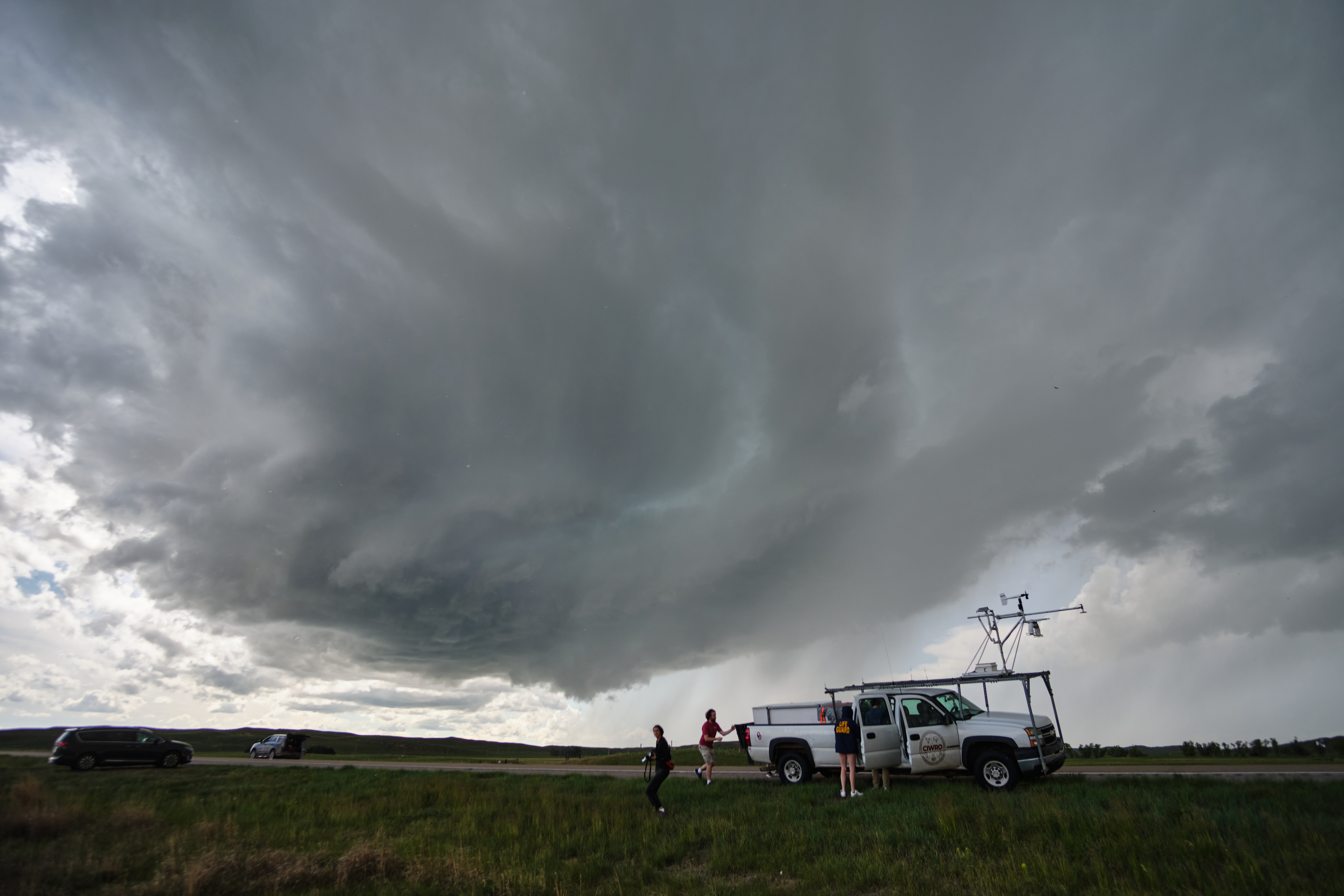
The University of Oklahoma will receive up to $220 million over five years from the U.S. Department of Commerce and the National Oceanic and Atmospheric Administration to continue the life-saving weather research led by the OU-NOAA Cooperative Institute for Severe and High-Impact Weather Research and Operations, extending a nearly 50-year partnership that has helped give Americans earlier, more accurate weather warnings
The OU Food Pantry won the annual Red River Food Fight, collecting 31,815.9 pounds of shelf-stable food and drinks to top UT Outpost’s 22,567 pounds. OU has won the competition four years in a row.