NEWS

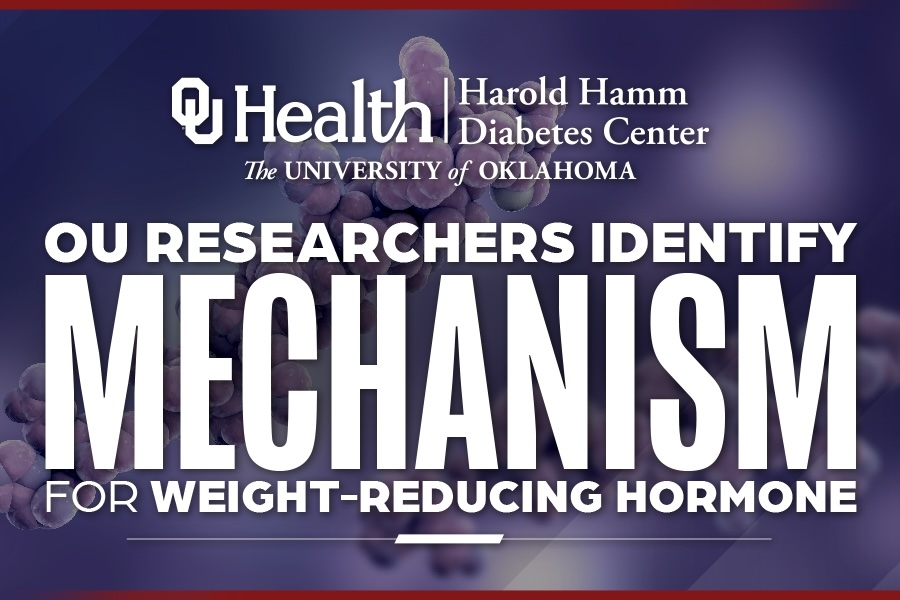
OKLAHOMA CITY – A hormone that reverses obesity in mice appears to work by signaling to a brain region involved in metabolism and appetite regulation, the same area targeted by the popular GLP-1 drugs. The finding, from University of Oklahoma researchers, is published in Cell Reports.
The study provides valuable new insight into the naturally occurring hormone, called FGF21 (fibroblast growth factor 21), which is already involved in drug development. Drugs that target the pathway of this hormone are currently being examined in clinical trials for the treatment of MASH (metabolic dysfunction-associated steatohepatitis), a form of fatty liver disease.
Researcher Matthew Potthoff, Ph.D., is the lead author of the study, which demonstrates that the hormone produces its beneficial effects by signaling to the hindbrain, or the lower back region of the brain.
“In our previous studies, we found that FGF21 signals to the brain instead of the liver, but we didn’t know where in the brain,” said Potthoff, a professor of biochemistry and physiology in the OU College of Medicine and deputy director of OU Health Harold Hamm Diabetes Center. “We thought we would find that it signaled to the hypothalamus (which is widely implicated in body weight regulation), so we were very surprised to discover that the signal was to the hindbrain, which is where the GLP-1 analogs are believed to act.”
Specifically, FGF21 signals to a part of the hindbrain known as the nucleus of the solitary tract (NTS) and the area postrema (AP). The NTS and AP essentially make a “phone call” to a different brain region called the parabrachial nucleus, a signaling process that is necessary for FGF21 to exert its beneficial metabolic effects to reduce body weight.
“This brain circuit seems to be mediating the effects of FGF21,” Potthoff said. “We hope that by identifying the specific circuit, it can help in the creation of more targeted therapies that are effective without negative side effects. FGF21 analogues have side effects like gastrointestinal issues and, in some cases, bone loss.”
Although they target the same area of the brain, FGF21 and GLP-1 act in different ways. GLP-1 works by reducing food intake, whereas FGF21 increases the metabolic rate, which burns energy and leads to weight loss.
Ultimately, Potthoff hopes to see a new drug for weight loss and MASH.
“While this study focused on the mechanism of FGF21 to reduce body weight, additional studies are necessary to examine whether this circuit also mediates the ability of FGF21 and FGF21 analogues to reverse MASH,” he said.
About the project
“Pharmacological administration of FGF21 reverses obesity through a parabrachial-projecting neuron population in the hindbrain,” can be found at https://www.cell.com/cell-reports/fulltext/S2211-1247(26)00171-3.
About the University of Oklahoma
Founded in 1890, the University of Oklahoma is a public research university with campuses in Norman, Oklahoma City and Tulsa. As the state’s flagship university, OU serves the educational, cultural, economic and health care needs of the state, region and nation. In Oklahoma City, the OU Health Campus is one of the nation’s few academic health centers with seven health profession colleges located on the same campus. The OU Health Campus serves approximately 4,000 students in more than 70 undergraduate and graduate degree programs spanning Oklahoma City and Tulsa and is the leading research institution in Oklahoma. For more information about the OU Health Campus, visit www.ouhsc.edu.
One in eight Oklahomans has type 2 diabetes, and an estimated one-third of the state’s adult population has undiagnosed prediabetes. University of Oklahoma researchers are developing a digital outreach program to help people understand their risk and connect with resources to help prevent the disease.
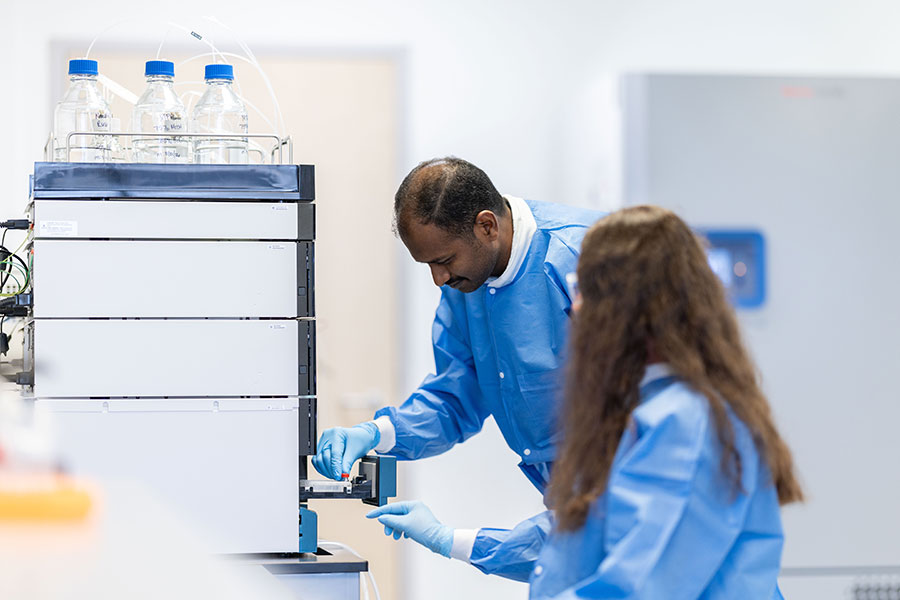
The Presbyterian Health Foundation has provided a grant for the University of Oklahoma College of Pharmacy to obtain its first liquid chromatography mass spectrometry equipment system. This acquisition expands the health campus’s ability to turn research into real-world impact.
Armed with a new five-year, $3.4 million grant from the National Institutes of Health, OU healthcare leaders are building the first chronic pain mHealth intervention app made with and for Native Americans.