NEWS

OKLAHOMA CITY – Results from a Phase 3 clinical trial offer new hope for patients with previously treated advanced pancreatic cancer, showing the experimental drug daraxonrasib significantly extended survival compared with chemotherapy alone. Researchers at the University of Oklahoma Health Stephenson Cancer Center enrolled patients in the global trial.
The clinical trial found that patients taking daraxonrasib had a median overall survival of 13.2 months compared with 6.7 months for those treated with chemotherapy. The drug also delayed the progression of the disease. In earlier trials, investigators reported the drug was well tolerated, with manageable side effects and no new safety concerns.
“Pancreatic cancer remains one of the most difficult cancers to treat – overall survival is less than a year with chemotherapy as the frontline treatment – so seeing this kind of improvement in survival is extremely encouraging. For patients whose cancer has progressed after prior treatment, these results suggest a promising new option that may help them live longer and maintain their quality of life,” said Susanna Ulahannan, M.D., OU Health oncologist and associate professor in the OU College of Medicine, who was the principal investigator for the trial at OU Health Stephenson Cancer Center.
According to a press release, Revolution Medicines, the sponsor of the trial, plans to submit the data to health regulators, including the U.S. Food and Drug Administration, as part of an application for approval.
Daraxonrasib works by targeting RAS proteins, mutations of which are present in more than 90% of pancreatic cancers and fuel tumor growth. The clinical trial included patients with many different RAS mutations, as well as patients whose tumors did not have an identified mutation. Researchers say daraxonrasib is the first in a new class of medicines designed to block these cancer-driving proteins.
“What makes this therapy especially exciting is that it targets the most common biological driver of pancreatic cancer,” Ulahannan said. “By blocking mutated RAS proteins that help tumors grow, this drug represents a new and highly targeted approach to treatment.”
The clinical trial, called RASolute 302, is a global Phase 3 study evaluating daraxonrasib as a single-drug treatment given orally to patients with previously treated advanced pancreatic cancer. Researchers hope the findings will help pave the way for a new standard treatment option for this aggressive disease.
For more information about the study, visit https://clinicaltrials.gov/study/NCT06625320.
About the University of Oklahoma
Founded in 1890, the University of Oklahoma is a public research university with campuses in Norman, Oklahoma City and Tulsa. As the state’s flagship university, OU serves the educational, cultural, economic and health care needs of the state, region and nation. In Oklahoma City, the OU Health Campus is one of the nation’s few academic health centers with seven health profession colleges located on the same campus. The OU Health Campus serves approximately 4,000 students in more than 70 undergraduate and graduate degree programs spanning Oklahoma City and Tulsa and is the leading research institution in Oklahoma. For more information about the OU Health Campus, visit www.ouhsc.edu.
OU Health Stephenson Cancer Center and its activities are made possible in part through funding from the Oklahoma Tobacco Settlement Endowment Trust (TSET).
The University of Oklahoma has received a transformative gift from Jon and Shannon McCartney, which will name the McCartney Family Tunnel of Champions, the McCartney Family Gate of the Gaylord Family - Oklahoma Memorial Stadium and the McCartney Family Grand Lecture Hall in the Michael F. Price College of Business. The gift will also support the Inspiring Champions and the Athletic Director’s Discretionary Fund, in addition to establishing the McCartney DFW Career Trek program at Price College.
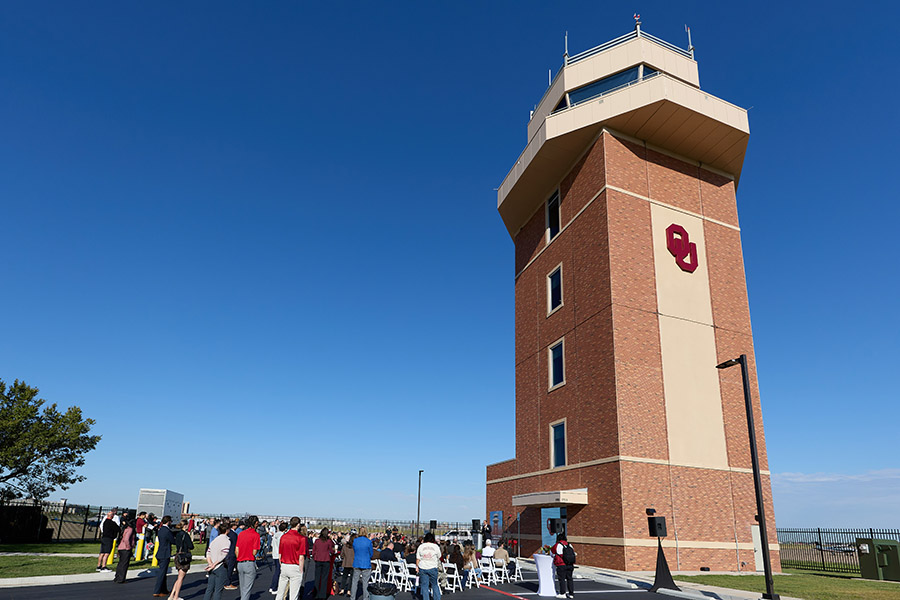
The University of Oklahoma today celebrated the opening of a new air traffic control tower at the OU Max Westheimer Airport. Standing 106 feet tall, more than double the current 52-foot facility, the new tower will modernize air traffic control operations and improve safety for pilots and students operating in the airspace.
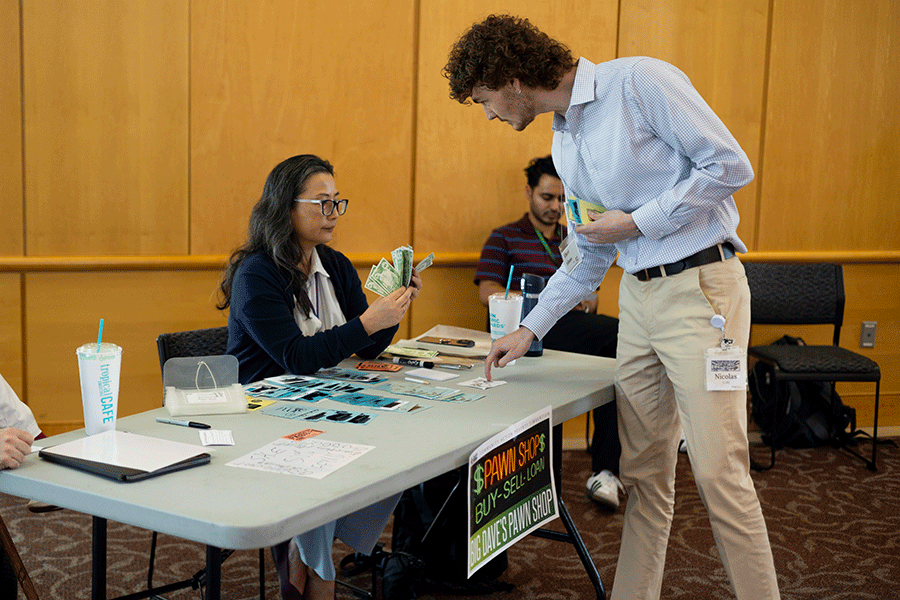
Do I buy groceries or pay the electric bill? Should I pawn some of my belongings to afford my prescription? My child is sick, so I will have to miss work to take care of him. Those are just a few of the difficult choices that OU-Tulsa health professional students confronted during the Community Access to Resources Experience. The role-playing activity challenged students to navigate the financial, family and other pressures that can affect a person’s health and ability to follow medical advice. Held annually during the SCM Institute orientation week, the experience is designed to generate understanding and build empathy.