NEWS

NORMAN, Okla. – A decade-long partnership between the University of Oklahoma and Southcentral Foundation, an Alaska Native-owned, nonprofit health care organization based in Anchorage, Alaska, has been awarded a five-year grant from the National Institutes of Health to grow and strengthen a research workforce serving American Indian and Alaska Native (AI/AN) communities.
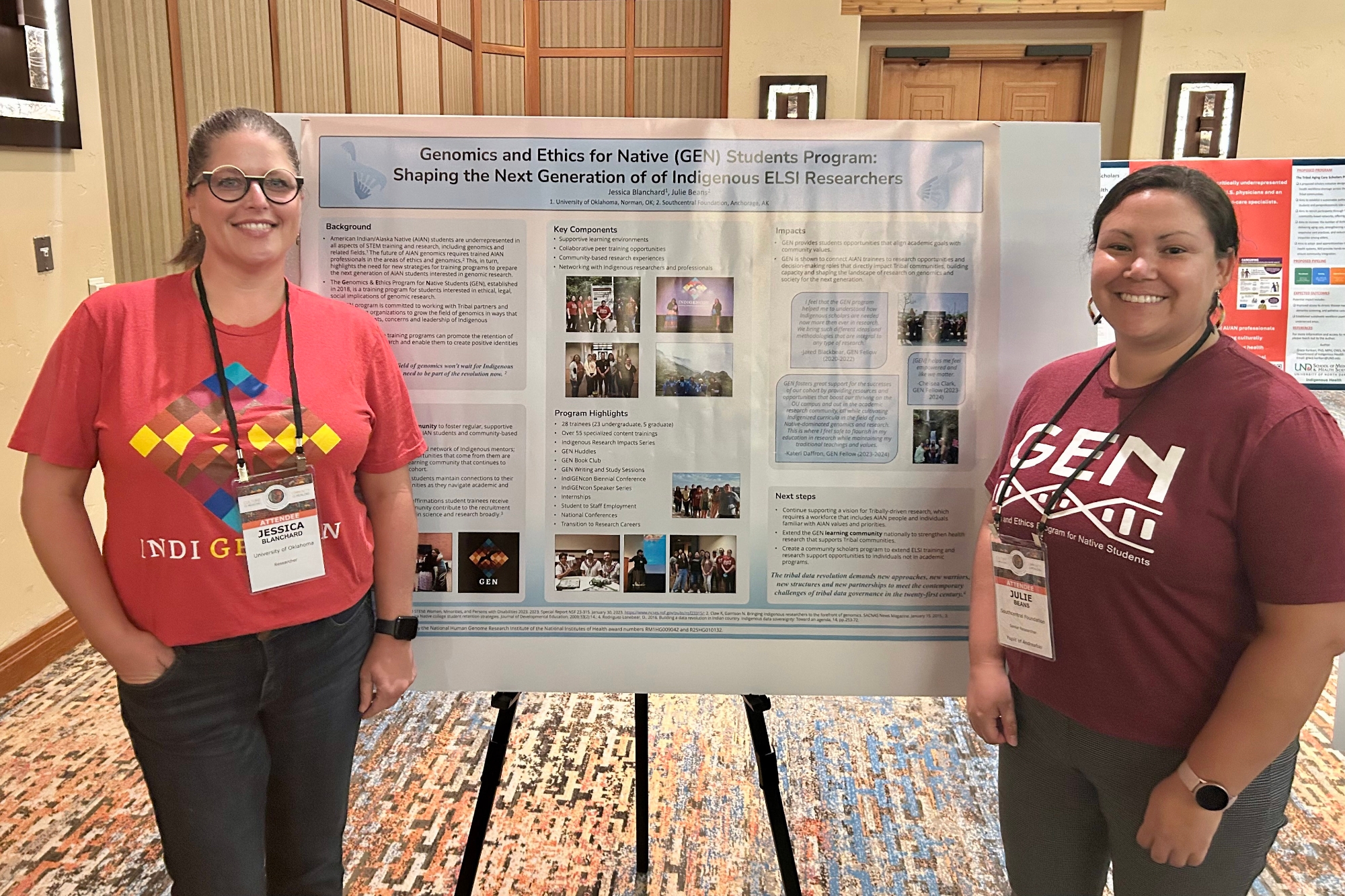
The program, called GEN4, is co-led by Jessica Blanchard, Ph.D., senior research scientist at OU’s Center for Applied Social Research, and Julie Beans, MPH, (Yup’ik/Oneida) at Southcentral Foundation. It marks the latest chapter in a collaboration that has produced a string of federally funded initiatives aimed at growing a biomedical research workforce that serves American Indian and Alaska Native communities. Over the five-year award, the initiative could train as many as 200 people.
According to Blanchard, that work takes more than just scientific training — it requires an understanding of the jurisdictional, cultural, legal and political histories that shape Tribal nations and of how much Tribal settings can differ from one another. GEN4 is designed to build that understanding directly into the training opportunities, pairing trainees across the country with a national network of mentors experienced in Tribal health research and in the Tribal health systems that serve AI/AN communities.
“We’re trying to grow Tribal health research that serve Tribal communities,” Blanchard said. “Growing the number of investigators focused on AI/AN health is critical, but sustainable research also requires trained staff at every level.”
GEN4 is open to a national pool of applicants with all levels of research experience, including undergraduate students, early career investigators, plus community members and others already working or interested in working in AI/AN health settings. “If we have an opportunity to build research skills and grow research capacity in the Tribal health systems that are already serving their communities, then that’s absolutely something we want to support," she said.
GEN4 has two components. The Fall/Spring Training Series will offer an annual series of trainings and activities to support Tribal health research, largely virtual, with in-person opportunities built into the academic year. The Spring/Summer Immersive Program (SIP) is a place-based learning experience that puts trainees directly into community-based research settings, working alongside mentors in Tribal health environments. The SIP involves opportunities to participate in one intensive week of learning and mentorship in Oklahoma (April 2027), and another week in Alaska (May 20027).
Blanchard said the program’s emphasis on place-based learning grew directly out of experience with the earlier GEN program. Traveling with trainees to real communities and health settings, rather than teaching about the topics in the classroom, leaves a lasting mark and has inspired a sense of service and commitment to research careers in tribal settings.
A team of 11 mentors from across the country will guide trainees through both components, sharing their expertise and providing a personal connection for trainees to learn about Tribal health research in practice.
“One of the lessons we learned from the early GEN program was the importance of mentors who understood the trainees,” Blanchard said. “In the context of promoting Tribal health research, you really need mentors and partners who understand the specific priorities of the communities.”
Applications for the first Spring/Summer Immersive Program cohort will open in December 2026, with the first Fall/Spring Training Series cohort beginning August 2027. Individuals who are interested in learning more can sign up here.
Funding for GEN4 is provided by the National Institute of General Medical Sciences, R25GM167234.
About the University of Oklahoma
Founded in 1890, the University of Oklahoma is a public research university located in Norman, Oklahoma. As the state’s flagship university, OU serves the educational, cultural, economic and healthcare needs of the state, region and nation. For more information about the university, visit www.ou.edu.
The University of Oklahoma has received a transformative gift from Jon and Shannon McCartney, which will name the McCartney Family Tunnel of Champions, the McCartney Family Gate of the Gaylord Family - Oklahoma Memorial Stadium and the McCartney Family Grand Lecture Hall in the Michael F. Price College of Business. The gift will also support the Inspiring Champions and the Athletic Director’s Discretionary Fund, in addition to establishing the McCartney DFW Career Trek program at Price College.
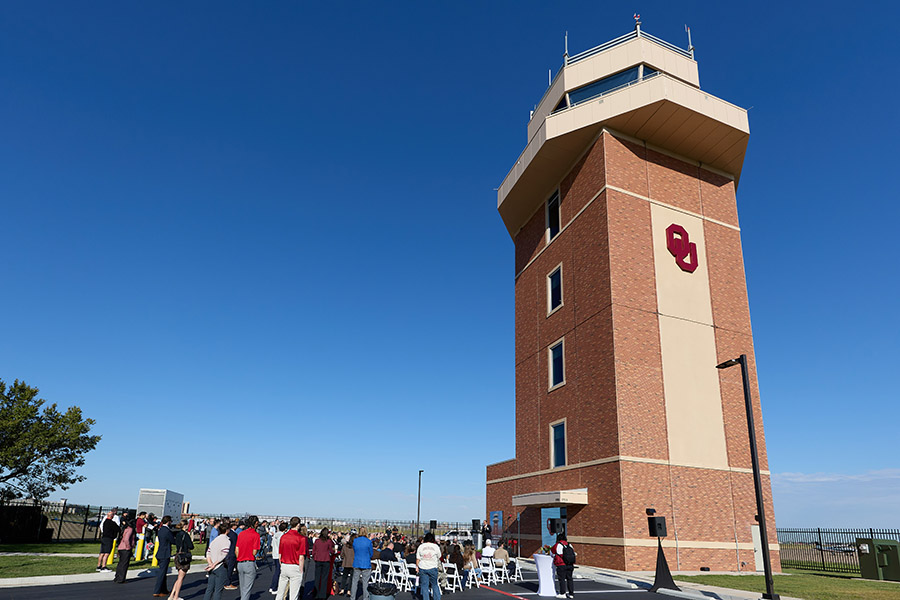
The University of Oklahoma today celebrated the opening of a new air traffic control tower at the OU Max Westheimer Airport. Standing 106 feet tall, more than double the current 52-foot facility, the new tower will modernize air traffic control operations and improve safety for pilots and students operating in the airspace.
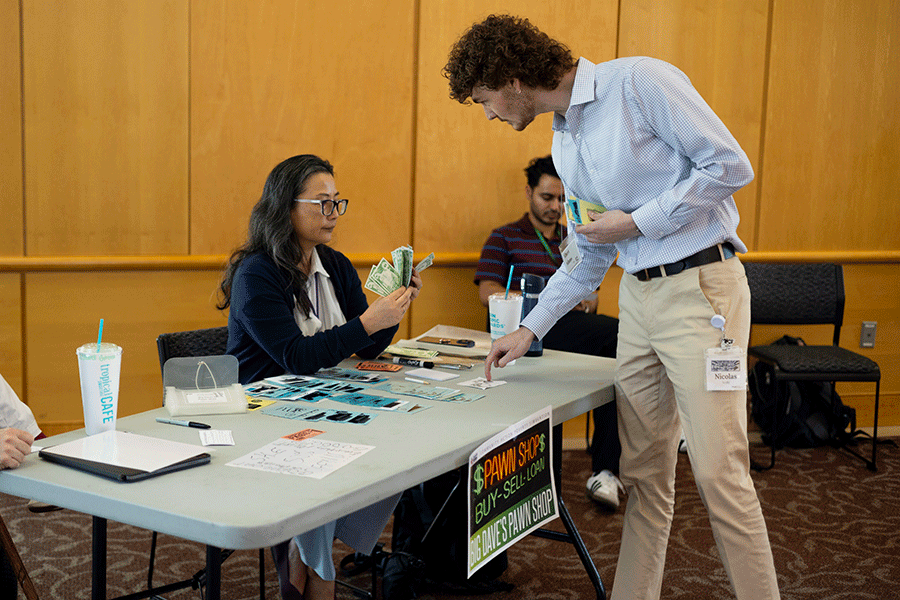
Do I buy groceries or pay the electric bill? Should I pawn some of my belongings to afford my prescription? My child is sick, so I will have to miss work to take care of him. Those are just a few of the difficult choices that OU-Tulsa health professional students confronted during the Community Access to Resources Experience. The role-playing activity challenged students to navigate the financial, family and other pressures that can affect a person’s health and ability to follow medical advice. Held annually during the SCM Institute orientation week, the experience is designed to generate understanding and build empathy.