NEWS

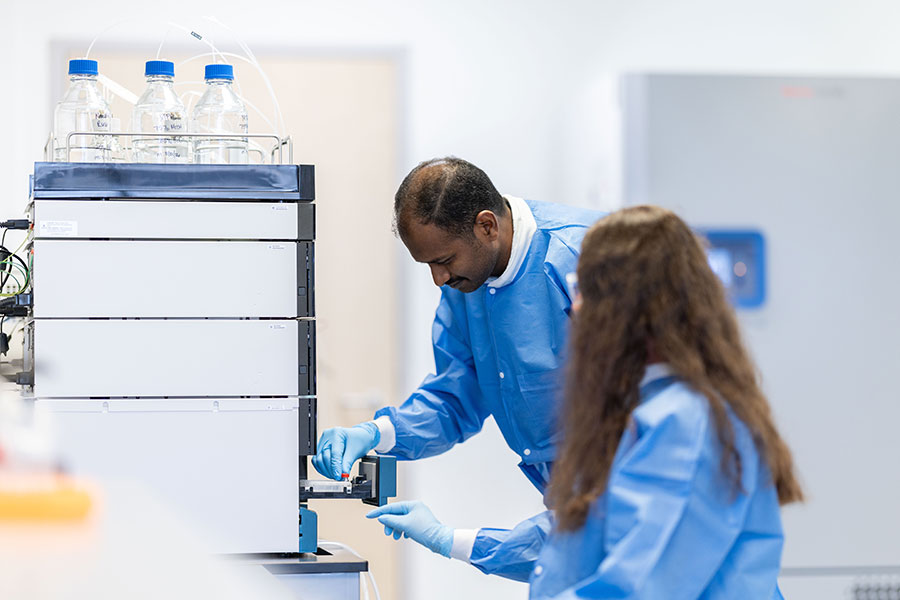
NORMAN, Okla. – Driven by a need for improved therapies to treat diseases, the pharmaceutical industry is shifting from traditional “small molecules” toward “biologic” medicines like antibodies, which now account for nearly 50% of the global research and development pipeline. These medicines are produced by advanced bioprocessing manufacturing processes. The University of Oklahoma’s Gallogly College of Engineering has taken a historic step in advancing workforce innovation with the launch of OU’s first official micro-credential program, focused on the high-growth field of bioprocessing.
Leveraging the College’s state-of-the-art Bioprocessing Core Facility (OU BPCF), the new Bioprocessing Micro‑Credentialing Program responds directly to the rapidly expanding needs of the biotechnology and biomanufacturing industries. The program reflects OU’s commitment to strengthening Oklahoma’s bioeconomy and modernizing technical training pathways for learners at every stage of their careers. As the first micro‑credential offered by OU, it establishes a model for flexible, industry‑aligned learning that keeps pace with evolving workforce demands.
“This is more than a micro-credential; it’s a catalyst for Oklahoma’s bio‑driven economy,” said John Klier, Dean of the Gallogly College of Engineering. “OU is proud to lead the way in delivering innovative, industry‑aligned training that empowers learners and advances our state.”
Biomanufacturing is accelerating nationwide as the need for cell therapies, vaccines, biologics and bio‑based products intensifies. With Oklahoma emerging as a competitive player in the sector through strategic investment and industry growth, the need for a skilled, job‑ready workforce has become paramount.
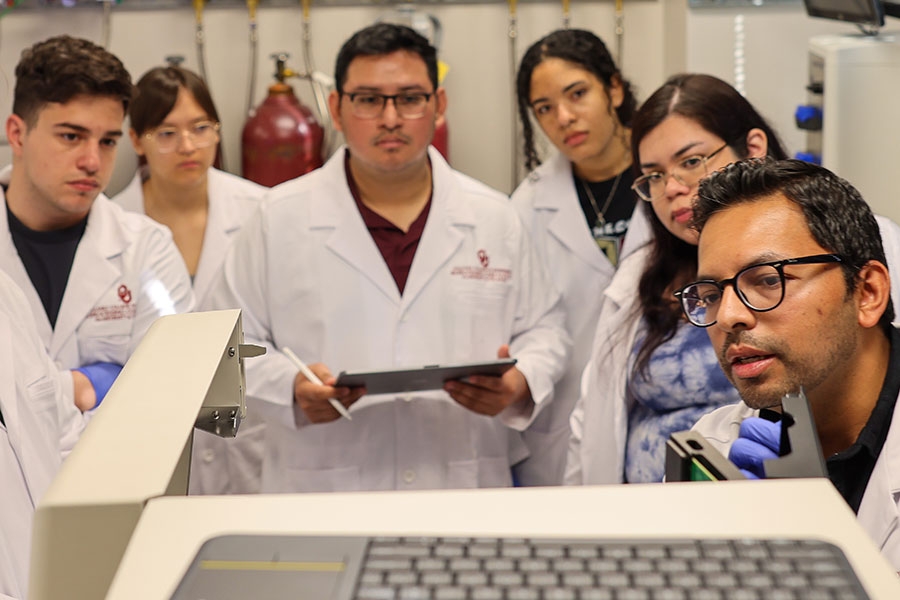
The OU Bioprocessing Micro-Credentialing Program addresses this need through hands-on workshops built around real-world technologies used in biopharma and advanced manufacturing. Designed by OU faculty and operational experts, the workshops combine foundational theory with immersive, application‑driven experience. Participants who complete the required workshops earn an OU‑verified digital credential demonstrating competency in critical bioprocessing skills.
This launch serves as the foundation for a broader ecosystem of stackable credentials aimed at strengthening Oklahoma’s biotech talent pipeline, supporting employers, empowering career‑seekers and reinforcing OU’s role in driving regional economic development. Supported by collaboration across OU and investments from the U.S. Economic Development Administration, the initiative marks a new era in how universities meet workforce needs.
For more information about the OU Bioprocessing Core Facility and registration details, visit the OU Bioprocessing Core Facility or email bioprocessing@ou.edu.
About the University of Oklahoma
Founded in 1890, the University of Oklahoma is a public research university located in Norman, Oklahoma. As the state’s flagship university, OU serves the educational, cultural, economic and healthcare needs of the state, region and nation. For more information about the university, visit www.ou.edu.
One in eight Oklahomans has type 2 diabetes, and an estimated one-third of the state’s adult population has undiagnosed prediabetes. University of Oklahoma researchers are developing a digital outreach program to help people understand their risk and connect with resources to help prevent the disease.
The Presbyterian Health Foundation has provided a grant for the University of Oklahoma College of Pharmacy to obtain its first liquid chromatography mass spectrometry equipment system. This acquisition expands the health campus’s ability to turn research into real-world impact.
Armed with a new five-year, $3.4 million grant from the National Institutes of Health, OU healthcare leaders are building the first chronic pain mHealth intervention app made with and for Native Americans.