NEWS


NORMAN, Okla. – The University of Oklahoma hosted “America’s Subsurface Advantage: Energy Dominance, Critical Minerals, and National Security” on Friday, Sept. 25, bringing together around 150 leaders from industry, government, national laboratories and universities to explore how America’s subsurface resources can become a lasting competitive advantage. The symposium focused on three areas grounded in subsurface science and engineering: shale energy, geothermal energy and critical minerals.
“We need more engineers, geoscientists, entrepreneurs and leaders who understand both the technical challenges and the larger strategic importance of that. This is why gatherings like this one today matter,” said Ken Waits, OU regent and president and CEO of Mewbourne Oil Company, during his opening remarks. “No single company, university or government agency can solve these challenges alone. We need the expertise of the industry, the research capabilities of universities like OU, national labs, and public policy that allows innovation and investment to move forward.”
The event was hosted by the Mewbourne College of Earth and Energy, the Gallogly College of Engineering, the Price College of Business, the College of Law and the Vice President for Research and Partnerships. The morning began with “A Conversation on America’s Energy Future,” a fireside chat between John Antonio, Ph.D., dean of the Mewbourne College of Earth and Energy, and Kyle Haustveit, Under Secretary of Energy for the U.S. Department of Energy (DOE), who earned his MBA in energy from OU. A petroleum engineer and former Devon Energy executive, Haustveit provides strategic leadership across DOE offices that deliver affordable, reliable and secure energy to the country.
“Humans with access to energy live longer and more prosperous lives. Plain and simple, the strongest correlation to human prosperity and flourishing is energy consumption,” said Haustveit.
Three panel discussions followed the keynote. “The Future of Shale Resources,” moderated by Waits, featured executives from BPX Energy, Diamondback Energy and Continental Resources. “The Geothermal Frontier,” moderated by OU professor Ahmad Ghassemi, featured experts from Idaho National Laboratory, Sandia National Laboratories and the DOE Office of Geothermal. “Critical Minerals: The New Strategic Resource Challenge,” moderated by Todd Schaef, chief scientist in the Energy and Environmental Directorate at Pacific Northwest National Laboratory, featured leaders from Element3 and SLB.
“Affordable, reliable, abundant energy underpins economic prosperity; it underpins our national security; and it underpins America’s ability to compete globally,” said Matt Hulver, OU vice president for research and partnerships. “Energy security is national security.”
Energy is one of four areas anchoring OU’s impact-focused research strategy, alongside health, weather and national security. Building on Oklahoma's deep legacy in domestic energy, the office is advancing subsurface energy systems, critical minerals, carbon management, grid resilience and next-generation energy technologies. Energy is also a strategic research area of Project 200, OU’s generational investment in research, talent and infrastructure, which is recruiting researchers across those same fields under its Secure and Resilient Energy Systems focus. The symposium reflected that commitment, bringing together the industry, government and national laboratory partners needed to turn OU’s discoveries into solutions that strengthen energy security for Oklahoma and the nation.
About the University of Oklahoma
Founded in 1890, the University of Oklahoma is a public research university located in Norman, Oklahoma. As the state’s flagship university, OU serves the educational, cultural, economic and healthcare needs of the state, region and nation. For more information about the university, visit www.ou.edu.
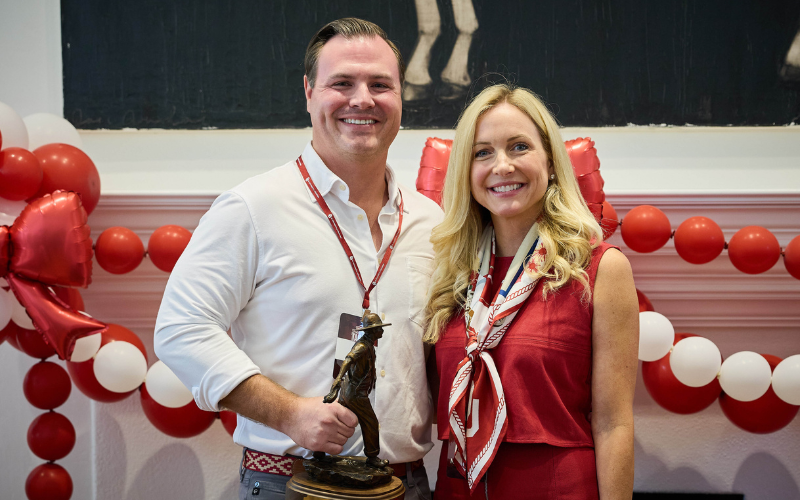
The University of Oklahoma has received a transformative gift from Jon and Shannon McCartney, which will name the McCartney Family Tunnel of Champions, the McCartney Family Gate of the Gaylord Family - Oklahoma Memorial Stadium and the McCartney Family Grand Lecture Hall in the Michael F. Price College of Business. The gift will also support the Inspiring Champions and the Athletic Director’s Discretionary Fund, in addition to establishing the McCartney DFW Career Trek program at Price College.
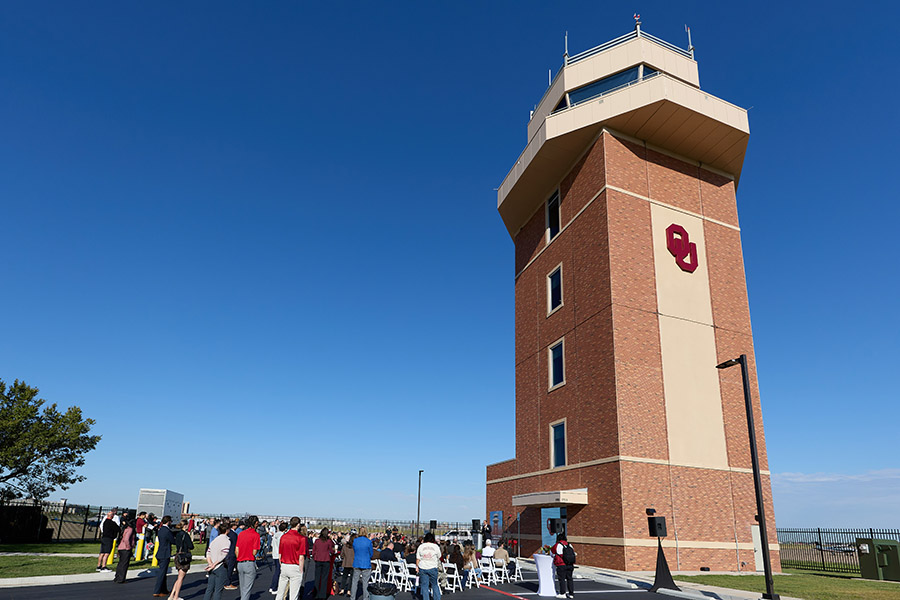
The University of Oklahoma today celebrated the opening of a new air traffic control tower at the OU Max Westheimer Airport. Standing 106 feet tall, more than double the current 52-foot facility, the new tower will modernize air traffic control operations and improve safety for pilots and students operating in the airspace.
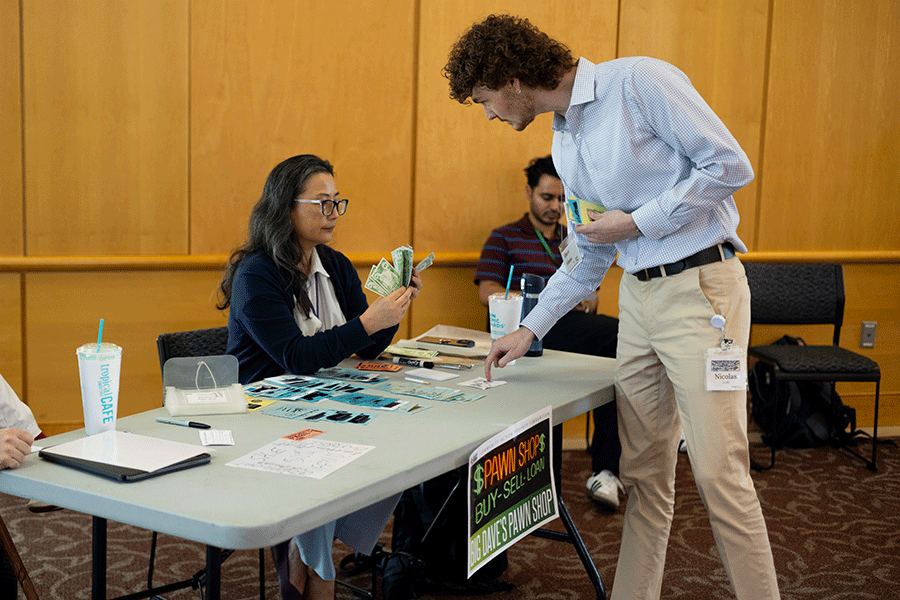
Do I buy groceries or pay the electric bill? Should I pawn some of my belongings to afford my prescription? My child is sick, so I will have to miss work to take care of him. Those are just a few of the difficult choices that OU-Tulsa health professional students confronted during the Community Access to Resources Experience. The role-playing activity challenged students to navigate the financial, family and other pressures that can affect a person’s health and ability to follow medical advice. Held annually during the SCM Institute orientation week, the experience is designed to generate understanding and build empathy.