NEWS

Date
Media Contact
ounews@ou.edu
NORMAN, OKLA. — University of Oklahoma assistant professors John Clegg and Rebecca Scott have developed a structured workshop to help biomedical engineering students compete for graduate research fellowships from the National Science Foundation. These efforts have led to a substantial increase in Biomedical Engineering NSF Graduate Research Fellowship applicants and awardees at OU, placing OU biomedical engineering undergraduate students among the nation’s top performers.
“Our students are tackling the kinds of complex, interdisciplinary problems that will shape the future of medicine and health care,” said John Klier, dean of the Gallogly College of Engineering. “This program gives them the tools and confidence to lead that work. When we invest in their growth as researchers and communicators, we’re also investing in Oklahoma’s future as a hub for biomedical innovation.”
Since Clegg and Scott implemented their program in 2023, nine OU undergraduate biomedical engineering students have been awarded NSF Graduate Research Fellowships, making OU the second-highest rate of NSF GRF awards among peer schools of Biomedical Engineering in the Southeastern Conference.
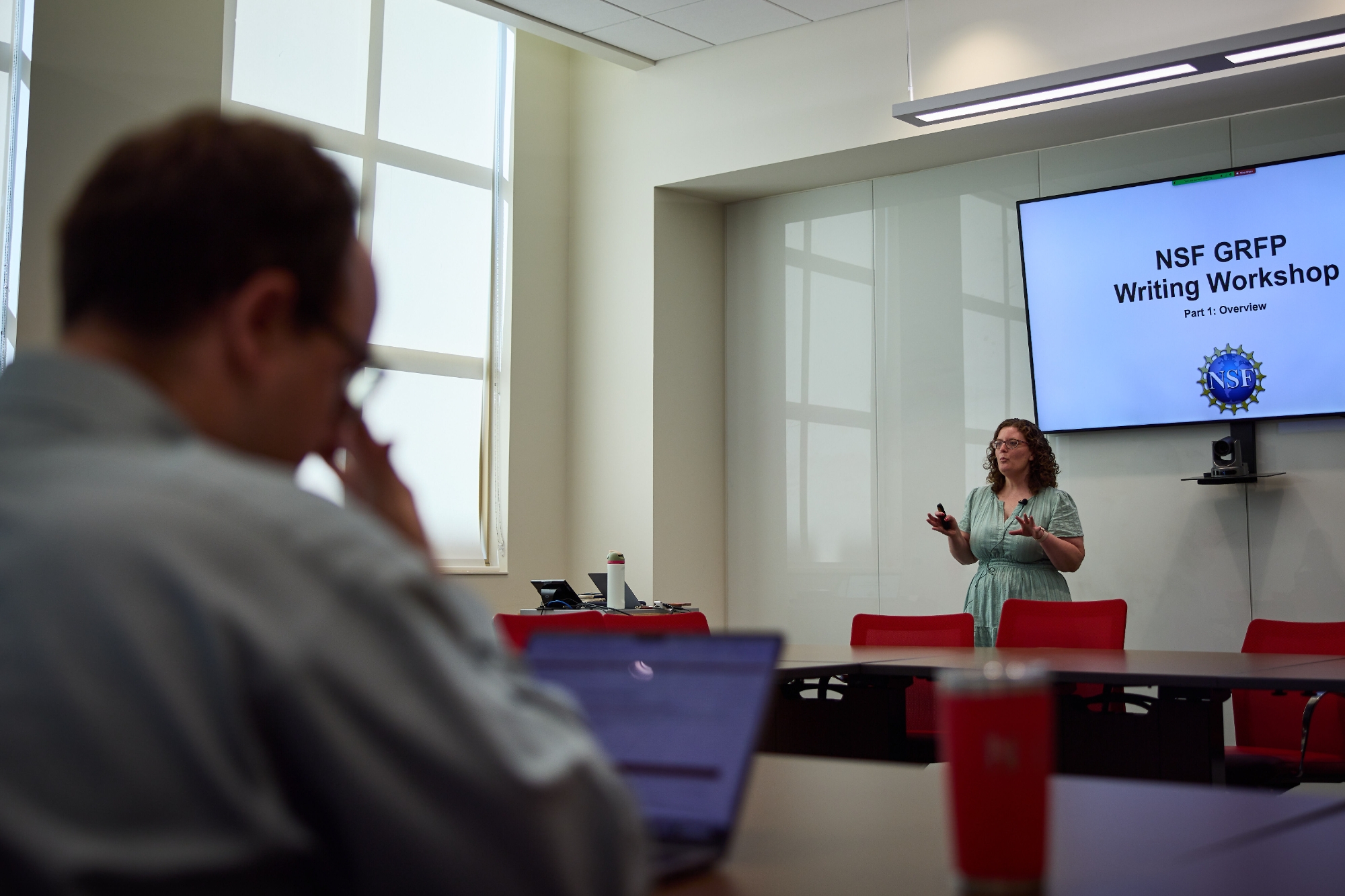
Their annual four-part workshop series prepares students to write competitive applications by demystifying the NSF GRF program selection criteria and emphasizing intellectual merit and broader impacts. The workshop includes personalized feedback on both personal and research statements and culminates in a mock review session that simulates the official NSF review process.
“These awards aren’t just about funding. They’re a national recognition of potential. Our goal is to show our students that they can compete with the best,” said Clegg.
Clegg also emphasized that the program’s success wouldn’t be possible without the university’s broader commitment to undergraduate research.
“We’re just the last step in a long chain. Our students’ achievements reflect the research mentorship they’ve received from faculty and graduate students across campus, starting as early as their freshman year,” he said. “This process is about helping students here in Oklahoma realize they belong in national conversations. When they win, they don’t just advance their careers. They also redefine what’s possible for future students.”
About the University of Oklahoma
Founded in 1890, the University of Oklahoma is a public research university located in Norman, Oklahoma. As the state’s flagship university, OU serves the educational, cultural, economic and health care needs of the state, region and nation. For more information about the university, visit www.ou.edu.
The University of Oklahoma has received a transformative gift from Jon and Shannon McCartney, which will name the McCartney Family Tunnel of Champions, the McCartney Family Gate of the Gaylord Family - Oklahoma Memorial Stadium and the McCartney Family Grand Lecture Hall in the Michael F. Price College of Business. The gift will also support the Inspiring Champions and the Athletic Director’s Discretionary Fund, in addition to establishing the McCartney DFW Career Trek program at Price College.
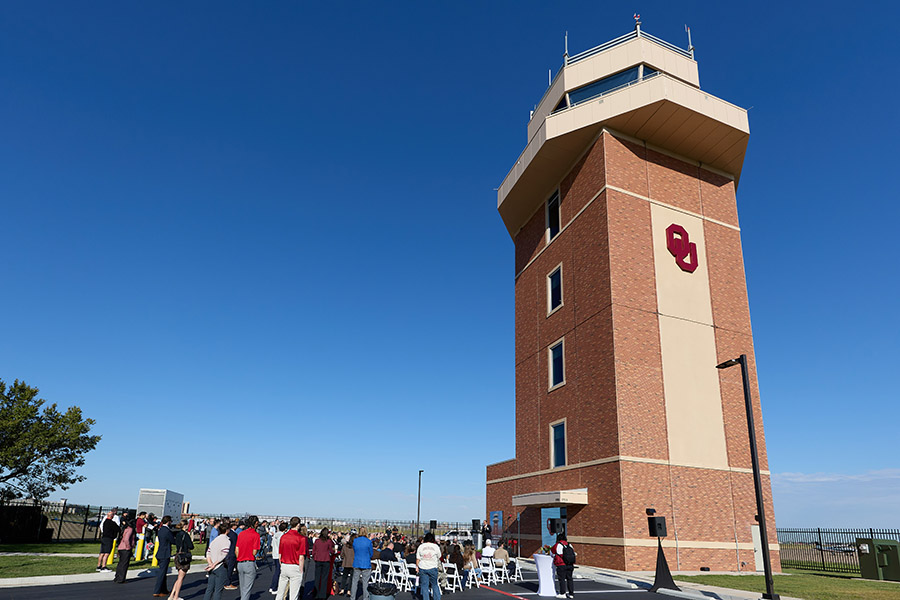
The University of Oklahoma today celebrated the opening of a new air traffic control tower at the OU Max Westheimer Airport. Standing 106 feet tall, more than double the current 52-foot facility, the new tower will modernize air traffic control operations and improve safety for pilots and students operating in the airspace.
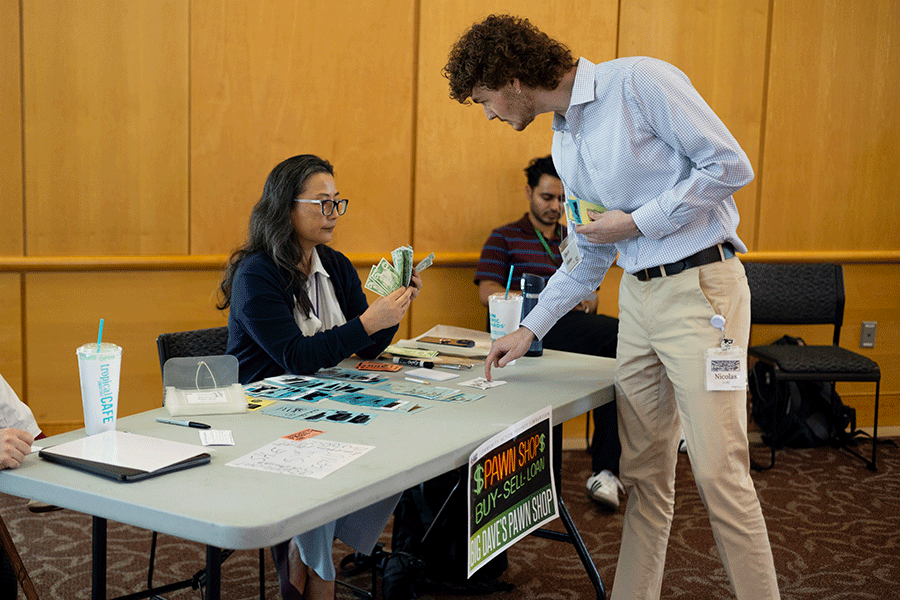
Do I buy groceries or pay the electric bill? Should I pawn some of my belongings to afford my prescription? My child is sick, so I will have to miss work to take care of him. Those are just a few of the difficult choices that OU-Tulsa health professional students confronted during the Community Access to Resources Experience. The role-playing activity challenged students to navigate the financial, family and other pressures that can affect a person’s health and ability to follow medical advice. Held annually during the SCM Institute orientation week, the experience is designed to generate understanding and build empathy.