NEWS

NORMAN, OKLA. – As electric vehicles (EV) race for market share with combustion engines, batteries are posing a major roadblock.
A University of Oklahoma mechanical engineering professor is leading efforts to advance EV battery technologies.
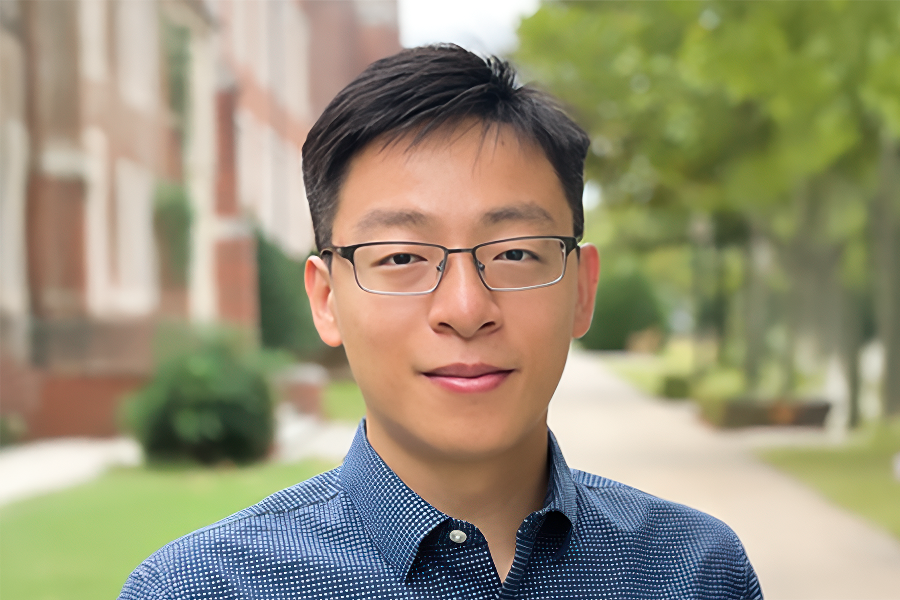
Dong Zhang, an assistant professor at the Gallogly College of Engineering, has been awarded a highly prestigious CAREER Award by the National Science Foundation (NSF), an early-career recognition that comes with a five-year, $556,000 grant to study next-generation batteries.
Because current lithium-ion battery technologies have limited energy density – a measure of how much energy they can store – EVs on the market today need large, heavy fuel packs to achieve desirable driving ranges. An average EV can travel 250 to 300 miles on a full charge, while gas-powered cars can go 300 to 500 miles on a single tank.
To produce batteries with higher energy densities, researchers are exploring advances in battery mechanisms and chemistries. Zhang’s efforts focus on using computational modeling and control algorithms to enhance real-time operational efficiency, improve performance and extend service life.
Researchers know that composite materials for battery electrodes offer higher energy densities compared to single-material electrodes. One compelling example is silicon-graphite composite anodes, which are nearly 10 times more efficient than commercially dominant graphite anodes.
The problem is that silicon particles expand, in some cases, as much as 400%. During the expansion they are prone to cracking, which leads to rapid degradation of how much charge a battery can hold.
It isn’t entirely clear how composite anodes break down over time. Zhang’s NSF-funded work will use computational models to help address this knowledge gap.
“We’re developing physics-based, high-fidelity models to predict the performance of battery cells with silicon and graphite composite material in the anode,” said Zhang.
Key questions the research will explore include understanding mechanical stress generation and volume changes in silicon and graphite particles during charging and discharging, and how these interactions drive battery long-term degradation.
Results could help engineers develop smarter batteries, including those that can optimize silicon-graphite composition and adjust current loads in real-time.
“For example, once silicon particles approach their theoretical operational limits, current could be strategically lowered to create the perfect balance, which in turn is going to provide the longest range while minimizing degradation and safety risks,” Zhang said.
“The goal is to leverage the models and control algorithms we create to make composite anode batteries stay within optimal regimes,” he said. “Building a battery of perfect operational composition can help EVs compete with gas-powered alternatives.”
In addition to battery modelling and control, Zhang’s lab is working on other initiatives to strengthen the EV battery market.
For instance, with support from the Oklahoma Center for the Advancement of Science and Technology (OCAST), Zhang’s lab is designing tools to diagnose battery capacity and health more efficiently, important processes in the so-called “second life” battery market.
Once EV battery packs reach about 70% of their original capacity, car manufacturers typically recommend retirement. But these depleted packs remain viable for non-automotive applications, such as renewable energy and back-up power storage. More accurate, faster diagnostics could decrease recycling costs and accelerate movement into second-life use.
Another project includes work with Oklahoma City-based EV Battery Solutions by Cox Automotive, a national leader in EV battery remanufacturing, repurposing and recycling. Researchers in Zhang’s group are studying ways to improve efficiency in battery pack disassembly and safety of these processes. Zhang is also working with industry and automotive leaders to create fast-charging processes for EV battery cells.
Finally, Zhang is leading a $2.3 million U.S. Department of Energy grant to develop autonomous EV mobility services for public transportation in the City of Atoka. That project is a partnership between the Choctaw Nation, OU, INCA Community Services, and Beep, Inc.
“Collectively, these projects are advancing research that intends to enable high-performance and long-lasting lithium-ion battery energy storage solutions, ultimately promoting the progress of science, and advancing prosperity and welfare,” Zhang said.
About the project
The project, “CAREER: Advancing Modeling and Control of Li-ion Batteries with Composite Electrodes via Distributed Parameter Systems,” is funded by the U.S. National Science Foundation, Award No. 2442042.
About the University of Oklahoma
Founded in 1890, the University of Oklahoma is a public research university located in Norman, Oklahoma. As the state’s flagship university, OU serves the educational, cultural, economic and health care needs of the state, region and nation. For more information about the university, visit www.ou.edu.
The University of Oklahoma College of Medicine has honored two residents with the Lloyd Rader Award, which recognizes outstanding clinical and research achievements in residency.
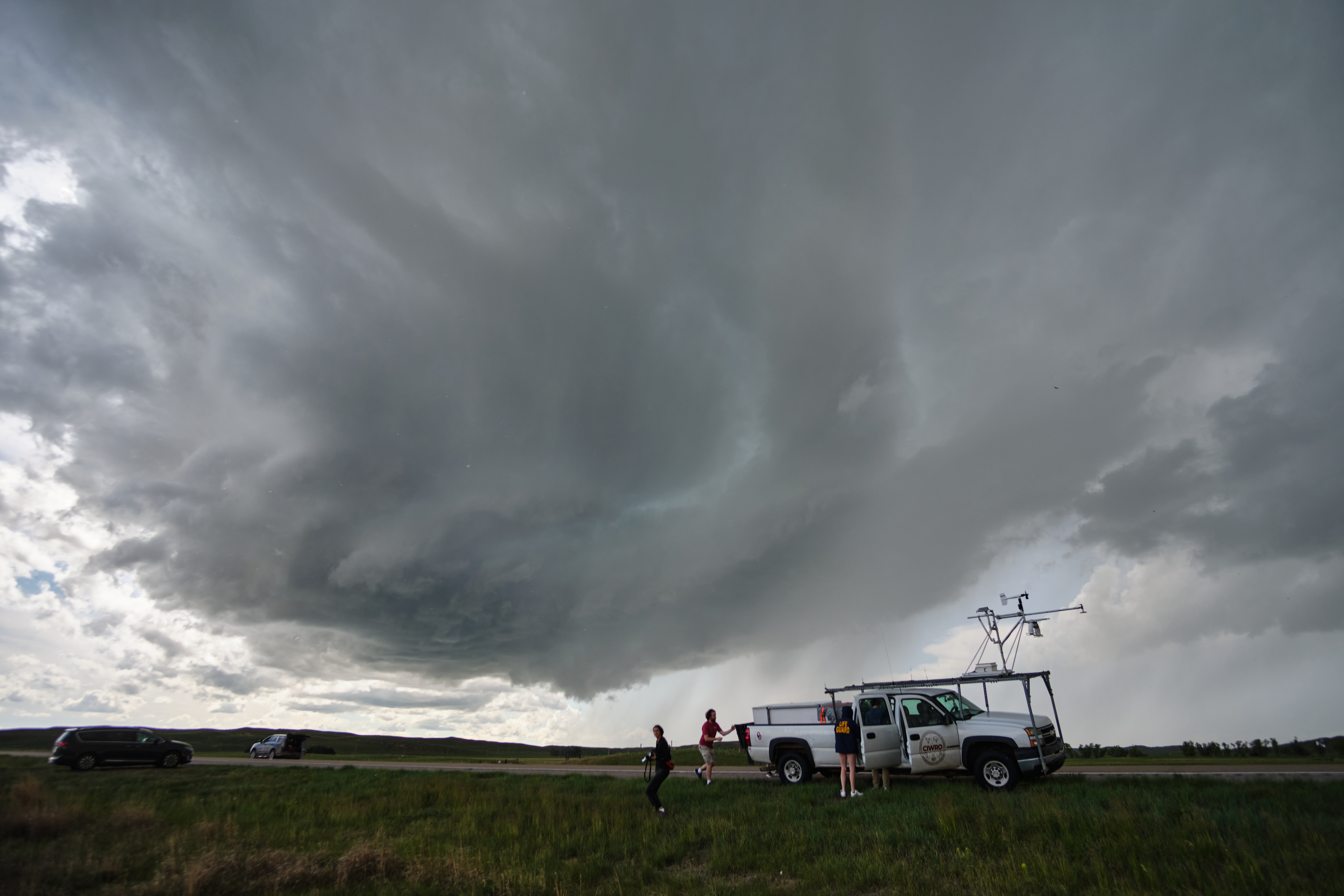
The University of Oklahoma will receive up to $220 million over five years from the U.S. Department of Commerce and the National Oceanic and Atmospheric Administration to continue the life-saving weather research led by the OU-NOAA Cooperative Institute for Severe and High-Impact Weather Research and Operations, extending a nearly 50-year partnership that has helped give Americans earlier, more accurate weather warnings
The OU Food Pantry won the annual Red River Food Fight, collecting 31,815.9 pounds of shelf-stable food and drinks to top UT Outpost’s 22,567 pounds. OU has won the competition four years in a row.