NEWS
By
Greg Bruno
Date
Media Contact
Kat Gebauer
kathryngebauer@ou.edu
NORMAN, Okla. – As any geologist knows, rocks don’t change much, at least not in our lifetime. Their stories are told in layers of silt and sand, measured in millions of years.
But for students at the University of Oklahoma’s Bartell Field Camp in Colorado each summer, those same rocks have the power to spark transformation in just six weeks.
“One of the assignments I have them do is to put down their phones and spend 15 minutes pondering geologic time,” said Shannon Dulin, an assistant professor of geology at the OU School of Geosciences and the field camp director.
“The stuff they come back with – about the scale of things and our relative insignificance, for instance – are the lessons that stay with them.”
Field camp is a rite of passage in geology education. Since the 1950s, OU students have spent summers in Colorado, studying the Cañon City embayment, a geologically unique basin of rocks – some more than a billion years old – nestled between Colorado’s Front Range and Wet Mountains.
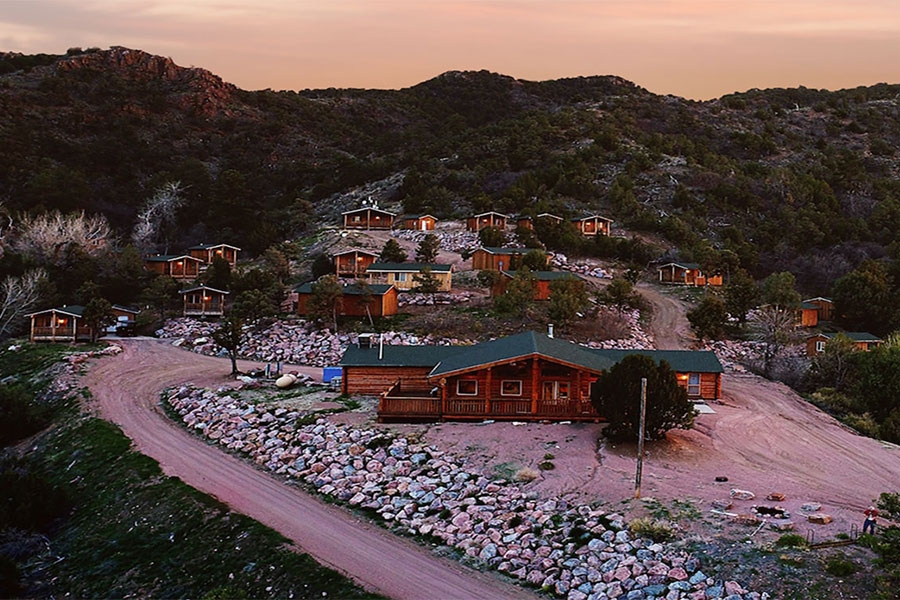
In 2011, with the support of OU geology alumni and guidance from OU graduate Denny Bartell, the camp expanded its scope. Modern living and learning facilities replaced tents and outhouses.
The curriculum was also updated. With funding support from industry donors, students now embark on regional trips that range from Utah to Louisiana, comparing how tectonic forces shaped landscapes across the American West.
“Students see how the local geology fits into the bigger continental picture,” Dulin explained. “They compare folding styles in the Rockies to those in the Sierra Nevada, learning how mountain building and faulting vary across regions.”
Beyond mapping old sediment, Dulin’s curriculum brings a broader, more interconnected perspective. She weaves Indigenous stories, like that of Pele in Hawaiian tradition, into lessons on volcanic rocks. She introduces students to uranium-bearing deposits – and then points out how an indigenous wildflower, the yellow Stanleya, thrives in those same soils, bridging geology and botany.
“This approach opens students up to understanding the interconnectedness of nature,” Dulin said. “Why learn geology? Because it kind of rules everything.”
Field camp itself has evolved alongside changes in technology. In addition to traditional Brunton compasses and printed topographic maps, students now learn to use digital mapping tools like StraboSpot, a software platform developed with funding from the National Science Foundation that allows field notes to be collected and shared digitally.
OU also offers an online version of its field mapping course, increasing accessibility for students who can’t spend six weeks in Colorado. During the COVID-19 pandemic, online enrollments surged to 20 students. Today, it’s closer to five. The in-person camp averages 25 students each summer, with room for up to 40.
Dulin advocates for fieldwork whenever possible. “It can feel herculean,” she said. “Field camp forces you to hike 10 miles a day, to confront stress, to solve problems in real time. It can be very challenging for many students. But later, I get emails saying how much it meant to them.”
Zach Williams, a petroleum geology alumnus who attended camp with Dulin in the summer of 2023, describes it as transformative. Writing of his time in Colorado in a post for the Geological Society of America Foundation, which helped fund his attendance, he recalled both the beauty of the mountains and the physical agony of hiking them for study.
But in the end, it was the lessons of perseverance – and the bonds formed along the way – that resonate.
“Moments such as visiting the Royal Gorge, witnessing the fire-toned sunset on the main cabin’s deck, and being in the presence of friends whom I now call family are moments I will cherish for the rest of my life,” he wrote.
Not every geology student will spend their career in the field, and with technology changing the industry, fieldwork jobs are decreasing every year. But Dulin is convinced the camp builds skills and relationships that go beyond hammering rock.
“I’m not trying to turn every student into a field geologist,” Dulin said. “But the critical thinking, the problem-solving they will do at camp – that puts them at the top of the workforce, whether they go into energy, research or something else entirely.”
“Field camp shows students they can do hard things,” she added, a lesson that stays with them forever. “The rocks may not change, but the students always do.”
About the University of Oklahoma
Founded in 1890, the University of Oklahoma is a public research university located in Norman, Oklahoma. As the state’s flagship university, OU serves the educational, cultural, economic and health care needs of the state, region and nation. For more information about the university, visit www.ou.edu.
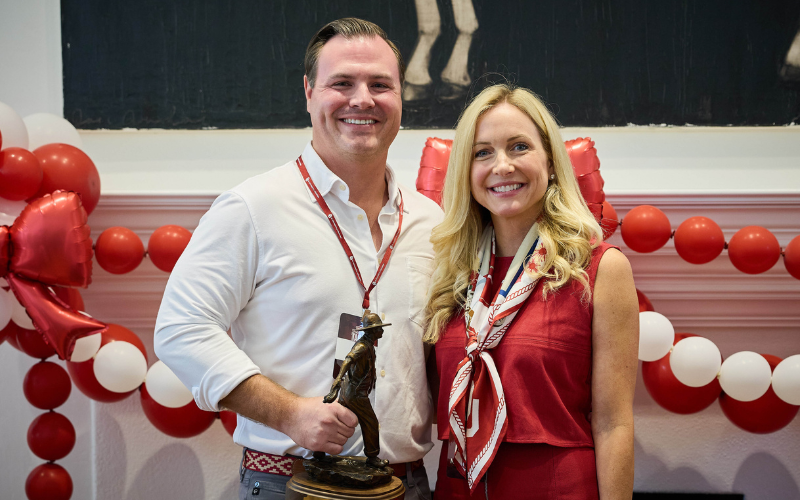
The University of Oklahoma has received a transformative gift from Jon and Shannon McCartney, which will name the McCartney Family Tunnel of Champions, the McCartney Family Gate of the Gaylord Family - Oklahoma Memorial Stadium and the McCartney Family Grand Lecture Hall in the Michael F. Price College of Business. The gift will also support the Inspiring Champions and the Athletic Director’s Discretionary Fund, in addition to establishing the McCartney DFW Career Trek program at Price College.
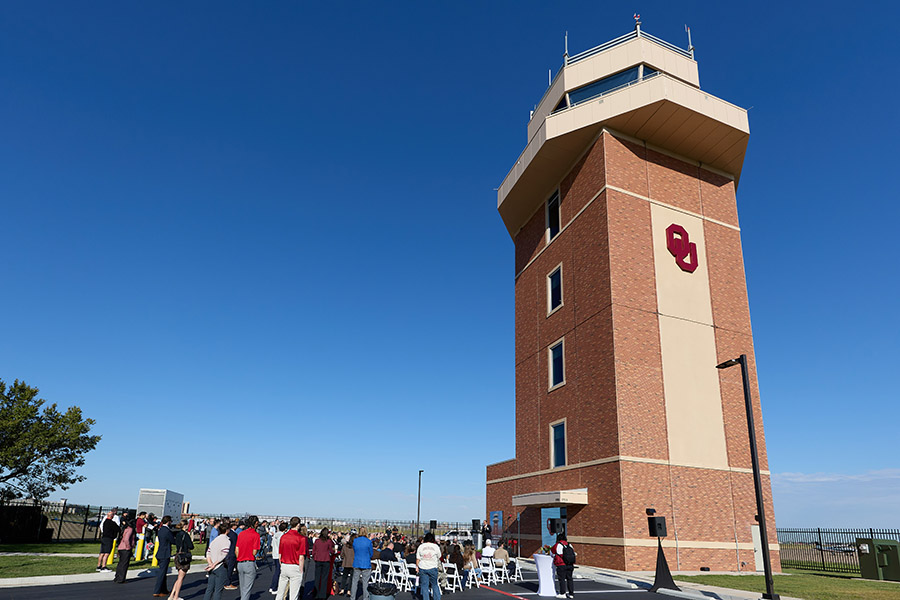
The University of Oklahoma today celebrated the opening of a new air traffic control tower at the OU Max Westheimer Airport. Standing 106 feet tall, more than double the current 52-foot facility, the new tower will modernize air traffic control operations and improve safety for pilots and students operating in the airspace.
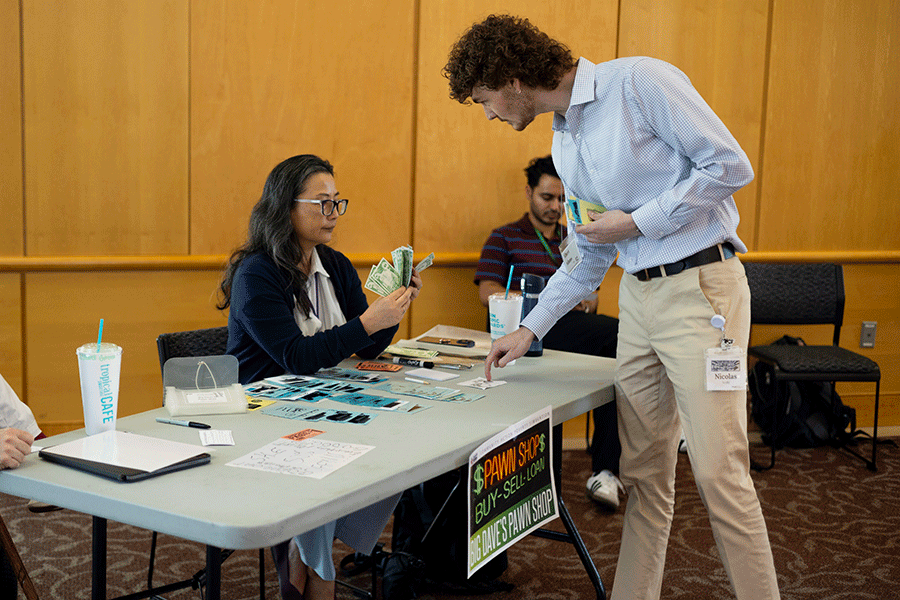
Do I buy groceries or pay the electric bill? Should I pawn some of my belongings to afford my prescription? My child is sick, so I will have to miss work to take care of him. Those are just a few of the difficult choices that OU-Tulsa health professional students confronted during the Community Access to Resources Experience. The role-playing activity challenged students to navigate the financial, family and other pressures that can affect a person’s health and ability to follow medical advice. Held annually during the SCM Institute orientation week, the experience is designed to generate understanding and build empathy.