NEWS


NORMAN, OKLA. – Liam Thompson, a junior in the University of Oklahoma College of Atmospheric and Geographic Sciences, is the lead author of a new study published in Urban Climate. The study was an assessment of a hydroclimate model’s ability to simulate temperature, dew point and wind speed evaluated against ground-level observations.
“Part of the reason we do studies like model evaluations is to figure out the obvious errors and biases in these models,” said Thompson.
The research investigates the performance of CONUS404, a hydroclimate modeling dataset of the contiguous United States. While scientists are interested in understanding how cities modify hydroclimate and ecosystems, CONUS404’s ability to capture conditions in urban areas is uncertain. CONUS404 uses a simplified urban surface representation and does not capture details such as building geometry or diverse types of land cover, factors that impact temperature and humidity. Urban areas are pivotal in shaping regional climate, driven by their unique surface characteristics and concentrated infrastructure.
Thompson’s research was conducted under the mentorship of Chenghao Wang, Ph.D., a professor in OU’s Department of Geography and Environmental Sustainability and School of Meteorology, and supported by undergraduate research funding from their department and the university’s Honors Research Opportunities Program.
Working in collaboration with scientists at the National Science Foundation’s National Center for Atmospheric Research, Thompson analyzed 10 years of hourly observations across dozens of U.S. cities, comparing them with CONUS404 outputs. Importantly, the study also assessed how model performance differs between urban and surrounding rural areas.
The results show biases in the model: a slight warm bias in temperature, a pronounced dry bias in dewpoint, and a systematic underestimation of wind speed in urban settings. These discrepancies varied seasonally and diurnally, revealing patterns that suggest areas where the model could be refined.
“Liam’s work fills a critical gap in how we evaluate high-resolution climate models at the continental scale. His findings help us understand where these models capture urban climate conditions well, and where there is still room for improvement,” said Wang. “That’s very important if we want to further improve how cities are represented in future simulations. It’s opportunities like this that make meaningful undergraduate research possible.”
Thompson was recently named a Goldwater Scholar for his research into CONUS-404. He has also won two conference poster awards for the work.
About the University of Oklahoma
Founded in 1890, the University of Oklahoma is a public research university located in Norman, Oklahoma. As the state’s flagship university, OU serves the educational, cultural, economic and health care needs of the state, region and nation. For more information about the university, visit www.ou.edu.
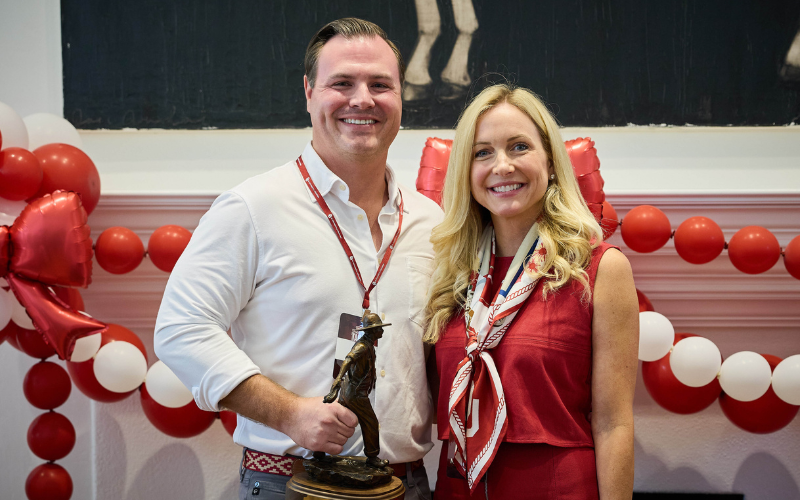
The University of Oklahoma has received a transformative gift from Jon and Shannon McCartney, which will name the McCartney Family Tunnel of Champions, the McCartney Family Gate of the Gaylord Family - Oklahoma Memorial Stadium and the McCartney Family Grand Lecture Hall in the Michael F. Price College of Business. The gift will also support the Inspiring Champions and the Athletic Director’s Discretionary Fund, in addition to establishing the McCartney DFW Career Trek program at Price College.
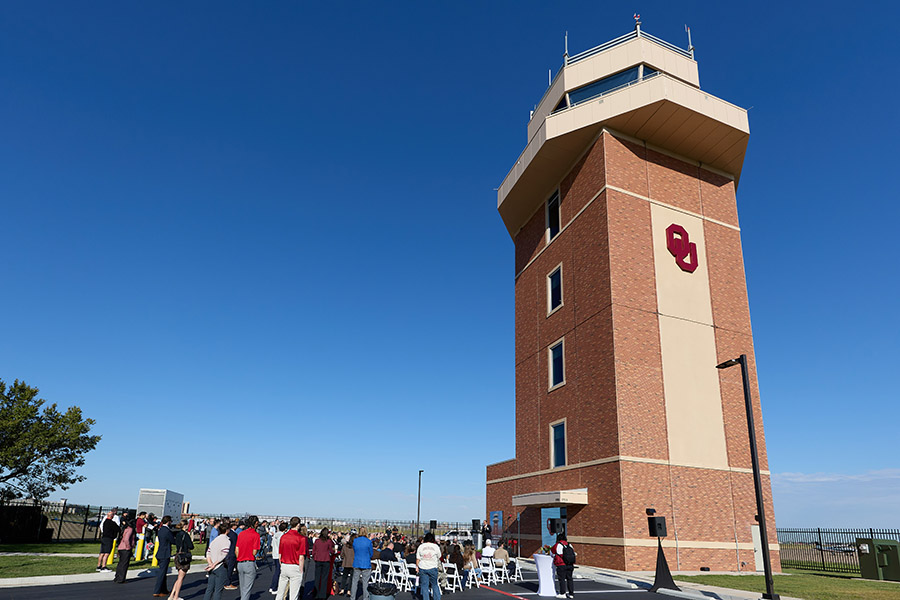
The University of Oklahoma today celebrated the opening of a new air traffic control tower at the OU Max Westheimer Airport. Standing 106 feet tall, more than double the current 52-foot facility, the new tower will modernize air traffic control operations and improve safety for pilots and students operating in the airspace.
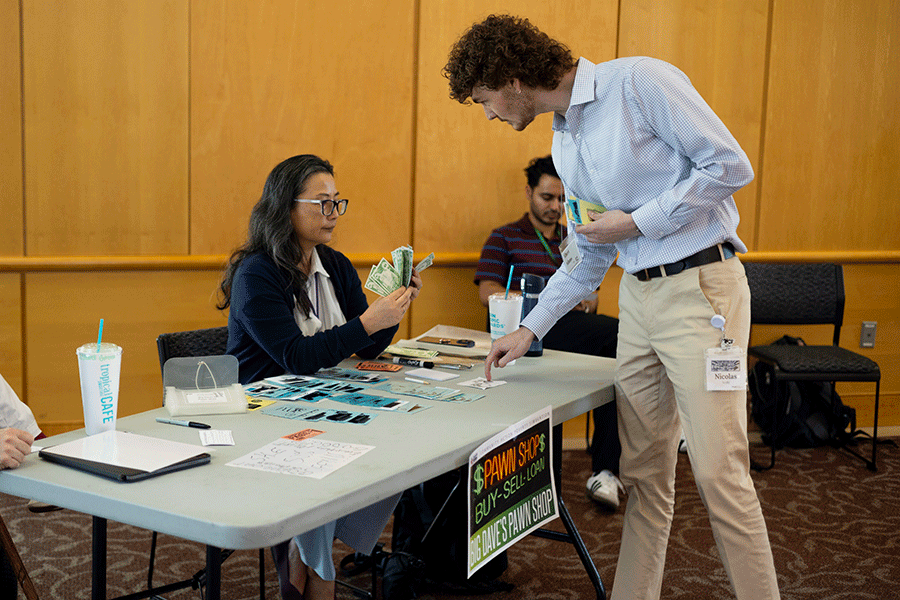
Do I buy groceries or pay the electric bill? Should I pawn some of my belongings to afford my prescription? My child is sick, so I will have to miss work to take care of him. Those are just a few of the difficult choices that OU-Tulsa health professional students confronted during the Community Access to Resources Experience. The role-playing activity challenged students to navigate the financial, family and other pressures that can affect a person’s health and ability to follow medical advice. Held annually during the SCM Institute orientation week, the experience is designed to generate understanding and build empathy.