NEWS


NORMAN, OKLA. – Three graduate students at the University of Oklahoma have been named winners of the 2025 Three-Minute Thesis (3MT) competition, an annual event challenging graduate students to present their research in just three minutes to a non-specialist audience.
First Place: Zainab Iyiola, a student from the Mewbourne College of Earth and Energy, presented a project titled “A Smart Approach to Safe Hydrogen Transport in Natural Gas Pipelines.” In the project, she introduced a model and assessment software designed to evaluate the safety of transporting hydrogen through converted gas pipelines. As the winner of the competition, she represents OU at the regional 3MT competition during the 81st Midwestern Association of Graduate Schools Annual Meeting in Indianapolis in April.
Runner-Up: Ashley Hawk, School of Music in the Weitzenhoffer Family College of Arts, delivered a presentation titled “Marches by Women,” which highlighted her research in compiling a catalog of over 100 marches written and arranged by women.
People’s Choice Award: Rana Ajeeb, Peggy and Charles Stephenson School of Biomedical Engineering in the Gallogly College of Engineering, showcased a project titled “From Chaos to Precision: Delivering Drugs Safely and Effectively Where They Are Needed,” which detailed her work developing nanoparticles for precision drug delivery in the human body.
Developed by the University of Queensland in 2008, the competition has since expanded to more than 900 universities worldwide. This was the ninth year in which the Graduate College at OU has hosted its own 3MT event.
To learn more about the competition, visit https://www.ou.edu/gradcollege/student-life/awards-and-competitions.
About the University of Oklahoma
Founded in 1890, the University of Oklahoma is a public research university located in Norman, Oklahoma. As the state’s flagship university, OU serves the educational, cultural, economic and health care needs of the state, region and nation. For more information about the university, visit www.ou.edu.
The University of Oklahoma has received a transformative gift from Jon and Shannon McCartney, which will name the McCartney Family Tunnel of Champions, the McCartney Family Gate of the Gaylord Family - Oklahoma Memorial Stadium and the McCartney Family Grand Lecture Hall in the Michael F. Price College of Business. The gift will also support the Inspiring Champions and the Athletic Director’s Discretionary Fund, in addition to establishing the McCartney DFW Career Trek program at Price College.
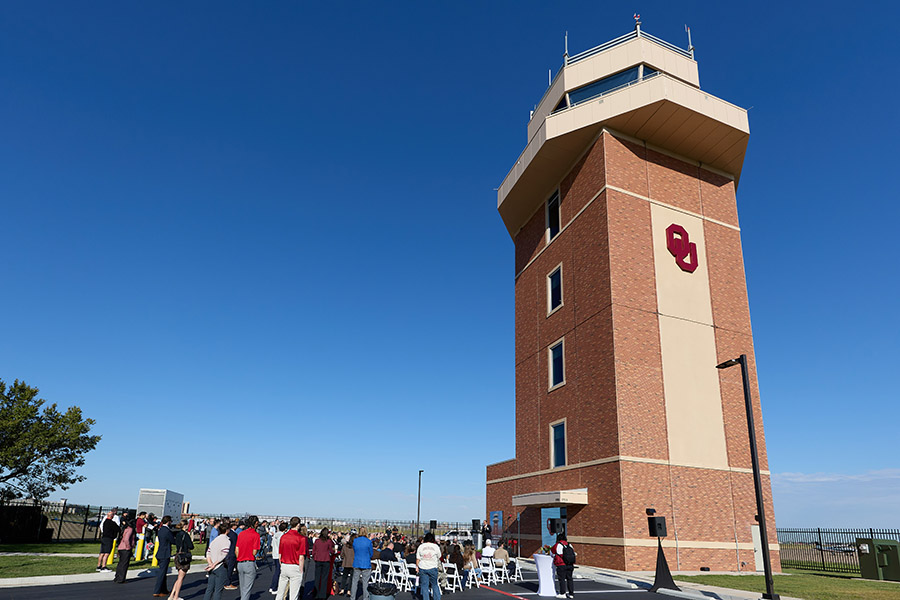
The University of Oklahoma today celebrated the opening of a new air traffic control tower at the OU Max Westheimer Airport. Standing 106 feet tall, more than double the current 52-foot facility, the new tower will modernize air traffic control operations and improve safety for pilots and students operating in the airspace.
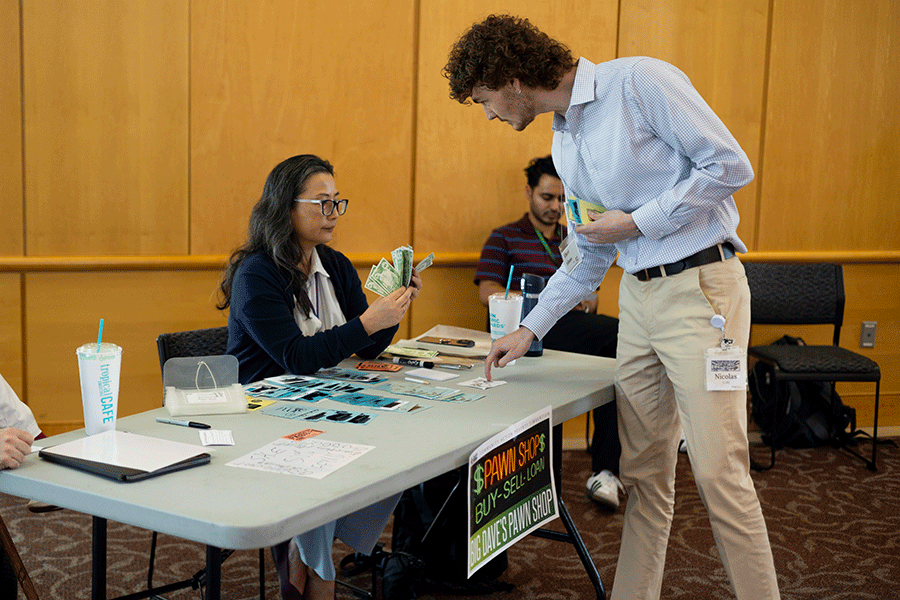
Do I buy groceries or pay the electric bill? Should I pawn some of my belongings to afford my prescription? My child is sick, so I will have to miss work to take care of him. Those are just a few of the difficult choices that OU-Tulsa health professional students confronted during the Community Access to Resources Experience. The role-playing activity challenged students to navigate the financial, family and other pressures that can affect a person’s health and ability to follow medical advice. Held annually during the SCM Institute orientation week, the experience is designed to generate understanding and build empathy.