NEWS


NORMAN, OKLA. – The University of Oklahoma is home to one of the region’s most advanced and well-staffed core research facilities: the Nuclear Magnetic Resonance Lab. This facility plays a critical role in cutting-edge research, student training and scientific discovery across several disciplines.
Nuclear Magnetic Resonance spectroscopy is an analytical technique that has transformed organic chemistry since it was introduced in the 1950s. NMR is used to determine the structure and characteristics of molecules, allowing researchers to visualize them in three dimensions.
“NMR is an essential tool for validating molecular structures during chemical synthesis,” said John Peters, professor and chair of the Department of Chemistry and Biochemistry, where the lab is housed. “Researchers rely on it to confirm that they’re building what they think they’re building, step by step. Whether it's designing a therapeutic or developing new materials, this level of molecular precision is vital.”

The OU NMR Facility is equipped with five high-field NMR spectrometers and an electron paramagnetic resonance instrument, enabling researchers to examine newly synthesized molecules with incredible sensitivity. This capability is foundational for faculty working in therapeutic development. It is also vital for catalysis and materials science, including quantum dots, molecular motors and metal-organic frameworks.
Researchers at OU use these instruments to advance medicinal chemistry, confirm novel drug compounds and work with quantum dots and quantum light. For example, Indrajeet Sharma has developed a breakthrough method of adding a single nitrogen or carbon atom to molecules, unlocking new possibilities in drug research and development. By modifying natural compounds, Shanteri Singh’s lab is working to develop better drug candidates for fighting cancer. Yitong Dong also uses these facilities to help stabilize quantum dots and explore magnetic impurity doping in nanocrystals, opening the door to new, affordable quantum lighting possibilities.
Beyond its research contributions, the NMR Lab plays a central role in graduate and undergraduate education. It’s also important for when recruiting researchers and faculty to the university. Novrus Akhmedov, who has nearly three decades of experience in NMR spectroscopy, is the lab’s director.
“When someone considers OU, they look at the research facilities and equipment we have available. They also want to know how knowledgeable the NMR manager is and what kind of techniques they can learn from them,” Akhmedov said. “OU’s investment in these core facilities definitely makes us more competitive and also allows us to train the next generation of scientists.”
Learn more about the equipment and capabilities of OU’s NMR Lab.
About the University of Oklahoma
Founded in 1890, the University of Oklahoma is a public research university located in Norman, Oklahoma. As the state’s flagship university, OU serves the educational, cultural, economic and health care needs of the state, region and nation. For more information about the university, visit www.ou.edu.
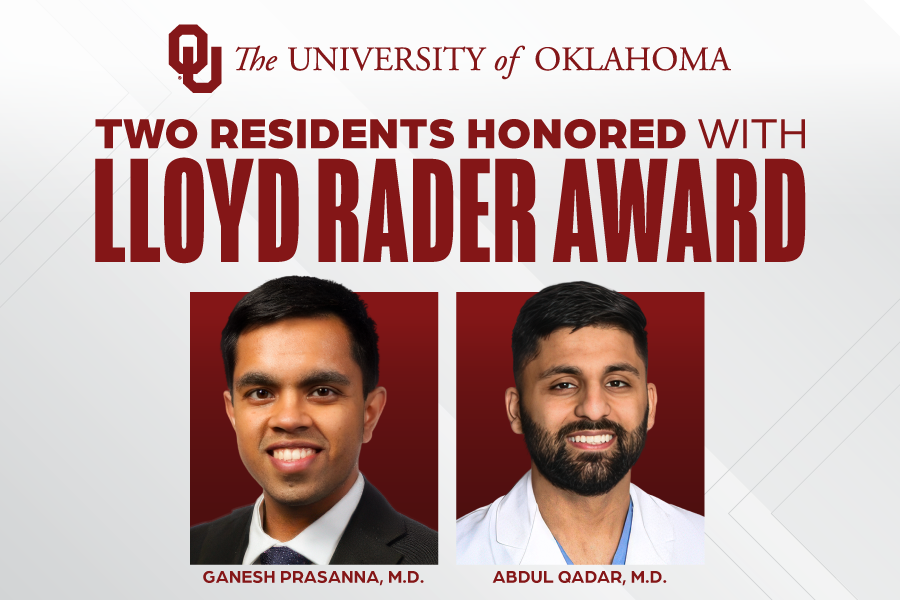
The University of Oklahoma College of Medicine has honored two residents with the Lloyd Rader Award, which recognizes outstanding clinical and research achievements in residency.
The University of Oklahoma will receive up to $220 million over five years from the U.S. Department of Commerce and the National Oceanic and Atmospheric Administration to continue the life-saving weather research led by the OU-NOAA Cooperative Institute for Severe and High-Impact Weather Research and Operations, extending a nearly 50-year partnership that has helped give Americans earlier, more accurate weather warnings
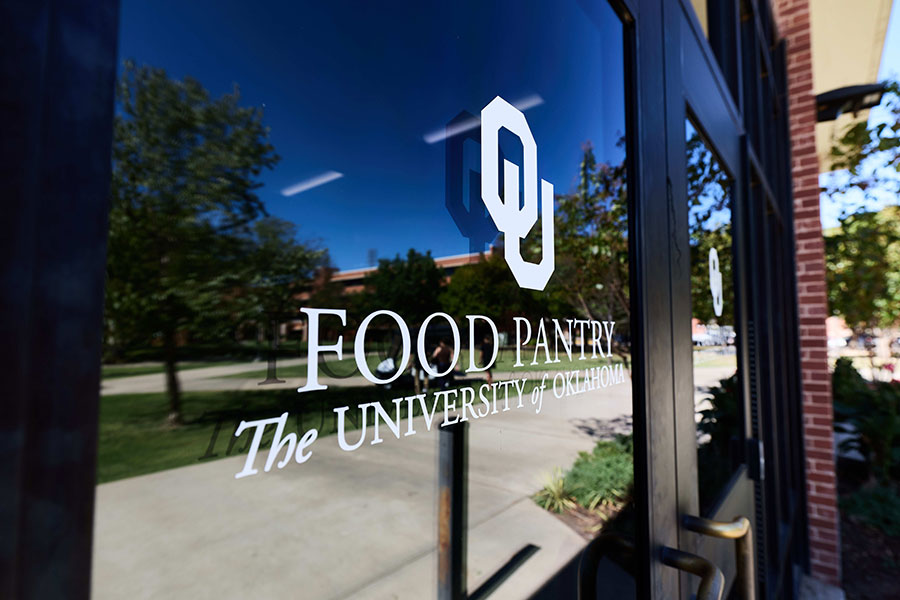
The OU Food Pantry won the annual Red River Food Fight, collecting 31,815.9 pounds of shelf-stable food and drinks to top UT Outpost’s 22,567 pounds. OU has won the competition four years in a row.