NEWS


NORMAN, OKLA. – Seven high school students from rural southwestern Oklahoma recently participated in the 2025 ROOT4NANO summer research camp at the University of Oklahoma, gaining hands-on experience in nanotechnology and biomedical engineering.
Led by Stefan Wilhelm, Ph.D., an associate professor in the Stephenson School of Biomedical Engineering in OU’s Gallogly College of Engineering, the ROOT4NANO camp introduces rural high school students to college-level STEM research.
ROOT4NANO stands for Rural Oklahoma Outreach and Teaching for Nanotechnology, focusing on serving under-resourced rural communities. “This program is about more than learning how to synthesize nanoparticles or operate a microscope,” Wilhelm said. “ROOT4NANO is designed to show students what is possible – what they are capable of doing in STEM fields when given the opportunity, support and exposure to real-world research environments.”
This year’s students came from six school districts – Fort Cobb-Broxton, Carnegie, Cyril, Anadarko, Apache and Cement – and are enrolled at the Caddo-Kiowa Technology Center in Fort Cobb, Oklahoma.
Throughout the week-long residential camp on OU’s Norman campus, students worked in the Wilhelm Lab, the Stephenson School’s research facilities and the Samuel Roberts Noble Microscopy Laboratory, synthesizing gold nanoparticles, liposomes and lipid nanoparticles. They evaluated the quality of the materials using dynamic light scattering, UV-Vis spectrophotometry and transmission electron microscopy.
In addition to technical skills, students also learned about biomedical applications, including nanoparticle delivery systems in cell culture models. They observed aseptic techniques, monitored cellular responses using optical microscopy and presented their research findings to a broad audience of family, teachers, OU faculty and members of the research community.
Since launching in 2019 with classroom visits to area high schools through partnerships with the Kiowa and Wichita Tribes, the program has grown into a year-long engagement model. Activities now include fall classroom visits, spring campus tours and the immersive summer camp.
Originally called BE4NANO, the initiative was later renamed ROOT4NANO and recalibrated, with the long-term goal of expanding and sustaining the program through donor support. Between 2022 and 2025, a total of 25 students attended the summer research camps. Of the 13 students who have since graduated from high school, 12 are now pursuing undergraduate degrees in STEM – eight of them at OU.
“Our hope is that by bringing high school students to campus and showing them the possibilities of a STEM degree, we can empower the next generation of scientists and engineers – especially those from rural and tribal communities,” Wilhelm said.
About the University of Oklahoma
Founded in 1890, the University of Oklahoma is a public research university located in Norman, Oklahoma. As the state’s flagship university, OU serves the educational, cultural, economic and health care needs of the state, region and nation. For more information about the university, visit www.ou.edu.
The University of Oklahoma has received a transformative gift from Jon and Shannon McCartney, which will name the McCartney Family Tunnel of Champions, the McCartney Family Gate of the Gaylord Family - Oklahoma Memorial Stadium and the McCartney Family Grand Lecture Hall in the Michael F. Price College of Business. The gift will also support the Inspiring Champions and the Athletic Director’s Discretionary Fund, in addition to establishing the McCartney DFW Career Trek program at Price College.
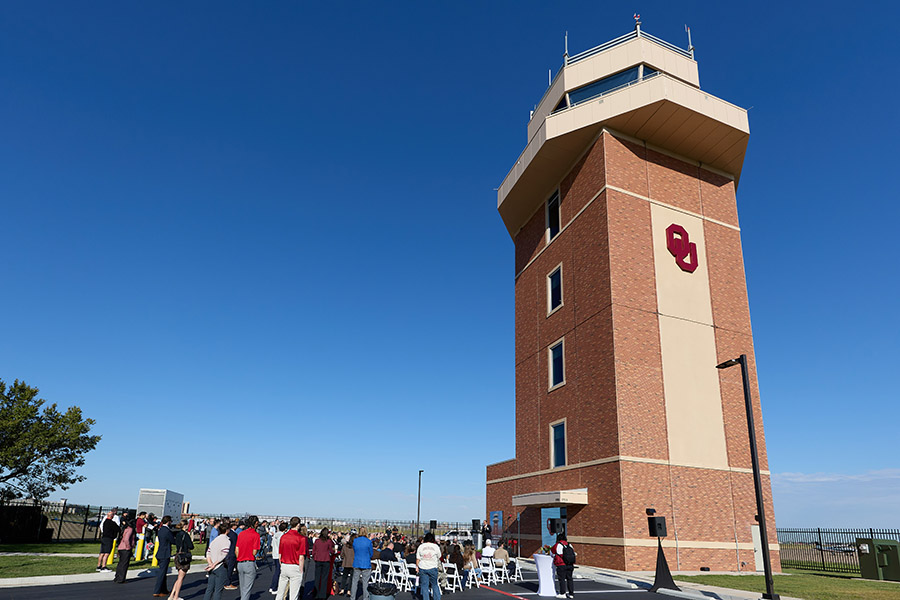
The University of Oklahoma today celebrated the opening of a new air traffic control tower at the OU Max Westheimer Airport. Standing 106 feet tall, more than double the current 52-foot facility, the new tower will modernize air traffic control operations and improve safety for pilots and students operating in the airspace.
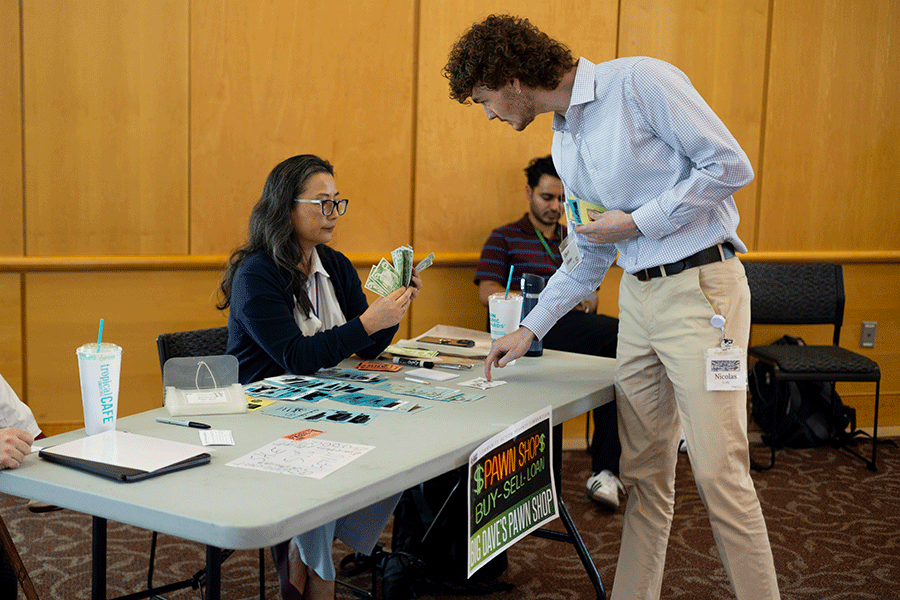
Do I buy groceries or pay the electric bill? Should I pawn some of my belongings to afford my prescription? My child is sick, so I will have to miss work to take care of him. Those are just a few of the difficult choices that OU-Tulsa health professional students confronted during the Community Access to Resources Experience. The role-playing activity challenged students to navigate the financial, family and other pressures that can affect a person’s health and ability to follow medical advice. Held annually during the SCM Institute orientation week, the experience is designed to generate understanding and build empathy.