NEWS


NORMAN, OKLA. – The University of Oklahoma celebrated the grand opening of its 4,000-square-foot Bioprocessing Core Facility with a ribbon-cutting ceremony Friday, May 23, 2025. This multimillion-dollar facility is a key piece in the state’s drive to become a national leader in biomanufacturing and biotech workforce development.
Backed by the Oklahoma Biotech Innovation Cluster that includes the Gallogly College of Engineering, the Greater Oklahoma City Chamber, the Oklahoma City Innovation District and local biotech industry partners, the facility is a key deliverable of Oklahoma’s Build Back Better Regional Challenge grant. It is designed to combine academic innovation with industrial application, catalyzing economic growth while training a new generation of bioengineers.
“This facility isn’t just a university resource, it’s a statewide investment in Oklahoma’s future,” said Daniel Baker, administrative project manager of the Bioprocessing Core Facility. “From startups to established companies, this space is built to support translational research, cross-sector collaboration and hands-on workforce training.”
Equipped for both upstream and downstream bioprocessing, including the $1 million Ambr 250 High-Throughput 12-Way System that improves performance and analytics, the facility also features advanced analytical capabilities that positions OU as a major player in biomanufacturing. Researchers, students and industry professionals will benefit from the facility’s capacity to accelerate product development, refine processes and cultivate the next generation of biotech talent.
“The OU Bioprocessing Core Facility serves as a vital engine for innovation and workforce development in biologics manufacturing,” said Farid Rowshan, facility director and Gallogly College of Engineering research assistant professor. “Equipped with industry-relevant platforms and supported by expert faculty, the facility empowers bioprocess optimization, translational research and scalable production of biopharmaceuticals including monoclonal antibodies, vaccines and therapeutic proteins.”
The facility plays a central role in OU’s expanding footprint in bioprocessing education, including a certificate program already serving undergraduate, graduate and professional learners. In just its second semester of operation, the facility supported coursework and training for 65 students.
In addition to current certificate offerings, OU plans to launch micro-credentialing and an online graduate certificate program by spring 2026, expanding access to professionals seeking skill development or cross-training in bioprocessing methods. Looking ahead, they are preparing to support cutting-edge research, foster technological innovation and address the rising need for biopharmaceutical solutions through strategic collaborations with both internal and external partners.
“This facility and associated graduate and undergraduate programs position OU’s Gallogly College of Engineering as a leader in biopharmaceutical process education and preparation,” said John Klier, dean of the Gallogly College of Engineering and professor in the OU School of Chemical, Biological and Materials Engineering.
Situated in the Innovation District near downtown Oklahoma City, the facility’s location ensures accessibility for collaborators while reinforcing the district’s role as a growing hub for biotechnology and engineering. The project’s long-term vision includes nurturing a fully integrated biomanufacturing ecosystem in Oklahoma, capable of supporting translational research, startup incubation and workforce upskilling.
Learn more about the OU Bioprocessing Core Facility and the Gallogly College of Engineering’s bioprocessing certificate program.
About the University of Oklahoma
Founded in 1890, the University of Oklahoma is a public research university located in Norman, Oklahoma. As the state’s flagship university, OU serves the educational, cultural, economic and health care needs of the state, region and nation. For more information about the university, visit www.ou.edu.
The University of Oklahoma College of Medicine has honored two residents with the Lloyd Rader Award, which recognizes outstanding clinical and research achievements in residency.
The University of Oklahoma will receive up to $220 million over five years from the U.S. Department of Commerce and the National Oceanic and Atmospheric Administration to continue the life-saving weather research led by the OU-NOAA Cooperative Institute for Severe and High-Impact Weather Research and Operations, extending a nearly 50-year partnership that has helped give Americans earlier, more accurate weather warnings
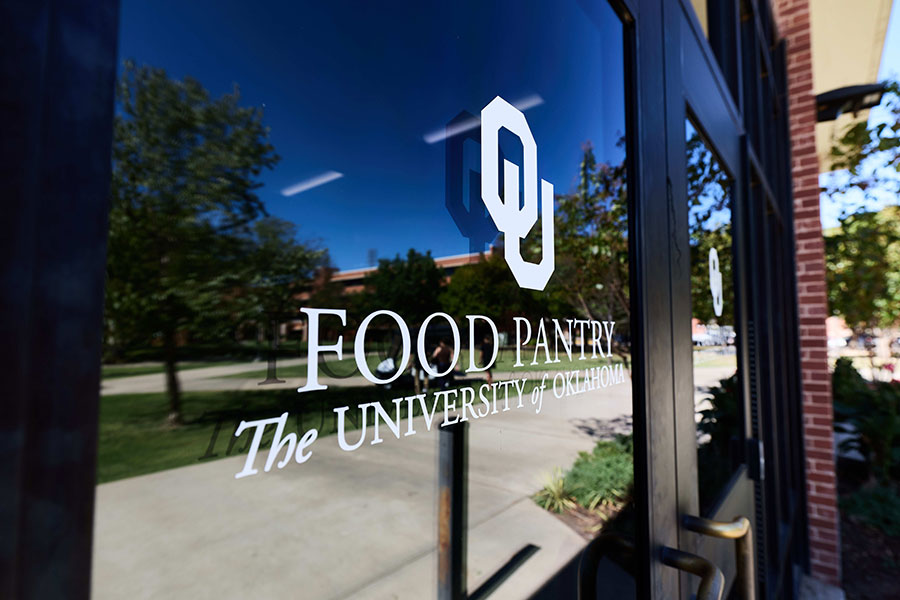
The OU Food Pantry won the annual Red River Food Fight, collecting 31,815.9 pounds of shelf-stable food and drinks to top UT Outpost’s 22,567 pounds. OU has won the competition four years in a row.