NEWS


NORMAN, OKLA – Two anthropology faculty members at the University of Oklahoma are earning international recognition for recent publications that shed light on critical aspects of cultural heritage and ancient innovation.
Marc Levine, associate professor of anthropology and associate curator at the Sam Noble Museum of Natural History, co-authored a study that reconstructs an intricate lost-wax casting technique used over 500 years ago in what is now Oaxaca, Mexico. Published in Ethnoarchaeology, the article, Making the Mold: Replicating a Lost-Wax Casting Technique from Late Postclassic Oaxaca, Mexico, details a replication experiment confirming that ceramic molds were likely used to create casting cores at the Mixtec capital of Tututepec. The discovery suggests a level of craftsmanship in gold production previously undocumented in Mesoamerica.
“This isn’t just about metallurgy,” Levine said. “It’s about understanding the decisions made by ancient craftspeople, their innovations and the social or political forces shaping those choices. These molds were part of a larger cultural story.”
Levine's research draws from more than two decades of archaeological excavation and community collaboration in Tututepec, which served as the capital of a powerful Mixtec empire from the 12th to early 16th centuries. Many artifacts remain housed in a community-run museum where Levine continues to support local efforts to preserve and interpret the region’s deep history.
In a separate publication, anthropologist Sean O’Neill explores the global crisis of language loss and the transformative efforts to reclaim endangered Indigenous languages. His article, Extinctions: Language Death, Intangible Cultural Heritage, and Early 21st-Century Renewal Efforts, underscores the profound knowledge embedded in oral traditions, from medicine and astronomy to poetry and prayer.
“Every language is a library of human wisdom,” he said. “When a language disappears, we lose entire ways of seeing and relating to the world.”
O’Neill’s research focuses on Native American languages in Oklahoma and California, with comparative insights drawn from global traditions including Irish Gaelic and Sanskrit. His work highlights how Indigenous communities are reviving languages through storytelling, performance and classroom instruction, and it offers powerful counter-narratives to cultural erasure.
“This isn’t just about grammar and vocabulary. When languages are reawakened, so are the songs and stories that carry generations of knowledge,” he said.
Together, these publications reinforce the University of Oklahoma’s prominence in anthropological research that honors both the material and intangible legacies of the past. Whether through reconstructing ancient technologies or amplifying voices nearly lost to history, these OU researchers continue to illuminate the complexity and resilience of human culture.
About the projects
Making the Mold: Replicating a Lost-Wax Casting Technique from Late Postclassic Oaxaca, Mexico was published in Ethnoarchaeology in Feb. 2025, DOI no: 19442890.2025.2464436. Extinctions: Language Death, Intangible Cultural Heritage, and Early 21st-Century Renewal Efforts was published by Oxford University Press in Feb. 2025, DOI no: 9780190228613.013.1241.
About the University of Oklahoma
Founded in 1890, the University of Oklahoma is a public research university located in Norman, Oklahoma. As the state’s flagship university, OU serves the educational, cultural, economic and health care needs of the state, region and nation. For more information about the university, visit www.ou.edu.
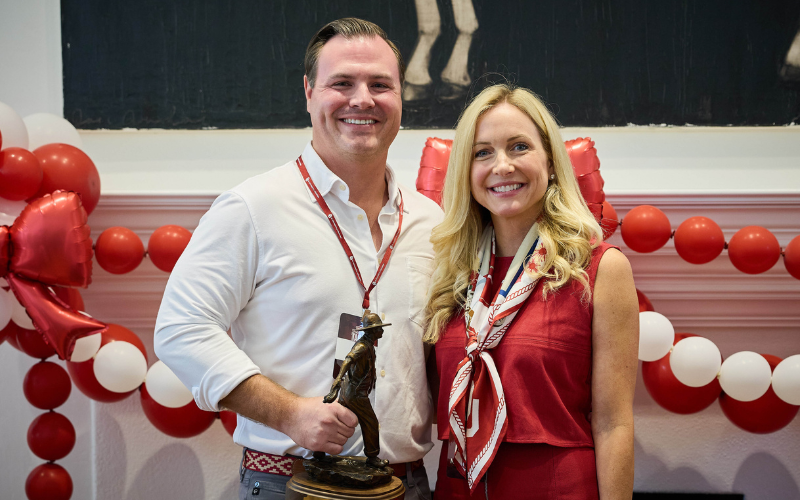
The University of Oklahoma has received a transformative gift from Jon and Shannon McCartney, which will name the McCartney Family Tunnel of Champions, the McCartney Family Gate of the Gaylord Family - Oklahoma Memorial Stadium and the McCartney Family Grand Lecture Hall in the Michael F. Price College of Business. The gift will also support the Inspiring Champions and the Athletic Director’s Discretionary Fund, in addition to establishing the McCartney DFW Career Trek program at Price College.
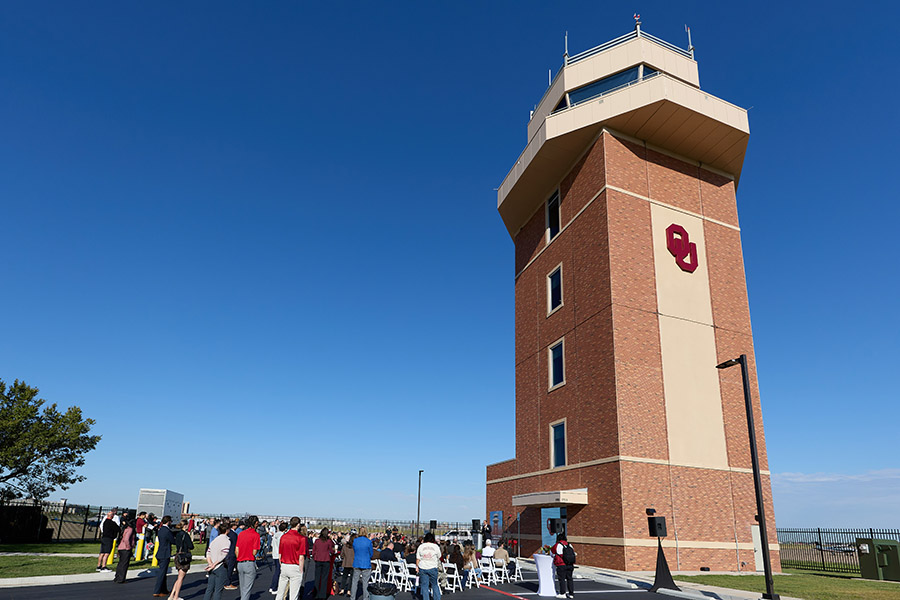
The University of Oklahoma today celebrated the opening of a new air traffic control tower at the OU Max Westheimer Airport. Standing 106 feet tall, more than double the current 52-foot facility, the new tower will modernize air traffic control operations and improve safety for pilots and students operating in the airspace.
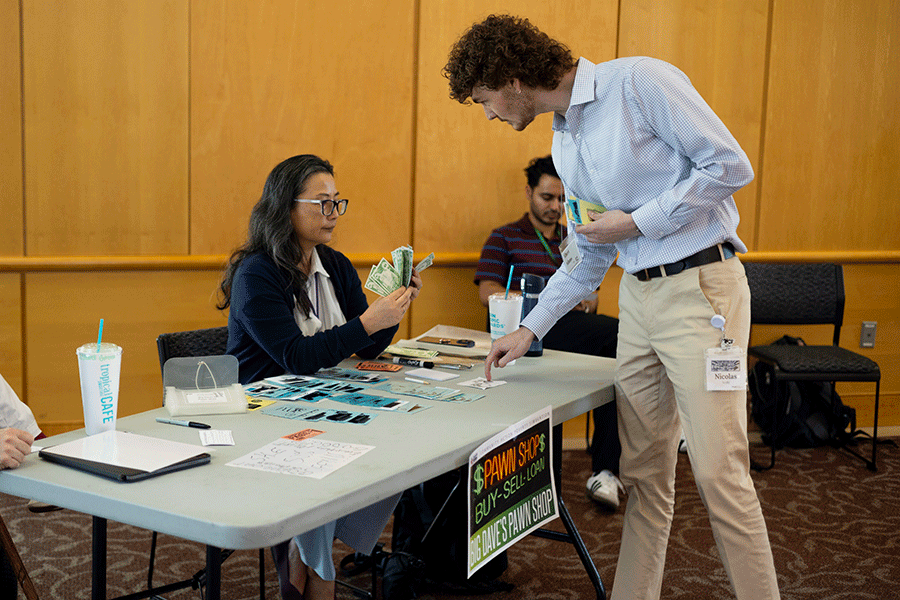
Do I buy groceries or pay the electric bill? Should I pawn some of my belongings to afford my prescription? My child is sick, so I will have to miss work to take care of him. Those are just a few of the difficult choices that OU-Tulsa health professional students confronted during the Community Access to Resources Experience. The role-playing activity challenged students to navigate the financial, family and other pressures that can affect a person’s health and ability to follow medical advice. Held annually during the SCM Institute orientation week, the experience is designed to generate understanding and build empathy.