NEWS


NORMAN, OKLA. – The University of Oklahoma announced today the students named to its fall 2024 honor roll, a distinction given to those who achieve the highest academic standards.
A total of 11,260 students were named to the fall 2024 honor roll. Of these students, 4,534 were named to the President’s Honor Roll for earning an “A” grade in all their courses.
The honor roll recognizes undergraduate students in the academic programs based at OU’s Norman campus and at OU Health Sciences. In most colleges, full-time undergraduate students who completed 12 or more letter-graded hours with a grade-point average of 4.0 were named to the President’s Honor Roll. Students with a grade-point average of 3.5 or higher were included in the Dean’s Honor Roll. Students in the Gallogly College of Engineering and the Mewbourne College of Earth and Energy are recognized with a 3.0 GPA or higher who completed 12 or more letter-graded hours.
A searchable honor roll list for fall 2024 is available for download online. Students who are on both the President’s Honor Roll and Dean’s Honor Roll are denoted by an asterisk.
About the University of Oklahoma
Founded in 1890, the University of Oklahoma is a public research university located in Norman, Oklahoma. As the state’s flagship university, OU serves the educational, cultural, economic and health care needs of the state, region and nation. For more information about the university, visit www.ou.edu.
The University of Oklahoma has received a transformative gift from Jon and Shannon McCartney, which will name the McCartney Family Tunnel of Champions, the McCartney Family Gate of the Gaylord Family - Oklahoma Memorial Stadium and the McCartney Family Grand Lecture Hall in the Michael F. Price College of Business. The gift will also support the Inspiring Champions and the Athletic Director’s Discretionary Fund, in addition to establishing the McCartney DFW Career Trek program at Price College.
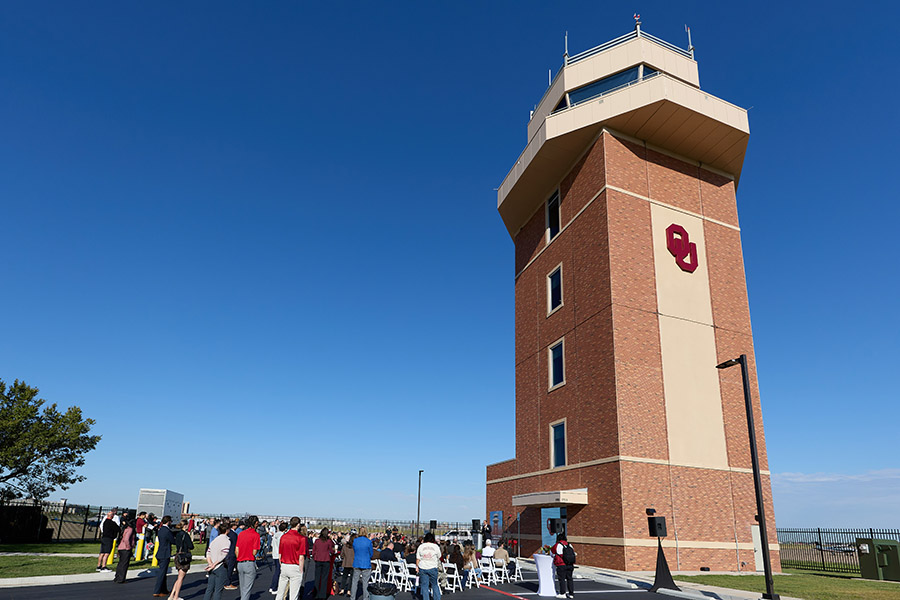
The University of Oklahoma today celebrated the opening of a new air traffic control tower at the OU Max Westheimer Airport. Standing 106 feet tall, more than double the current 52-foot facility, the new tower will modernize air traffic control operations and improve safety for pilots and students operating in the airspace.
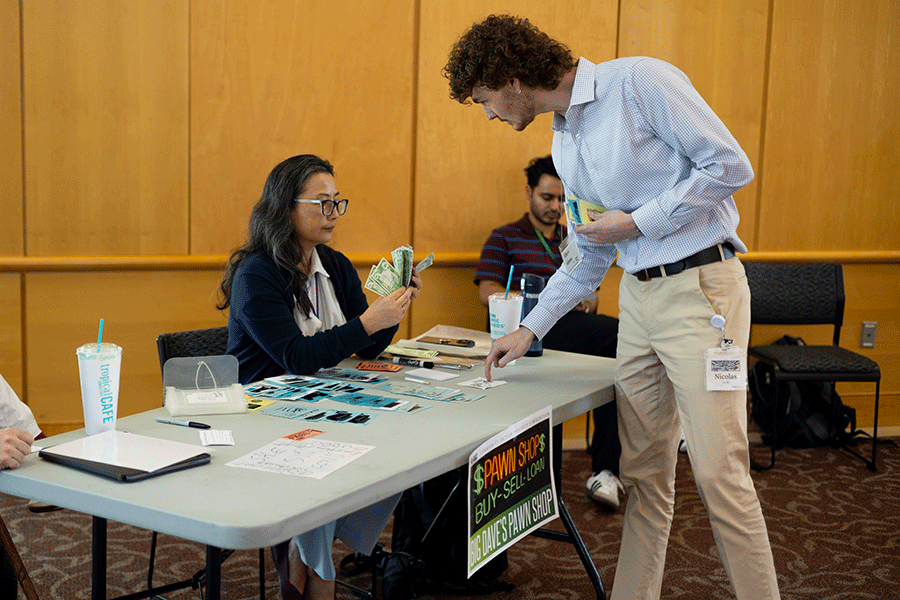
Do I buy groceries or pay the electric bill? Should I pawn some of my belongings to afford my prescription? My child is sick, so I will have to miss work to take care of him. Those are just a few of the difficult choices that OU-Tulsa health professional students confronted during the Community Access to Resources Experience. The role-playing activity challenged students to navigate the financial, family and other pressures that can affect a person’s health and ability to follow medical advice. Held annually during the SCM Institute orientation week, the experience is designed to generate understanding and build empathy.