NEWS

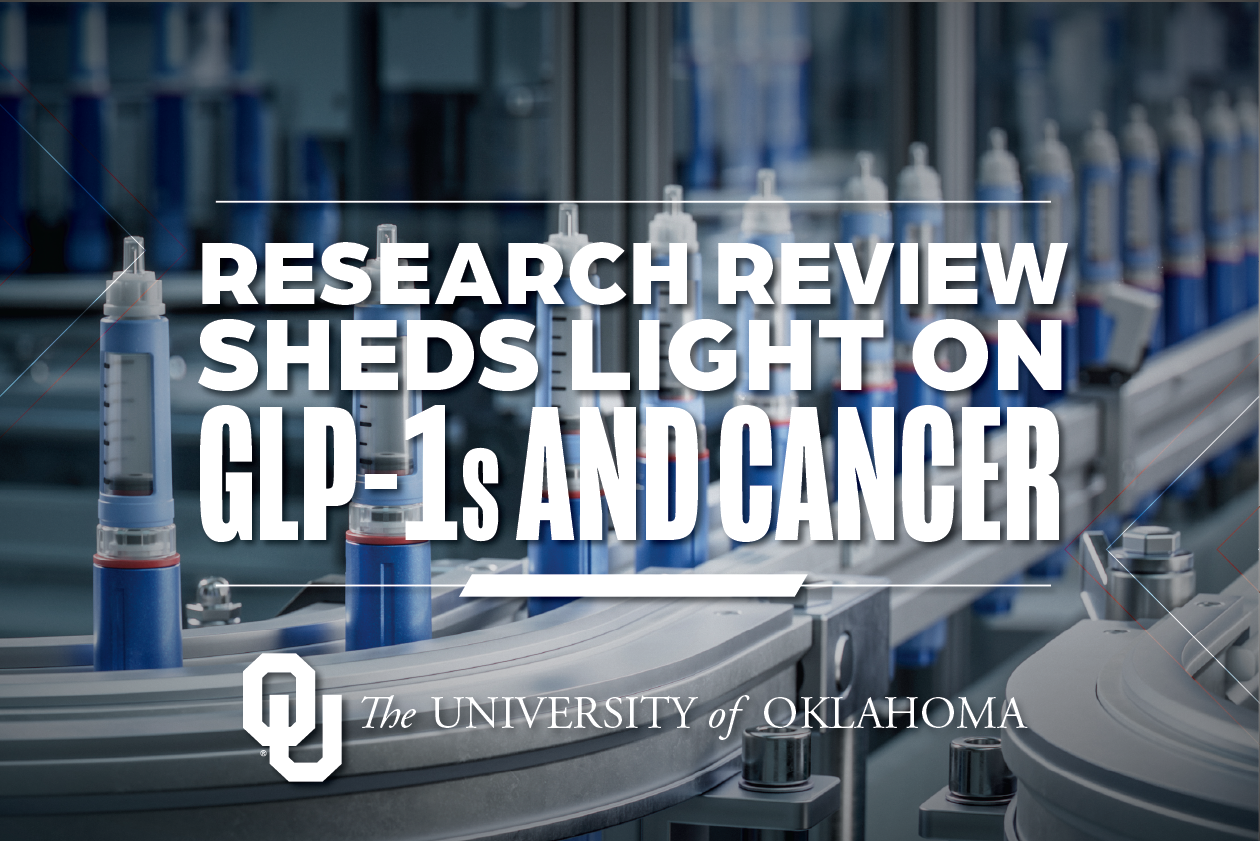
OKLAHOMA CITY – The success of GLP-1 medications for treating Type 2 diabetes and obesity naturally leads to a related question: Do GLP-1 drugs affect cancer risk, which is often associated with obesity and Type 2 diabetes?
University of Oklahoma researcher Elizabeth Wellberg, Ph.D., is the senior author of a review article in The Journal of Clinical Investigation that gathers current research evidence about the effects of GLP-1 drugs, like Ozempic and Zepbound, on cancer risk. The data suggest that GLP-1s do not increase the risk of cancer and may even reduce the risk of several types of cancer, particularly in people with obesity or Type 2 diabetes. Researchers reviewed clinical studies as well as laboratory and animal research.
“In our analysis of clinical studies, we found evidence that people using GLP-1 drugs do not experience higher overall cancer rates compared with non-users. Some studies even reported lower incidence of cancer, including colorectal, liver, prostate and endometrial cancers,” said Wellberg, an assistant professor in the OU College of Medicine and research member of OU Health Stephenson Cancer Center. “However, these studies are observational, not randomized trials, so we cannot yet interpret the findings as proof of a cancer risk reduction.”
The review also addressed the question of whether GLP-1s reduce cancer risk because they cause weight loss and improved metabolism, or because they have a direct anti-cancer effect.
“In people, we don’t have the answer to that question yet,” Wellberg said, “but in animal research models, there seems to be evidence that GLP-1s are beneficial by themselves, even in the absence of obesity.”
Some research suggests that GLP-1 drugs may affect the immune system, rather than lowering the risk for specific cancers, Wellberg said. “It may be that GLP-1s create a heightened surveillance in immune cells that makes them better at getting rid of damaged cells before they turn cancerous,” she said.
Although the findings are encouraging, Wellberg said much more research is needed to determine whether GLP-1 drugs could be used to prevent cancer or serve as part of cancer treatment strategies. Clinical trials are being developed to study GLP-1s in patients receiving ongoing cancer treatment, as well as in patients who do not have diabetes or obesity. Long-term data is also needed because widespread GLP-1 use is still relatively recent.
Wellberg is also speaking to her fellow scientists through the review article. She encourages researchers to look at what the clinical data say and carefully design their studies accordingly.
“As we look ahead, we urge our preclinical colleagues to dig deeper into how GLP-1s influence tumor biology, not only through metabolic pathways, but through their emerging effects on the immune system,” she said. “We need rigorous models that distinguish cancer risk from progression, as well as studies that carefully vary treatment timing, duration and combinations with standard therapies. Clarifying these mechanisms will be essential for translating the promise of GLP-1–based therapies into effective cancer applications.”
About the project
The article, “GLP-1 receptor agonists and cancer: current clinical evidence and translational opportunities for preclinical research,” is part of a three-article review series that is available at https://www.jci.org/review_series/134.
About the University of Oklahoma
Founded in 1890, the University of Oklahoma is a public research university with campuses in Norman, Oklahoma City and Tulsa. As the state’s flagship university, OU serves the educational, cultural, economic and health care needs of the state, region and nation. In Oklahoma City, the OU Health Campus is one of the nation’s few academic health centers with seven health profession colleges located on the same campus. The OU Health Campus serves approximately 4,000 students in more than 70 undergraduate and graduate degree programs spanning Oklahoma City and Tulsa and is the leading research institution in Oklahoma. For more information about the OU Health Campus, visit www.ouhsc.edu.
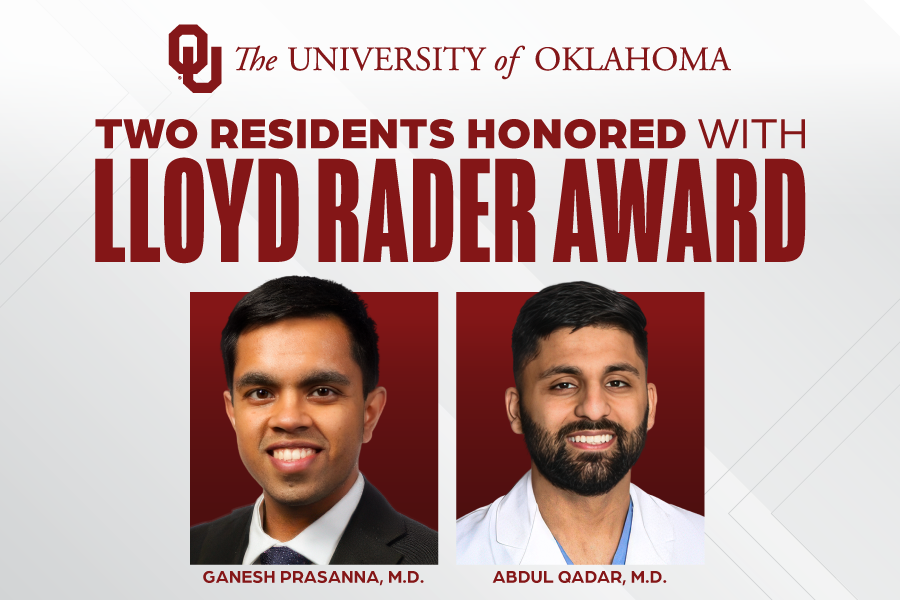
The University of Oklahoma College of Medicine has honored two residents with the Lloyd Rader Award, which recognizes outstanding clinical and research achievements in residency.
The University of Oklahoma will receive up to $220 million over five years from the U.S. Department of Commerce and the National Oceanic and Atmospheric Administration to continue the life-saving weather research led by the OU-NOAA Cooperative Institute for Severe and High-Impact Weather Research and Operations, extending a nearly 50-year partnership that has helped give Americans earlier, more accurate weather warnings
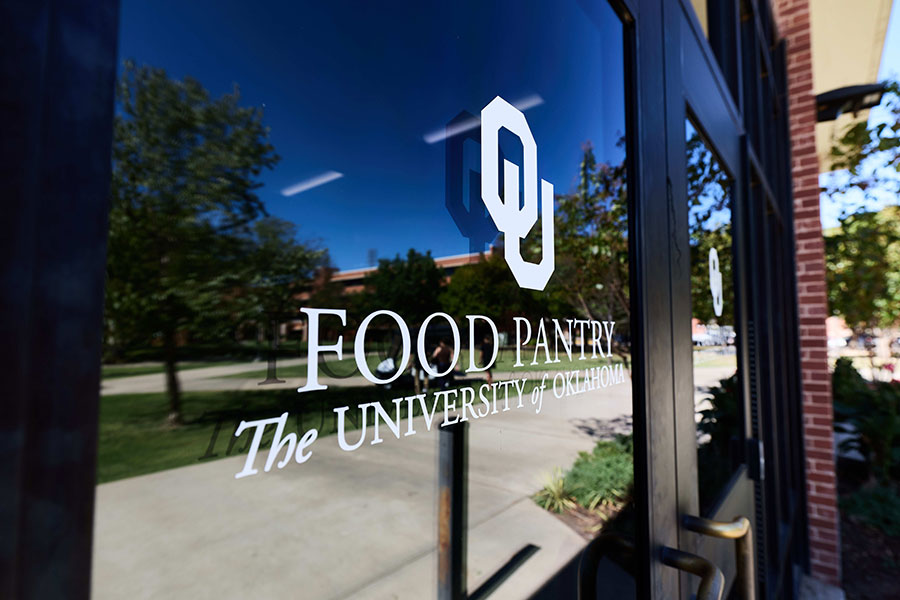
The OU Food Pantry won the annual Red River Food Fight, collecting 31,815.9 pounds of shelf-stable food and drinks to top UT Outpost’s 22,567 pounds. OU has won the competition four years in a row.