NEWS


NORMAN, OKLA. – A University of Oklahoma scientist is developing new techniques for monitoring radioactivity by combining remote sensing measurements with diffusion modeling to track air pollutants. Feng Xu, a professor in the OU School of Meteorology, is contributing to broader U.S. scientific nuclear nonproliferation efforts by improving models that track the spread of radioactive pollutants.
Xu’s research focuses on how incorporating remote sensing observations can enhance the accuracy and efficiency of pollutant diffusion models.
“We are working to combine measurement techniques and modeling capabilities to improve the accuracy and spatial coverage of tracking nuclear pollutants such as radiocesium and other radionuclides,” said Xu.
Radionuclides are unstable isotopes of elements that emit radiation as they decay. Exposure to high levels of radiation from radionuclides such as radiocesium can cause severe health issues, including burns, radiation sickness and death, according to the U.S. Environmental Protection Agency.
In preliminary studies, Xu and his team examined data from the 2011 Fukushima nuclear accident. “We have seen the value of satellite remote sensing data in constraining estimates of aerosol pollutant deposition through a diffusion model,” said Xu.
They found that inclusion of aerosol remote sensing measurements significantly improved the model’s accuracy, offering higher efficiency and broader coverage at a lower cost.
Building on this work, the OU team is developing an integrated remote sensing instrumentation system to better identify and characterize different types of aerosol particles by their scattering and absorption properties. Their research could also help refine emission-monitoring models and support future nuclear nonproliferation research.
Xu is a member of the Enabling Capabilities in Technology Consortium, led by the University of Tennessee, and supported by the U.S. Department of Energy’s National Nuclear Security Administration Office of Defense Nuclear Nonproliferation. The consortium brings together researchers from 15 universities and eight national laboratories to train the next generation of nuclear security professionals while advancing fundamental research in fields such as earth, environmental, atmospheric and space science, radio and nuclear chemistry and nuclear engineering. Xu’s work is conducted in partnership with the Air Force Institute of Technology (AFIT).
Findings from the research will be incorporated into aerosol science, radiation and remote sensing courses at AFIT and OU, helping to further the consortium’s educational mission.
To learn more about Xu’s work and his Atmospheric Radiation & Remote Sensing Group, visit fengxu.oucreate.com/research.
About the University of Oklahoma
Founded in 1890, the University of Oklahoma is a public research university located in Norman, Oklahoma. As the state’s flagship university, OU serves the educational, cultural, economic and health care needs of the state, region and nation. For more information about the university, visit www.ou.edu.
The University of Oklahoma College of Medicine has honored two residents with the Lloyd Rader Award, which recognizes outstanding clinical and research achievements in residency.
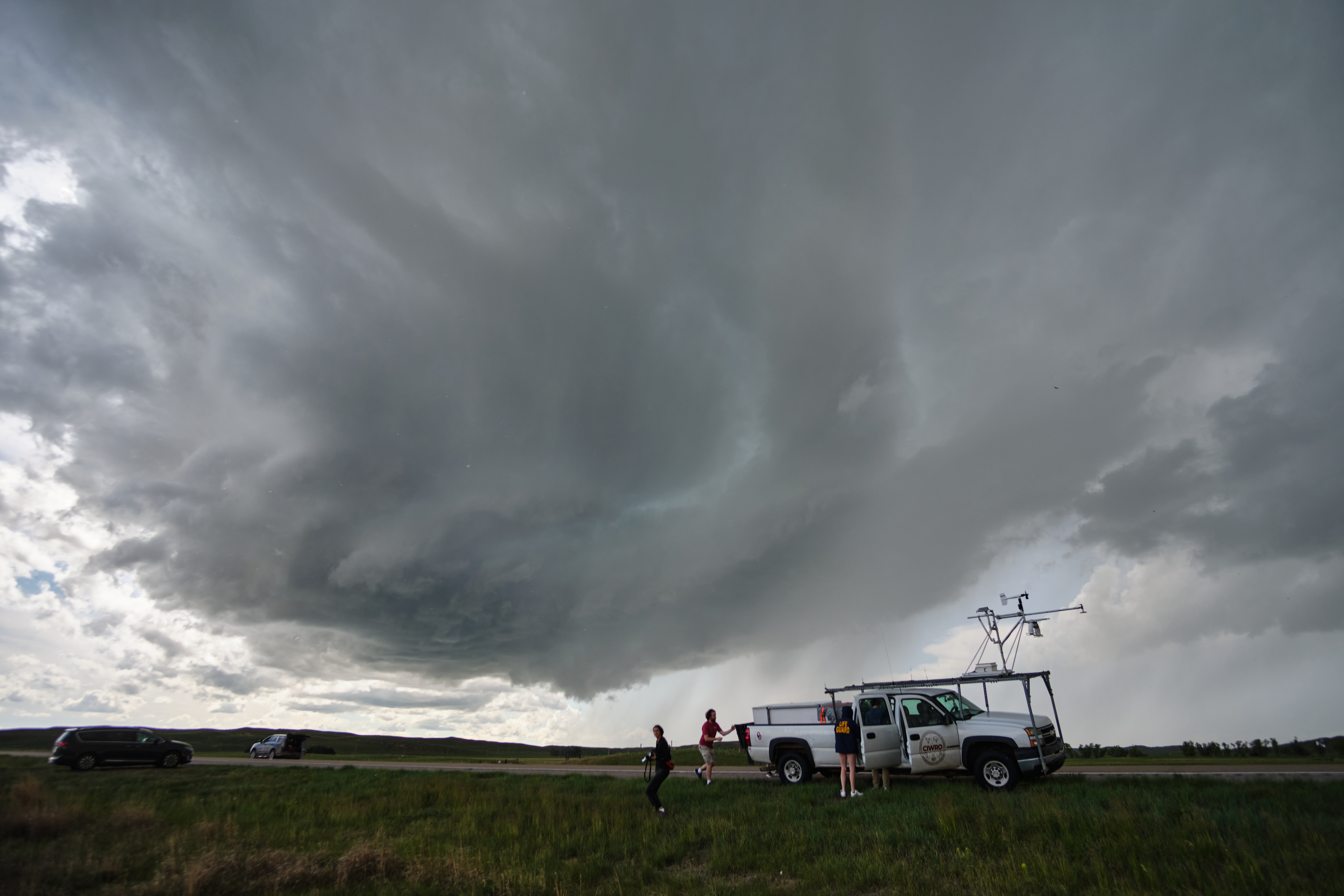
The University of Oklahoma will receive up to $220 million over five years from the U.S. Department of Commerce and the National Oceanic and Atmospheric Administration to continue the life-saving weather research led by the OU-NOAA Cooperative Institute for Severe and High-Impact Weather Research and Operations, extending a nearly 50-year partnership that has helped give Americans earlier, more accurate weather warnings
The OU Food Pantry won the annual Red River Food Fight, collecting 31,815.9 pounds of shelf-stable food and drinks to top UT Outpost’s 22,567 pounds. OU has won the competition four years in a row.