NEWS


NORMAN, OKLA. – A group of high school students from Tachikawa High School in Tokyo recently visited the University of Oklahoma weather research enterprise as part of an annual competition sponsored by the WNI WxBUNKA Foundation (WeatherNews Foundation). As part of the visit, students representing their school's Astronomy and Meteorology Club presented their competition-winning research on meteor observation and tracking to members of the National Weather Center and Advanced Radar Research Center community.
The students' project won the 13th High School/Technical College Meteorological Observation Equipment Contest, competing against 40 to 45 applications from schools across Japan. Their award-winning design stood out for its innovative approach to identifying meteor position and angle using a combination of visual observation, radio waves, and infrared camera technology to observe meteors and meteor showers. The students used their access to a telescope to verify the accuracy of a model they developed for projecting the trajectory of the orbital path of a comet.
For many of the students, this opportunity was their first visit to the United States, a significant milestone in their academic development. During their visit, the students presented their research in a seminar open to faculty, students and staff at the National Weather Center.
"They're brave. If you think about high school students going to a foreign country, speaking in a second language, that they did this kind of thing in an open seminar, it's impressive," said Tian-You Yu, director of operations at the ARRC and professor in electrical engineering and meteorology.
In addition to giving a seminar, the students were able to tour both the National Weather Center, the Radar Innovation Laboratory and other highlights on the University of Oklahoma Norman campus. The evening after their presentation, the students visited Lake Thunderbird to observe the night sky, an experience that particularly thrilled them, given the limited stargazing opportunities available in Tokyo.
The final selection for this year's competition will be held on Dec. 20 aboard the retired Japanese Antarctic research vessel SHIRASE5002.
About the University of Oklahoma
Founded in 1890, the University of Oklahoma is a public research university located in Norman, Oklahoma. As the state’s flagship university, OU serves the educational, cultural, economic and health care needs of the state, region and nation. For more information about the university, visit www.ou.edu.
The University of Oklahoma has received a transformative gift from Jon and Shannon McCartney, which will name the McCartney Family Tunnel of Champions, the McCartney Family Gate of the Gaylord Family - Oklahoma Memorial Stadium and the McCartney Family Grand Lecture Hall in the Michael F. Price College of Business. The gift will also support the Inspiring Champions and the Athletic Director’s Discretionary Fund, in addition to establishing the McCartney DFW Career Trek program at Price College.
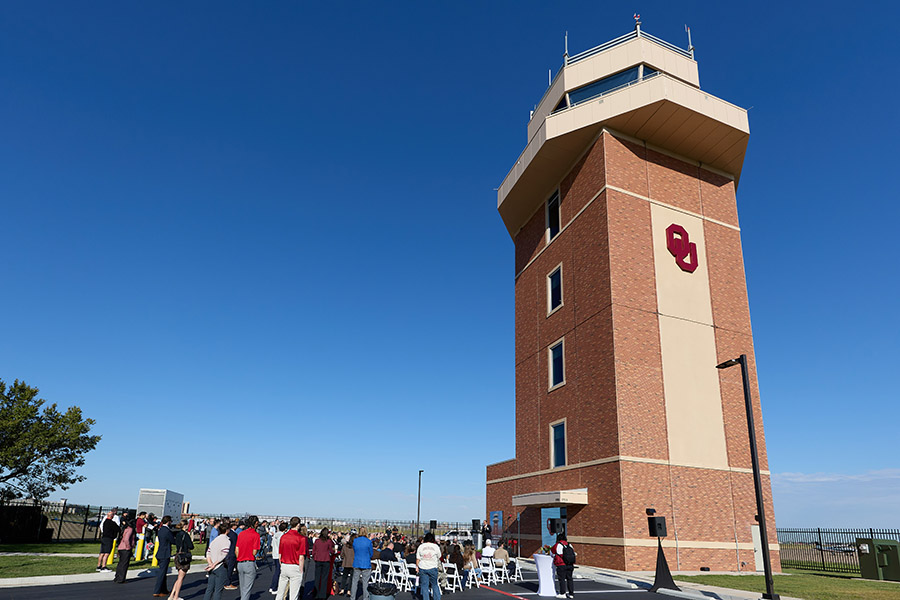
The University of Oklahoma today celebrated the opening of a new air traffic control tower at the OU Max Westheimer Airport. Standing 106 feet tall, more than double the current 52-foot facility, the new tower will modernize air traffic control operations and improve safety for pilots and students operating in the airspace.
Do I buy groceries or pay the electric bill? Should I pawn some of my belongings to afford my prescription? My child is sick, so I will have to miss work to take care of him. Those are just a few of the difficult choices that OU-Tulsa health professional students confronted during the Community Access to Resources Experience. The role-playing activity challenged students to navigate the financial, family and other pressures that can affect a person’s health and ability to follow medical advice. Held annually during the SCM Institute orientation week, the experience is designed to generate understanding and build empathy.