NEWS


NORMAN, OKLA. – Luis Felipe Flores Garzón learned more than he expected from his initial fieldwork with three Indigenous Achuar communities in the Ecuadorian Amazon last summer. He experienced firsthand the harsh realities faced by some Indigenous groups as they fight to preserve their cultural heritage and environment. He also absorbed the value of learning alongside the people, creating knowledge together, and supporting one another.
Flores Garzón, a doctoral candidate in the planning, design, and construction program of the Christopher C. Gibbs College of Architecture at the University of Oklahoma, is studying the Jea, a traditional house for 91 Achuar communities in this rainforest setting. He recently received the Endangered Material Knowledge Programme grant sponsored by the British Museum and Arcadia, a charitable fund supporting the preservation of cultural heritage, protecting the environment, and promoting open access. Teresa Chiriapa, the first female president of the Achuar community of Mashientz, and Angela Person, an associate professor of architecture at OU, are co-investigators on the grant.
“Receiving this grant from the British Museum holds deep significance, as it will support the Achuar people in preserving their cultural heritage and advocating for community planning that honors both their worldview and evolving societal needs,” said Flores Garzón.
This research is an extension of Flores Garzón’s doctoral program, he explains, which focuses on studying the Westernization of a traditional Amazonian house, the Jea, and how this transformation affects the Achuar people’s social structure, gender dynamics, and landscape management. Previous studies of the Jea rely heavily on non-Indigenous scholars’ descriptions, overlooking the house's more profound social, relational and cosmological significance for the Achuar. The grant will support his efforts to document valuable Achuar knowledge about the house's lifecycle – passed down via hands-on learning but quickly disappearing – and make it accessible to future Achuar generations, both digitally and physically, says Flores Garzón.
With the receipt of this grant, Flores Garzón joins the prestigious 2024 EMKP Cohort of international scholars from nearly 20 countries, undertaking diverse projects. He was also invited to participate in the EMKP training at The British Museum in London. Collectively, these projects underscore the cultural and traditional diversity preserved by the 2024 cohort.
“The communities I visited live far from the standards of Western society, yet their daily happiness and contentment were unlike anything I’ve seen elsewhere,” said Flores Garzón. “I hope to learn from this research to embrace the shared moments and presence of the communities that welcome me. I believe that research is a form of ceremony, and approaching it this way transforms the work into a constant, mindful meditation. There’s a certain magic that unfolds when we learn to genuinely listen to others.”
Click here to learn more about Luis Felipe Flores Garzón’s documentation project.

About the University of Oklahoma
Founded in 1890, the University of Oklahoma is a public research university located in Norman, Oklahoma. As the state’s flagship university, OU serves the educational, cultural, economic and health care needs of the state, region and nation. For more information about the university, visit www.ou.edu.
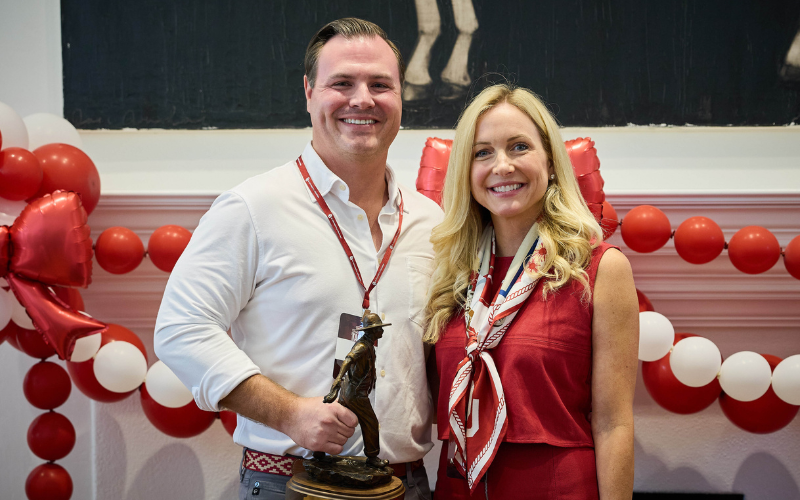
The University of Oklahoma has received a transformative gift from Jon and Shannon McCartney, which will name the McCartney Family Tunnel of Champions, the McCartney Family Gate of the Gaylord Family - Oklahoma Memorial Stadium and the McCartney Family Grand Lecture Hall in the Michael F. Price College of Business. The gift will also support the Inspiring Champions and the Athletic Director’s Discretionary Fund, in addition to establishing the McCartney DFW Career Trek program at Price College.
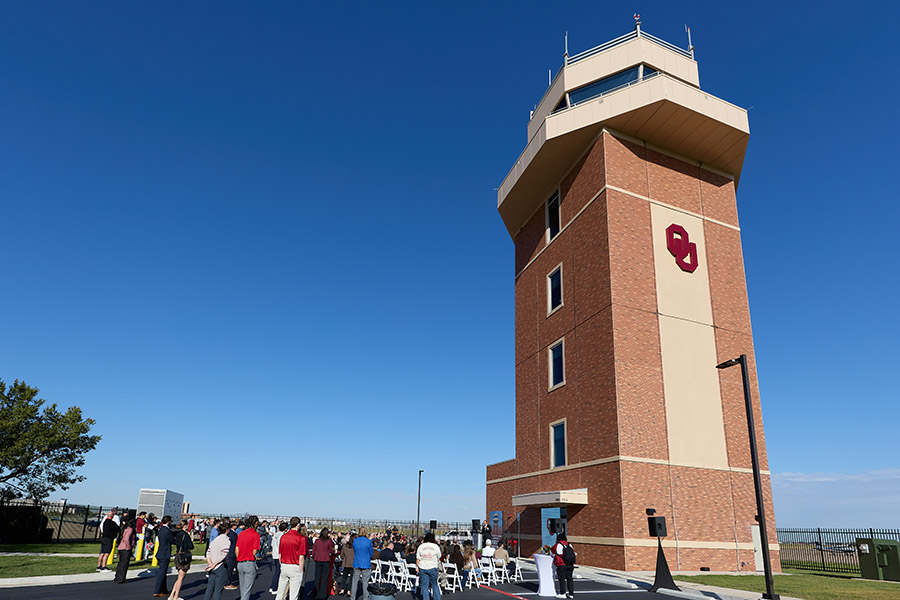
The University of Oklahoma today celebrated the opening of a new air traffic control tower at the OU Max Westheimer Airport. Standing 106 feet tall, more than double the current 52-foot facility, the new tower will modernize air traffic control operations and improve safety for pilots and students operating in the airspace.
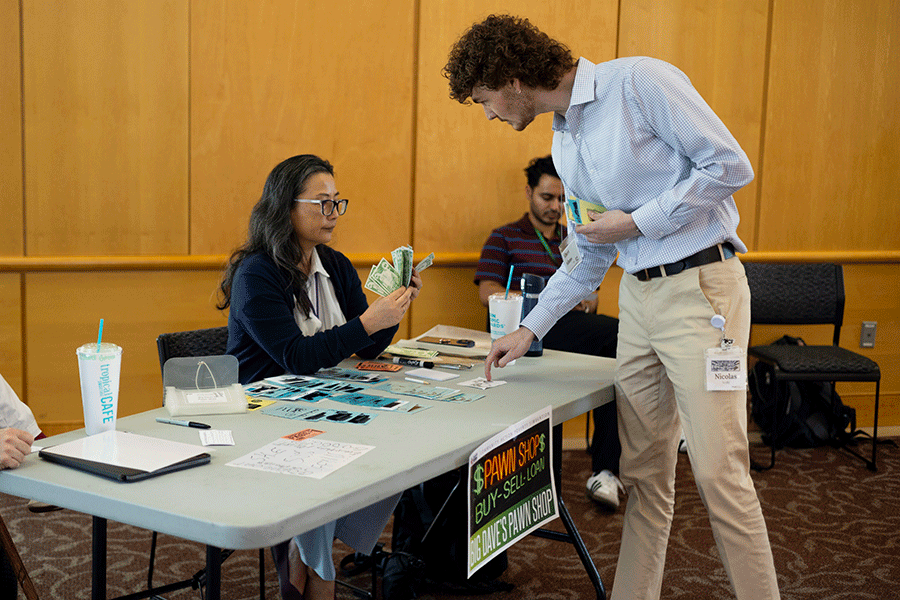
Do I buy groceries or pay the electric bill? Should I pawn some of my belongings to afford my prescription? My child is sick, so I will have to miss work to take care of him. Those are just a few of the difficult choices that OU-Tulsa health professional students confronted during the Community Access to Resources Experience. The role-playing activity challenged students to navigate the financial, family and other pressures that can affect a person’s health and ability to follow medical advice. Held annually during the SCM Institute orientation week, the experience is designed to generate understanding and build empathy.