NEWS


NORMAN, OKLA. – Quinn Smith, a graduate student at the University of Oklahoma Stephenson School of Biomedical Engineering, was selected in the 2024 Geographic Finalist category of the Institute of Electronics and Engineers (IEEE) 46th Engineering in Medicine and Biology Society (EMBS) student paper competition. Smith was the no. one ranked student in the United States and Canada among the many contestants.
Smith authored the paper, “Test-Retest Reliability of Neurovascular Coupling and Impairment in Epilepsy Measured by fNIRS and EEG” for the competition. For her efforts, she was awarded with a second-place finish.
“It was such an exciting feeling, and a little bit of shock,” said Smith. “I felt confident in the paper I submitted but never imagined I could be the top finalist of the region.
IEEE EMBS is the largest international society for biomedical engineering. EMBS provides its members with access to the people, practices, information, ideas, and opinions that are shaping one of the fastest-growing fields in science.
“It was already such an honor presenting my paper at the IEEE EMBS Conference,” said Smith. “So, placing well meant so much to me. It was such a great feeling to see our lab’s hard work pay off and get recognized at such a big conference.”
In addition to her academic prowess, Smith also has a history with the university's illustrious women’s gymnastics program. During her freshman year, Smith competed in two meets for the Sooners on vault for head coach K.J. Kindler’s team. A season-ending injury ended her freshman campaign. Following her freshman year, Smith decided to retire from gymnastics to focus on her academic journey at OU.
“In gymnastics, we’ve been trained to perform well under pressure, even under crazy circumstances,” said Smith. “So, when translating those experiences to an academic setting, being able to prepare well and be at your best when it mattered most was equally important.
Representing my team and university, whether it be for athletics or academics is always a thrilling experience that I’m extremely thankful for,” added Smith.
About the University of Oklahoma
Founded in 1890, the University of Oklahoma is a public research university located in Norman, Oklahoma. As the state’s flagship university, OU serves the educational, cultural, economic and health care needs of the state, region and nation. For more information about the university, visit www.ou.edu.
From strengthening severe-weather preparedness to advancing national security, MITRE and the University of Oklahoma (OU) are joining forces to tackle some of the nation’s most critical challenges.
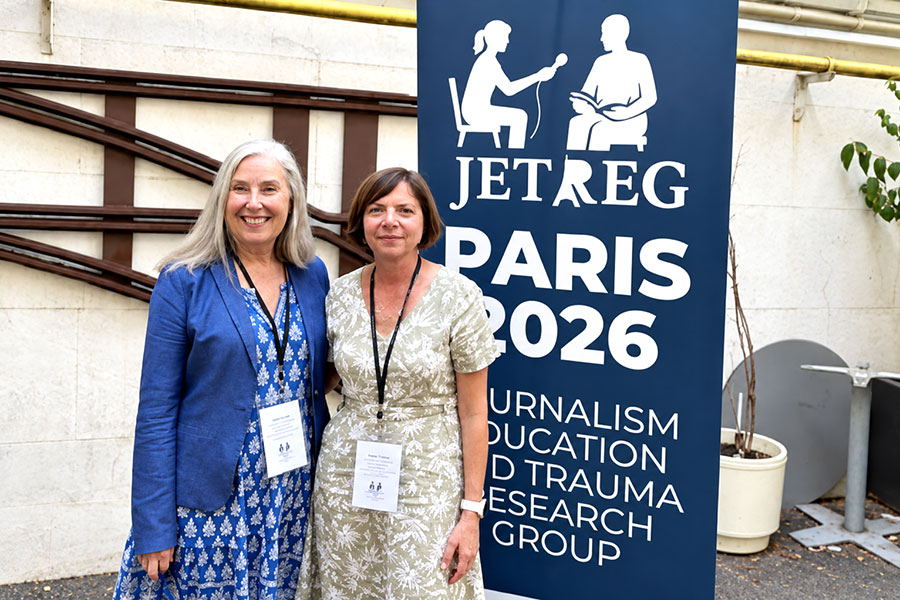
Desiree Hill was an executive producer at News 9 when the Oklahoma City bombing put local journalists in the middle of a story they would carry with them long after the coverage ended. Years later, she returned to the bombing as a researcher, interviewing journalists about its effects on their lives and work.
Jensen Moore, Ph.D., an associate professor of public relations at the University of Oklahoma’s Gaylord College of Journalism and Mass Communication, has been elected to a three-year term on the Association for Education in Journalism and Mass Communication’s Standing Committee on Professional Freedom and Responsibility.