NEWS


TULSA, OKLA. – University of Oklahoma Health Sciences Fran and Earl Ziegler College of Nursing has partnered with New York University Rory Meyers College of Nursing and the George Kaiser Family Foundation to explore strategies to decrease maternal and infant mortality through education and support. The coalition recently brought together various stakeholders at OU-Tulsa to discuss a successful and sustainable pathway to explore nurse-midwifery education and practice as one mechanism to address maternal and infant mortality in Oklahoma.
“As leaders in nursing education in Oklahoma, we are deeply motivated to address the need for more access to maternal care in our state,” said Melissa Craft, Ph.D., dean of the College of Nursing. “This symposium was an effort to bring the right people to the table to make these discussions happen and to determine the best way forward. I am grateful to leaders at both NYU and the George Kaiser Family Foundation for partnering with the OU College of Nursing to explore this exciting potential for the future.”
Oklahoma was recently ranked 47th in women’s health and reproductive care outcomes. At the same time, Oklahoma faces a shortage of health care providers, especially in obstetric care and rural areas. Over half of Oklahoma’s counties are considered maternity care deserts, and more than two-thirds of rural hospitals lack labor and delivery services. There is a critical need to grow Oklahoma’s maternal workforce.
“We saw that Oklahoma is at a crisis point,” said Kimberly Butler, senior program officer at the George Kaiser Family Foundation. “When it comes to maternal health in our state, one of the biggest challenges is provider access. Oklahoma has a lot of maternal health deserts in rural areas, but even the Tulsa and Oklahoma City areas – though not true deserts – still have low access to maternal health providers.”
The symposium participants say one option to address this workforce shortage could be to certify nurse midwives. Speakers discussed how certified nurse-midwifery care has been shown to contribute to improved outcomes in low- and high-resource settings in the U.S. and around the world. The strategic discussion engaged constituents, including policymakers, maternal health care professionals, health experts, legislators, consumers and others, regarding expanding health care access using a nurse midwifery-led care model.
“When you begin to think about who would be willing and ready to go into these spaces to provide access to the underserved, you realize midwives are primed for serving the community,” said Alexis Dunn Amore, Ph.D., clinical associate professor at the Rory Meyers College of Nursing at New York University. “It may be more efficient to train and educate local Oklahomans who would be willing to stay in the state and provide that care, especially in the rural areas. The way midwives train is community-focused.”
About the University of Oklahoma
Founded in 1890, the University of Oklahoma is a public research university located in Norman, Oklahoma. As the state’s flagship university, OU serves the educational, cultural, economic and health care needs of the state, region and nation. For more information about the university, visit www.ou.edu.
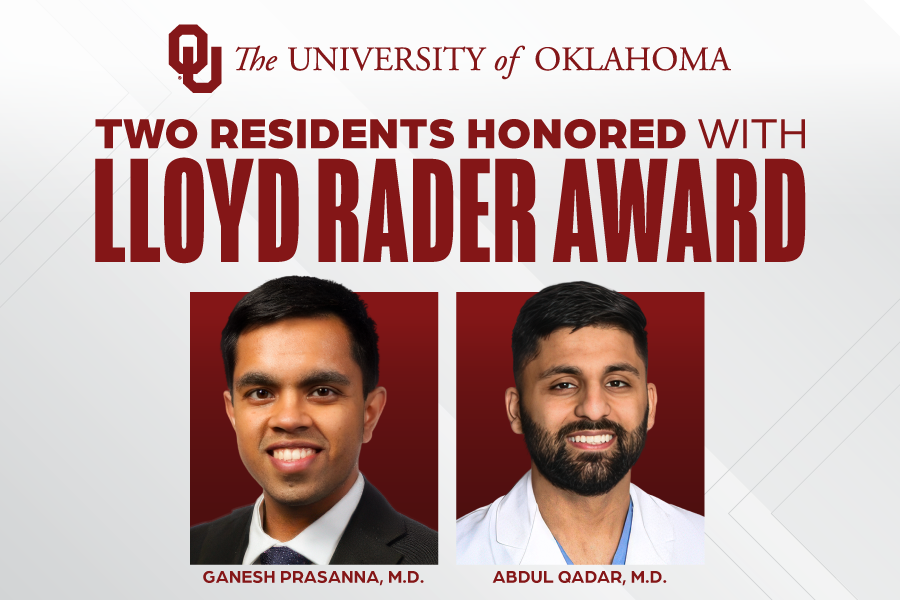
The University of Oklahoma College of Medicine has honored two residents with the Lloyd Rader Award, which recognizes outstanding clinical and research achievements in residency.
The University of Oklahoma will receive up to $220 million over five years from the U.S. Department of Commerce and the National Oceanic and Atmospheric Administration to continue the life-saving weather research led by the OU-NOAA Cooperative Institute for Severe and High-Impact Weather Research and Operations, extending a nearly 50-year partnership that has helped give Americans earlier, more accurate weather warnings
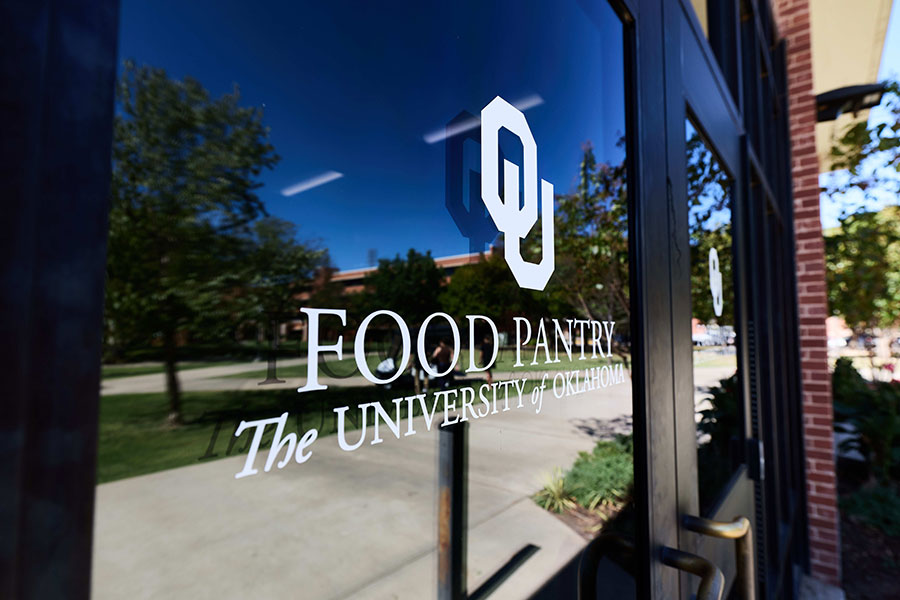
The OU Food Pantry won the annual Red River Food Fight, collecting 31,815.9 pounds of shelf-stable food and drinks to top UT Outpost’s 22,567 pounds. OU has won the competition four years in a row.