NEWS

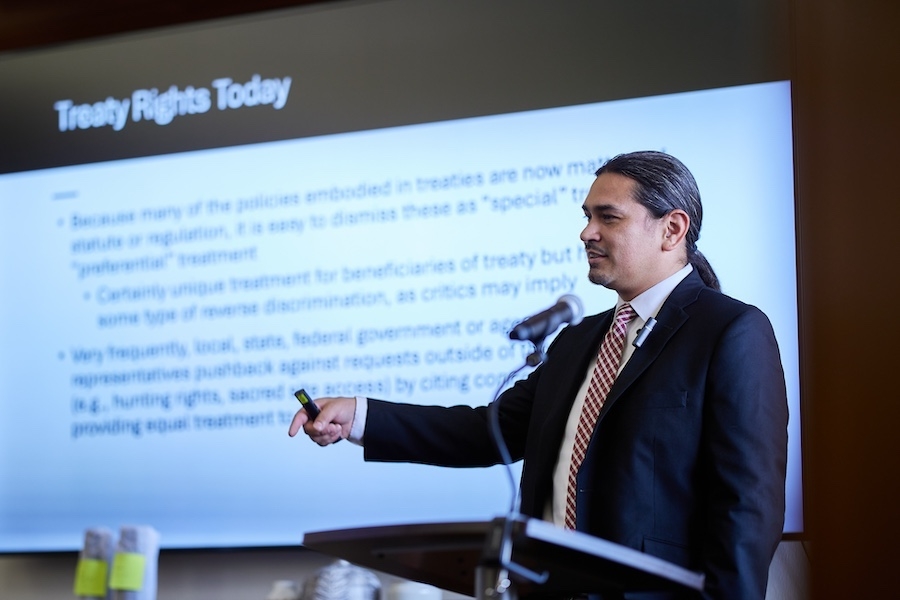
NORMAN, OKLA. — The University of Oklahoma recently hosted an event as part of its Ethical Tribal Engagement Series, which seeks to promote meaningful dialogue, cultivate ethical practices, and foster collaborative partnerships between Tribal Nations and representatives of non-Indigenous institutions. The event featured newly elected Comanche Nation Chairman Forrest Tahdooahnippah, JD (Comanche), who spoke on the topic of “Bridging Gaps: Treaties and Treaty Rights – A Tribal Leader’s Perspective.”
“Chairman Tahdooahnippah is deeply committed to Native law, focusing on protecting and strengthening Tribal sovereignty and educating others on these critical issues,” said Tana Fitzpatrick, JD, (Crow/Lakota/Ponca/Chickasaw), associate vice president of Tribal relations and director of the Native Nations Center. “We are grateful to him for illuminating OU faculty, staff and students about Comanche Nation’s treaties.”
Tahdooahnippah examined the trust relationships embedded in treaties between Tribal Nations and the U.S. government. His presentation included the historic and ongoing significance of treaty rights as more than legal contracts — they represent sacred agreements founded on trust and mutual respect, grounded in the sacrifices made by Native ancestors.
“For Indigenous peoples, treaties represent not just rights, but also responsibilities passed down from generations who fought, suffered and even gave their lives to secure them,” Tahdooahnippah said. “These are not just legal documents; they are human rights and fundamental rights that define the trust relationship between tribes and the federal government.”
During the keynote, Tahdooahnippah addressed a common misconception: that treaty rights are a form of special treatment or preferential status. He explained that this view undermines the true purpose of treaties, which are unique, nation-to-nation agreements.
“Calling treaty rights ‘special treatment’ has connotations of reverse discrimination, which misses the point entirely. Our treaty rights are our birthrights and they exist because our ancestors sacrificed for them,” he said.
Tahdooahnippah further explored the trust relationship through historical examples, including the Treaty of Medicine Lodge Creek, underscoring how treaties reflect the federal government’s recognition of Tribal Nations as sovereign entities.
“When the U.S. entered into treaties with the Comanche Nation, they were acknowledging us as nations — equivalent in status to any other sovereign country,” he said. However, he cautioned against interpreting treaties solely through the lens of Western contract law, which he argued fails to capture these agreements' moral and historical gravity.
Directly following his Keynote presentation, the Office of Tribal Relations hosted the inaugural “Ethical Engagement Showcase: Tribal Partnerships in Academia.” This event highlighted the work and collaborative efforts of faculty members from across OU’s Norman campus who are accomplished in fostering respectful relationships with Tribal Nations. Represented were 17 projects with 37 presenters from a diverse representation of OU departments, joined by partners from the Caddo Nation, Chickasaw Nation, Kiowa Tribe and the Otoe-Missouria Tribe.
The Comanche Nation is based near Lawton, Oklahoma.
To learn about the Native Nations Center in the Office of the President, visit ou.edu/nativenationscenter.
About the University of Oklahoma
Founded in 1890, the University of Oklahoma is a public research university located in Norman, Oklahoma. As the state’s flagship university, OU serves the educational, cultural, economic and health care needs of the state, region and nation. For more information about the university, visit www.ou.edu.
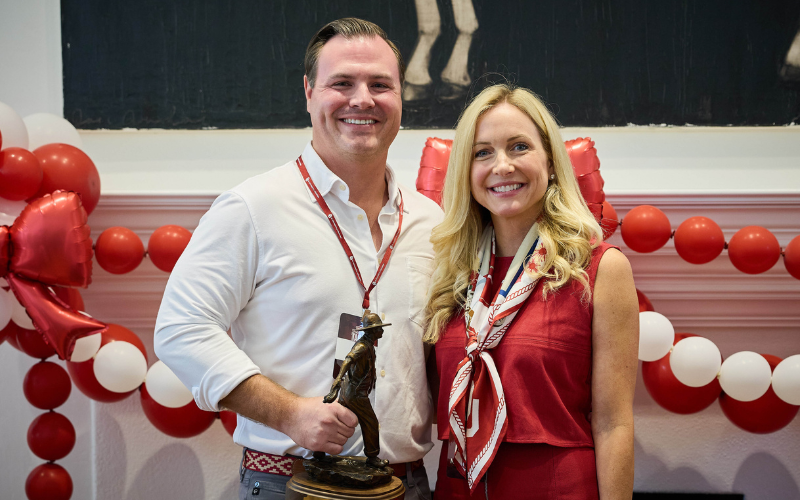
The University of Oklahoma has received a transformative gift from Jon and Shannon McCartney, which will name the McCartney Family Tunnel of Champions, the McCartney Family Gate of the Gaylord Family - Oklahoma Memorial Stadium and the McCartney Family Grand Lecture Hall in the Michael F. Price College of Business. The gift will also support the Inspiring Champions and the Athletic Director’s Discretionary Fund, in addition to establishing the McCartney DFW Career Trek program at Price College.
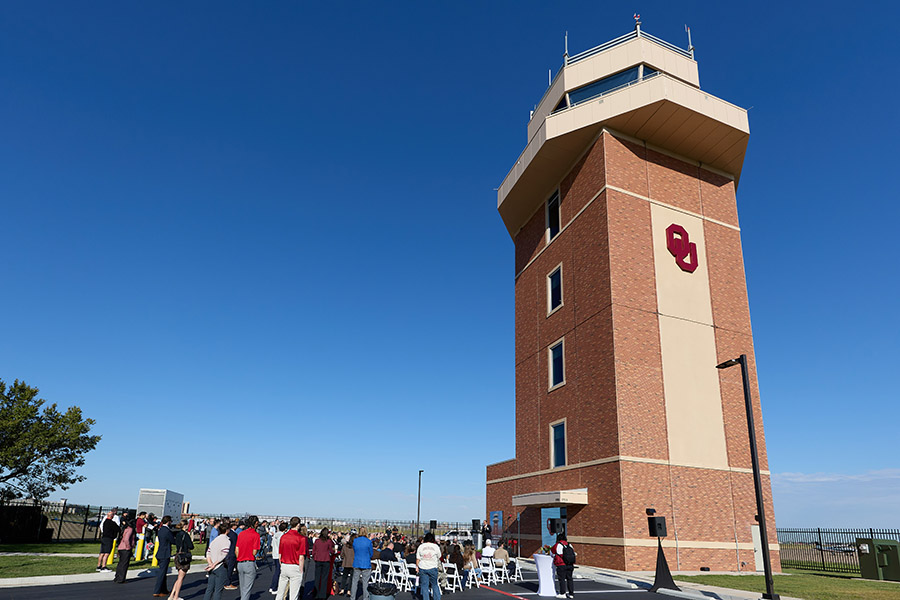
The University of Oklahoma today celebrated the opening of a new air traffic control tower at the OU Max Westheimer Airport. Standing 106 feet tall, more than double the current 52-foot facility, the new tower will modernize air traffic control operations and improve safety for pilots and students operating in the airspace.
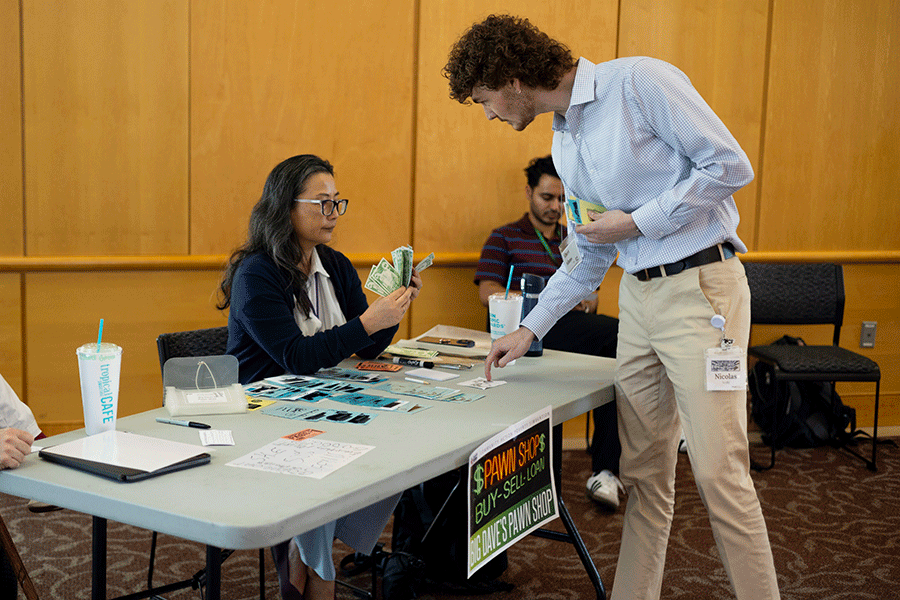
Do I buy groceries or pay the electric bill? Should I pawn some of my belongings to afford my prescription? My child is sick, so I will have to miss work to take care of him. Those are just a few of the difficult choices that OU-Tulsa health professional students confronted during the Community Access to Resources Experience. The role-playing activity challenged students to navigate the financial, family and other pressures that can affect a person’s health and ability to follow medical advice. Held annually during the SCM Institute orientation week, the experience is designed to generate understanding and build empathy.