NEWS

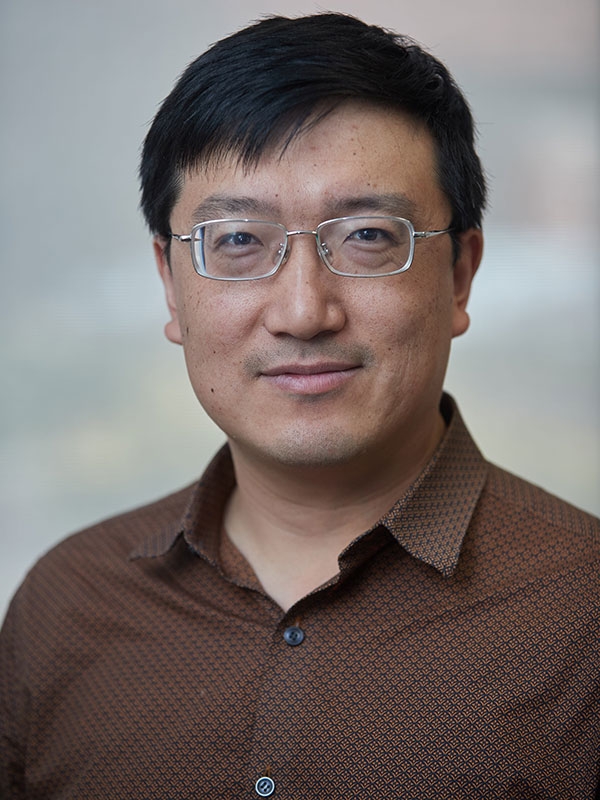
NORMAN, OKLA. – Bin Wang, a professor in the School of Sustainable Chemical, Biological and Materials Engineering at the University of Oklahoma, has received a Friedrich Wilhelm Bessel Research Award from the Alexander von Humboldt Foundation. Wang was selected for his contributions to computational catalysis and physical chemistry.
The Bessel Award is funded by the German Federal Ministry of Education and Research to foster collaborative relationships between international academics and German researchers. The award includes a grant that supports up to 12 months of study in Germany.
In his research, Wang uses simulations to understand materials at the atomic level, providing insights into materials that can be used to accelerate chemical reactions. He will work with the Sustainable Materials Computational Materials Design department of the Max Planck Institute to use a machine learning approach to study solid-liquid interfacial chemistry. Wang says that because simulations of the solid-liquid interface include so much complexity, accurate simulation can be challenging. Machine learning techniques can help improve those simulations.
According to Wang, the collaboration could not come at a better time. Recently, OU’s School of Sustainable Chemical, Biological and Materials Engineering added “sustainable” to its name. “When people think about chemical engineering, the perception is that it’s all about oil and gas chemistry and operation,” he said. “That’s the reason [the school] changed the name, to show that our research and education is very broad and to achieve a sustainable future.”
This April, the Max Planck Institute for Iron Research did something similar, becoming the Max Planck Institute for Sustainable Materials.
“This really reflects what’s happening in the field right now. People are looking to sustainability and the challenges associated with it,” said Wang.
Wang has received numerous accolades during the span of his career, including an Early Career Award from the U.S. Department of Energy. He has been recognized as an Emerging Investigator by the Royal Society of Chemistry’s Catalysis Science & Technology and an Influential Researcher by the American Chemical Society’s Industrial & Engineering Chemistry Research.
About the award
The Friedrich Wilhelm Bessel Research award is granted by the Alexander von Humboldt Foundation annually to 20 international scholars from outside Germany in recognition of their research accomplishments and to foster international academic collaboration with German research institutions. Visit the Humboldt Foundation’s website to learn more about the award.
About the University of Oklahoma
Founded in 1890, the University of Oklahoma is a public research university located in Norman, Oklahoma. As the state’s flagship university, OU serves the educational, cultural, economic and health care needs of the state, region and nation. OU was named the state’s highest-ranking university in U.S. News & World Report’s most recent Best Colleges list. For more information about the university, visit ou.edu.
The University of Oklahoma College of Medicine has honored two residents with the Lloyd Rader Award, which recognizes outstanding clinical and research achievements in residency.
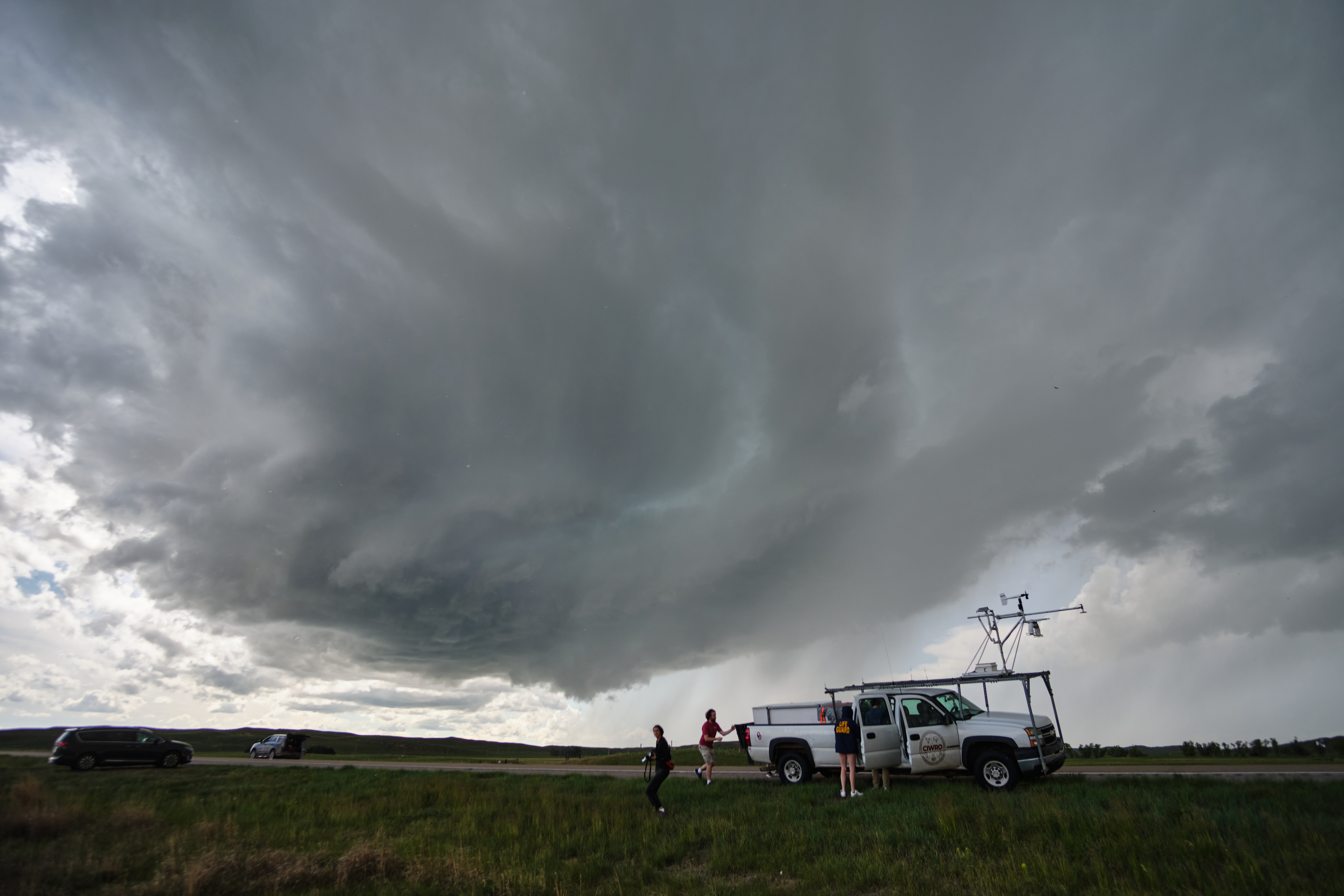
The University of Oklahoma will receive up to $220 million over five years from the U.S. Department of Commerce and the National Oceanic and Atmospheric Administration to continue the life-saving weather research led by the OU-NOAA Cooperative Institute for Severe and High-Impact Weather Research and Operations, extending a nearly 50-year partnership that has helped give Americans earlier, more accurate weather warnings
The OU Food Pantry won the annual Red River Food Fight, collecting 31,815.9 pounds of shelf-stable food and drinks to top UT Outpost’s 22,567 pounds. OU has won the competition four years in a row.