NEWS

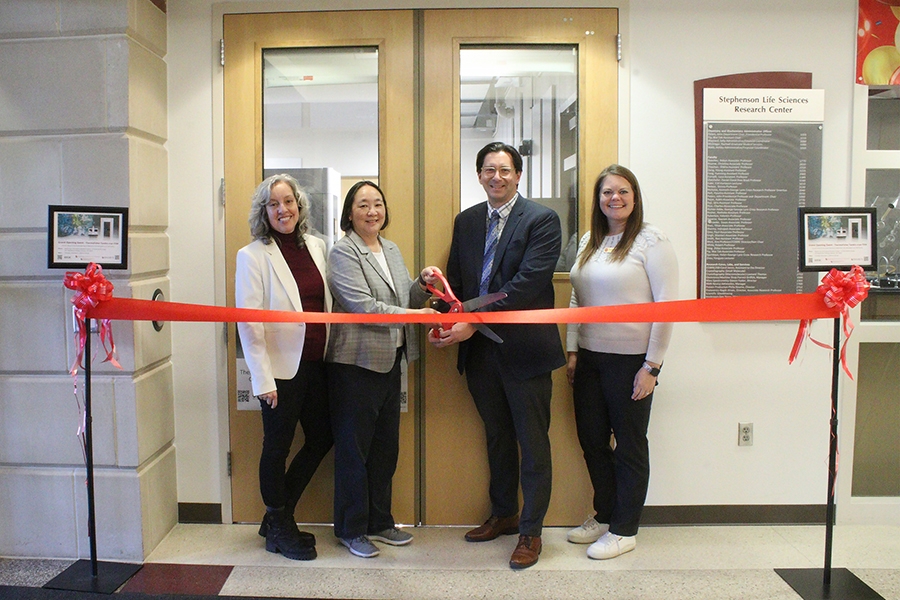
NORMAN, OKLA. – The University of Oklahoma officially unveiled a new microscope that enables advanced research capabilities during a grand opening on Thursday, Dec. 5.
“This Tundra cryo-transmission electron microscope is the first of its kind here at OU and in the state of Oklahoma. And, since it is a relatively new instrument, there are only a handful in the nation,” said Ann West, director of the Oklahoma Center for Biomedical Research Excellence in Structural Biology. “This microscope will allow researchers to complete single particle analysis for macro-molecular structure determinations.”
A cryo-TEM allows scientists to examine extremely small things, like proteins or viruses, in their natural state. The instrument passes an electron beam through a thin, frozen sample and captures detailed 2D images. Multiple 2D images can then be combined to produce 3D reconstructions that reveal atomic-level details.
“It’s very exciting that this instrument will be part of the core user facility of the Sam Roberts Noble Microscopy Lab. This technology will support many current and future students,” said SRNML Director Andrew Elwood Madden.
This facility was made possible through collaborative support from the Office of the Vice President for Research and Partnerships, the SRNML and COBRE.
Others present at the ceremony who will be involved in the use of the Tundra cryo-TEM include COBRE Biomolecular Structure Core Director Len Thomas, SRNML Research Scientist Julian Sabisch and SRNML Research Associate Preston Larson.
Learn more about COBRE, the SRNML and the Tundra cryo-TEM.
About the University of Oklahoma
Founded in 1890, the University of Oklahoma is a public research university located in Norman, Oklahoma. As the state’s flagship university, OU serves the educational, cultural, economic and health care needs of the state, region and nation. For more information about the university, visit www.ou.edu.
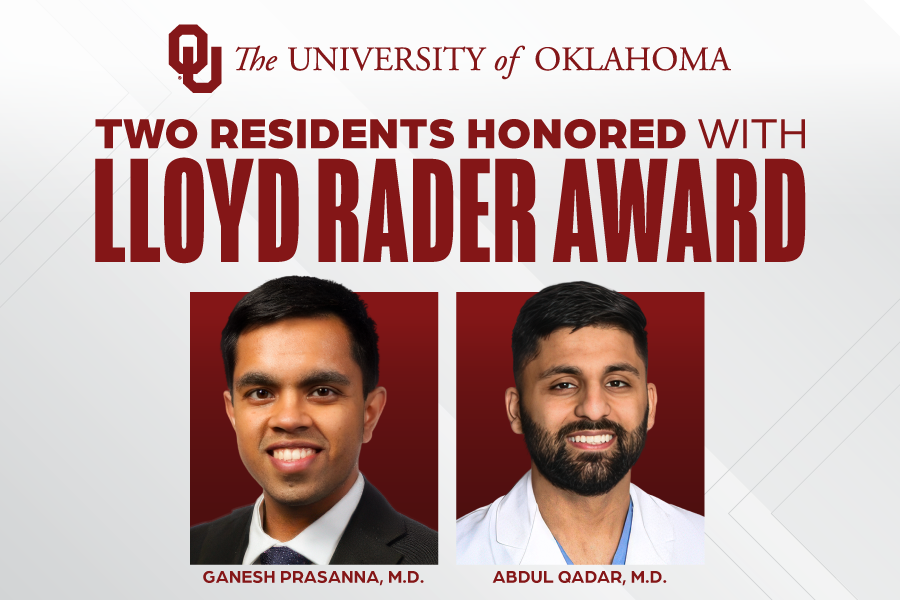
The University of Oklahoma College of Medicine has honored two residents with the Lloyd Rader Award, which recognizes outstanding clinical and research achievements in residency.
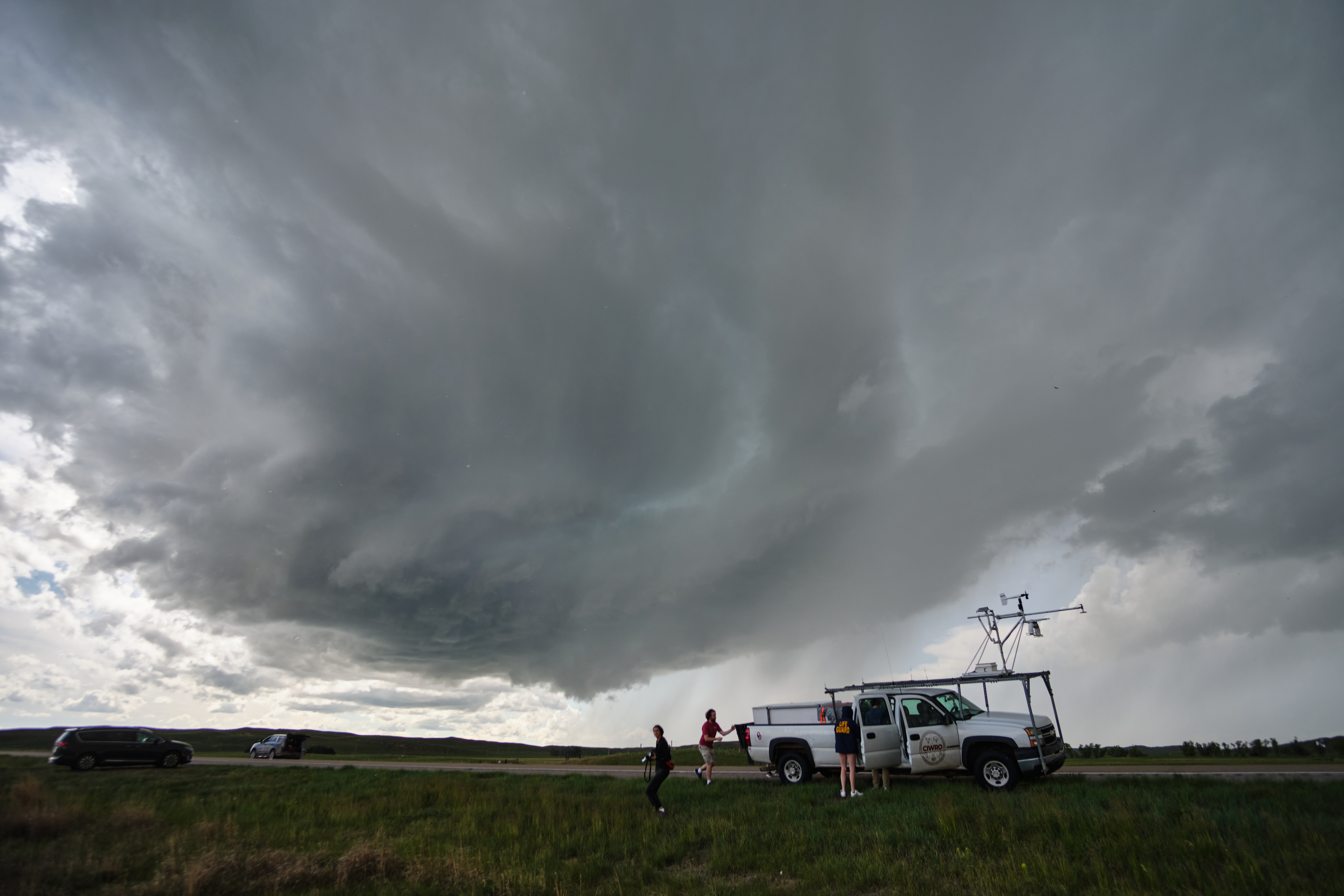
The University of Oklahoma will receive up to $220 million over five years from the U.S. Department of Commerce and the National Oceanic and Atmospheric Administration to continue the life-saving weather research led by the OU-NOAA Cooperative Institute for Severe and High-Impact Weather Research and Operations, extending a nearly 50-year partnership that has helped give Americans earlier, more accurate weather warnings
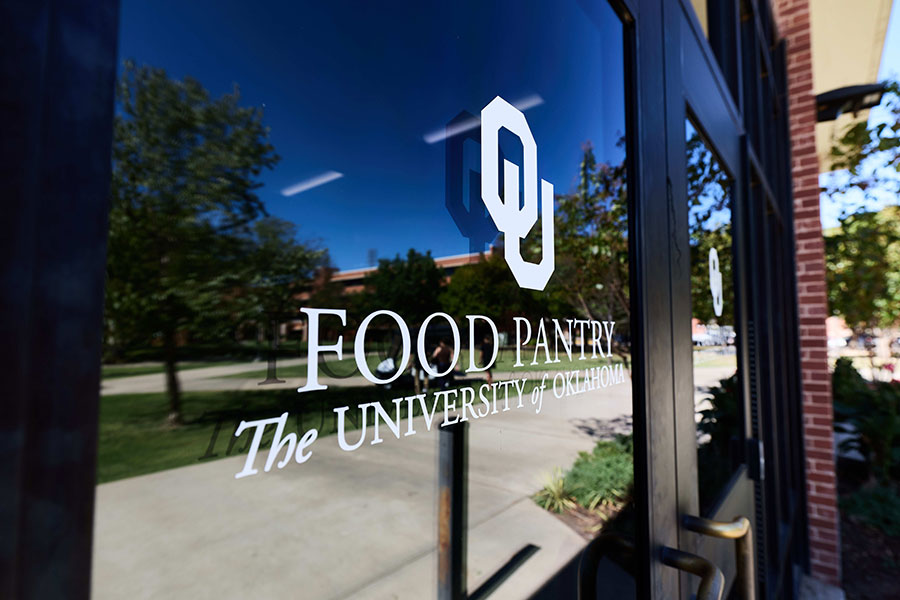
The OU Food Pantry won the annual Red River Food Fight, collecting 31,815.9 pounds of shelf-stable food and drinks to top UT Outpost’s 22,567 pounds. OU has won the competition four years in a row.