NEWS


NORMAN, OKLA. – Understanding how communities share information during disasters is more crucial than ever because of the recurring and unpredictable nature of storms, floods, tornadoes and earthquakes. Arif Sadri, Ph.D., an assistant professor at the University of Oklahoma, recently received a Faculty Early Career Development Award, known as a CAREER award, from the National Science Foundation to better understand how we communicate during these disasters.
Sadri’s project, jointly funded by NSF’s Human-Environment and Geographical Sciences program, Human Networks and Data Science program, and the Established Program to Stimulate Competitive Research, aims to enhance community disaster preparedness, response and recovery efforts.
“Communities share information about disaster risks differently, likely leading to uneven distributions of survival resources and communication that fails to foster trust. Understanding how people are connected in a community can reveal key insights into who lacks access to resources, who plays a key role, and how information about risks and resources can spread during disasters,” Sadri said.
The research project, titled “Risk-Sharing Communication Networks for Compound Disasters,” spans from April 1, 2024, to March 31, 2029, with an award amount of $506,797. Sadri hopes to introduce the concept of the risk-sharing commons primarily to the disaster research community and aims to address the risk-sharing communication challenges to foster resilience in at-risk communities.
With firsthand exposure to Oklahoma’s tornadoes and Florida’s hurricanes, Sadri recognizes the importance of his research.
“This research is from the core of my heart,” said Sadri, who is trained as a civil engineer with a background in transportation engineering and network science. “Understanding the dynamics of communal resource usage, or “commons,” is essential to my work, particularly in the context of disaster preparedness.”
Sadri highlights the importance of geographical sciences in determining community parameters, ranging from local to regional and rural to urban settings. “Social networks are not confined by physical proximity; trust can extend across distances, such as my mom’s influence from Bangladesh in South Asia,” he said.
His research draws on Elinor Ostrom’s Nobel Prize-winning work on the economic governance of the commons.
“We see the risks associated with the overuse of shared resources, such as a village pond overfished by some, impacting the livelihoods of others. This concept extends to modern-day risk-sharing commons, where communities depend on each other for information and resources during crises.
“Whether it is assessing the severity of a threat or coordinating protective actions like evacuation or resource sharing, this interconnectedness stresses the need for coordinated responses. With the increasing frequency and severity of disasters due to climate change, it is imperative to rely on credible and trustworthy information channels,” Sadri said.
The interdisciplinary approach combines qualitative and quantitative research methods to gain a fundamental understanding of risk communication dynamics in disaster scenarios. For the project, Sadri and his research team have started investigating how people and communities navigate complex communication networks before, during and after disasters. He says he will enhance the understanding of risk-sharing decisions and information cascades by analyzing these local social and social media networks, conducting observational research, and using advanced network science methods.
“I am excited about exploring how social media and face-to-face networks intersect in risk communication,” Sadri said. “In times of crisis, timely and accurate information can mean the difference between life and death. By studying how communities share risks and resources, we can develop more systematic approaches to disaster response.”
The interdisciplinary project integrates geographical sciences, social networks, and data science to address these complex problems. CAREER awards also require integrating research with education. Sadri says he plans to empower community volunteers and stakeholders in disaster response efforts.
The project includes a learning aspect for residents, community volunteers and organizations like the Red Cross. “I hope to translate my research in a way that the community volunteers can learn something out of it. I hope they will get to better know and build their networks based on this research,” Sadri said.
Learn more at Sadri’s research.
About the project:
The project, titled “Risk-Sharing Communication Networks for Compound Disasters,” spans from April 1, 2024, to March 31, 2029, with an award amount of $506,797. The project is jointly funded by the National Science Foundation’s Human-Environmental and Geographic Sciences Program, Human Networks and Data Science Program and Established Program to Stimulate Competitive Research co-funding as part of award #2339100.
About the University of Oklahoma
Founded in 1890, the University of Oklahoma is a public research university in Norman, Oklahoma. As the state’s flagship university, OU serves the educational, cultural, economic and health care needs of the state, region and nation. OU was named the state’s highest-ranking university in U.S. News & World Report’s most recent Best Colleges list. For more information, visit ou.edu.
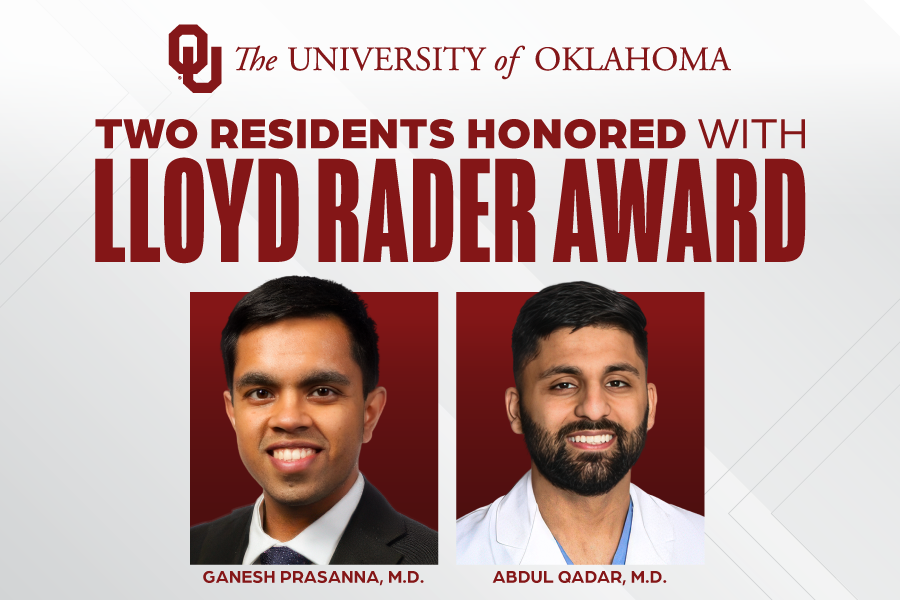
The University of Oklahoma College of Medicine has honored two residents with the Lloyd Rader Award, which recognizes outstanding clinical and research achievements in residency.
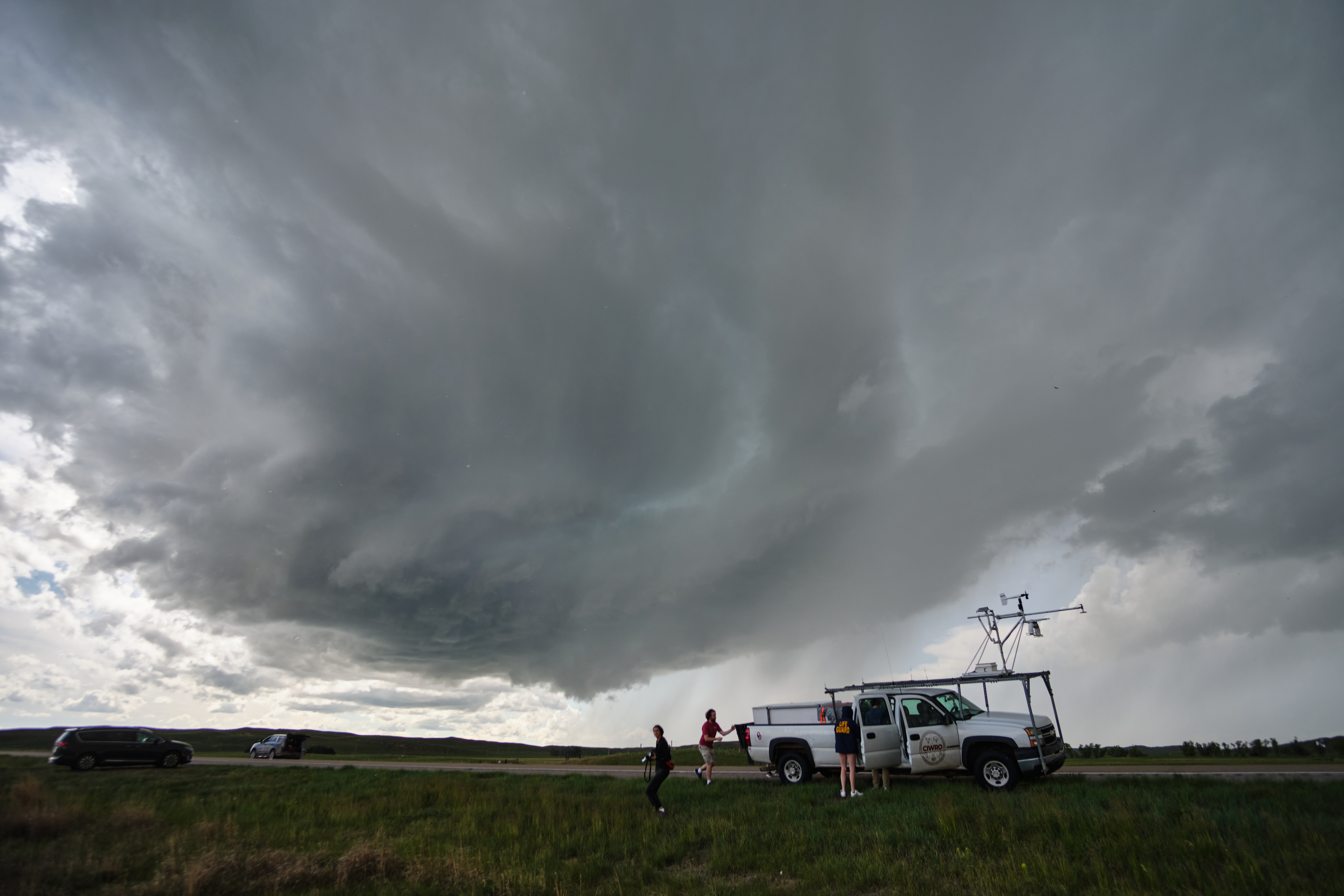
The University of Oklahoma will receive up to $220 million over five years from the U.S. Department of Commerce and the National Oceanic and Atmospheric Administration to continue the life-saving weather research led by the OU-NOAA Cooperative Institute for Severe and High-Impact Weather Research and Operations, extending a nearly 50-year partnership that has helped give Americans earlier, more accurate weather warnings
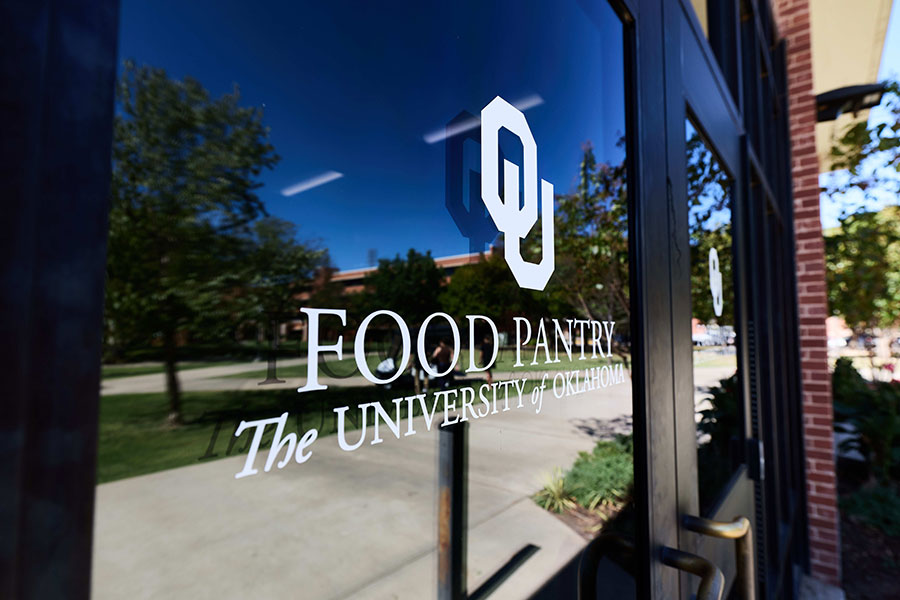
The OU Food Pantry won the annual Red River Food Fight, collecting 31,815.9 pounds of shelf-stable food and drinks to top UT Outpost’s 22,567 pounds. OU has won the competition four years in a row.