NEWS

OKLAHOMA CITY, OKLA. – Research increasingly suggests that when a woman with obesity becomes pregnant, a process of “fetal reprogramming” increases the risk that her baby will face problems like obesity, Type 2 diabetes and liver disease earlier in life.
To better understand how that reprogramming occurs, University of Oklahoma researchers recently earned a $2.3 million grant from the National Institutes of Health. They also will study whether an antioxidant called PQQ given to the mother can lower the risk of future metabolic problems for her offspring.
“Today in the United States, more than 40% of women of childbearing age are overweight or obese,” said OU College of Medicine researcher Karen Jonscher, Ph.D., who is leading the work of the grant with Dean Myers, Ph.D. “Research has shown that people whose mothers were obese during pregnancy have a higher risk for developing metabolic dysfunction-associated steatotic liver disease, a fatty liver disease that becomes progressively worse and can result in the need for a transplant. However, in offspring, it happens earlier in life and with more severe problems. The whole process seems to be accelerated in children who are born to mothers with obesity.”
Much of America’s obesity problem is attributed to eating a “Western-style” diet that is heavy on fats. However, even if a woman with obesity eats healthier during pregnancy, her offspring still face a higher risk of disease. Jonscher and Myers believe the key may be what is happening in the placenta — the interface between mother and fetus.
Obesity is essentially a low-grade, chronic inflammatory disease. Fat cells cause inflammation, which means the body’s white blood cells are in a constant state of activation and can damage other cells and tissues. Cholesterol and triglyceride levels rise, and blood pressure increases. Jonscher hypothesizes that the inflammation in pregnant women with obesity prompts the placenta to send a signal to the fetus’s stem cells, telling them to reprogram themselves to become more susceptible to the inflammation’s harmful effects.
“There is even some evidence that inflammation changes how nutrients are transported to the fetus so that fat is preferentially transported rather than the building blocks of proteins,” said Jonscher, an associate professor of biochemistry and physiology.
With the grant, Jonscher and Myers will try to prove that hypothesis. In addition, they will test an antioxidant called pyrroloquinoline quinone, or PQQ, for its ability to block or reverse fetal reprogramming. PQQ, found in fruits and vegetables, has anti-inflammatory properties, but if a person doesn’t eat a healthy diet, they are less likely to have adequate levels of PQQ.
In their preliminary studies in a preclinical research model, the researchers found that when PQQ is given to obese mothers, their offspring are protected from fatty liver disease in adulthood. Because women are generally advised not to take weight loss drugs during pregnancy due to potential harm to the fetus, the researchers hope PQQ is both safe and effective.
“Based on the data we have gathered so far, we believe that PQQ will create a healthier pregnancy,” Myers said. “The mother may still have a high body mass index, but PQQ appears able to lower inflammation and improve cholesterol and lipid levels. If we can improve the mother's health, we are also improving the function of the placenta, which will protect the fetus in a positive way. And if we can protect the placenta, nutrient transport will be improved with more amino acids and protein building blocks reaching the fetus instead of fats, as well as better oxygen flow.”
Myers, who is a professor in the Department of Obstetrics and Gynecology, often talks with his clinical colleagues who are caring for women with obesity during their pregnancies. Exercising and eating a healthy diet can be difficult for all people, pregnant or not, and physicians need another tool to help women become more metabolically healthy while pregnant.
“Our goal is to create a less-inflamed, healthier placenta,” he said. “Hopefully, PQQ will help the mother, too, because women with obesity who are pregnant have an increased risk for gestational diabetes. If our research with this grant is successful, we hope to move PQQ into clinical trials in a few years.”
About the University of Oklahoma
Founded in 1890, the University of Oklahoma is a public research university located in Norman, Oklahoma. As the state’s flagship university, OU serves the educational, cultural, economic and health care needs of the state, region and nation. OU was named the state’s highest-ranking university in U.S. News & World Report’s most recent Best Colleges list. For more information about the university, visit ou.edu.
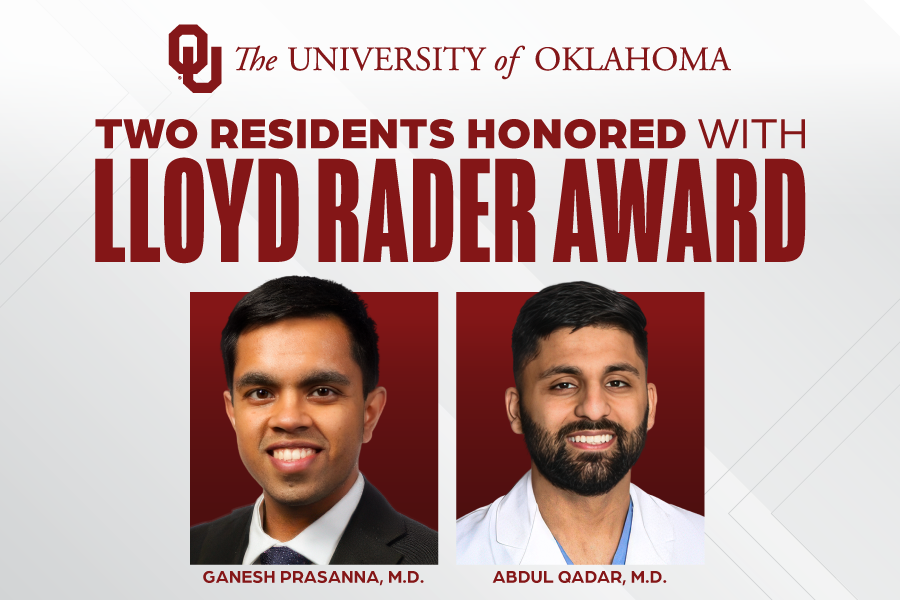
The University of Oklahoma College of Medicine has honored two residents with the Lloyd Rader Award, which recognizes outstanding clinical and research achievements in residency.
The University of Oklahoma will receive up to $220 million over five years from the U.S. Department of Commerce and the National Oceanic and Atmospheric Administration to continue the life-saving weather research led by the OU-NOAA Cooperative Institute for Severe and High-Impact Weather Research and Operations, extending a nearly 50-year partnership that has helped give Americans earlier, more accurate weather warnings
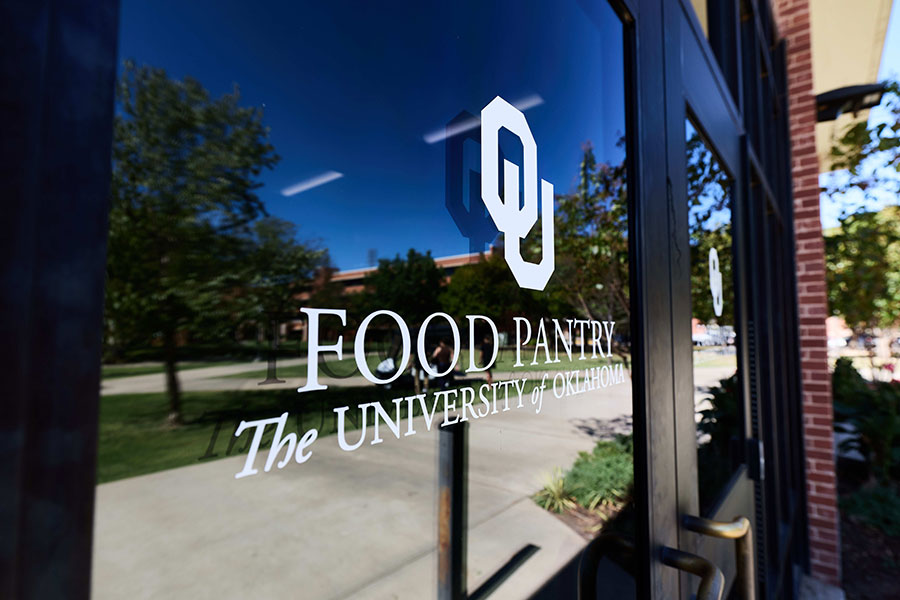
The OU Food Pantry won the annual Red River Food Fight, collecting 31,815.9 pounds of shelf-stable food and drinks to top UT Outpost’s 22,567 pounds. OU has won the competition four years in a row.