NEWS

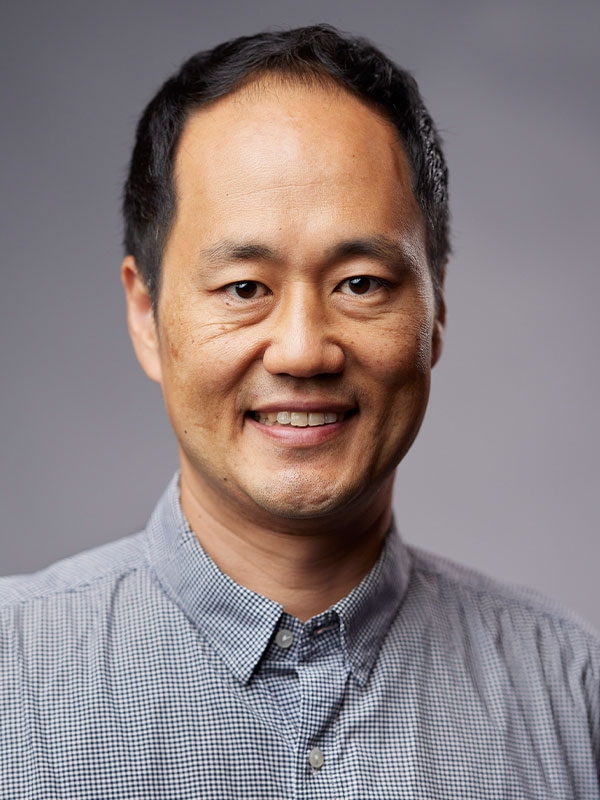
NORMAN, OKLA. – University of Oklahoma engineering researcher Sangpil Yoon, Ph.D., has been awarded a $1.9 million grant from the U.S. Department of Health and Human Services, National Institutes of Health, for his project titled “Development of protein-based nanostructures activated by ultrasound.”
The five-year grant is part of the NIH’s Research Project Grant (R01) program, which supports cutting-edge health-related research and development initiatives. Yoon’s funding, totaling $363,919 for the first year, helps move his research into protein-based delivery systems that could revolutionize how diseases are treated at the cellular level forward over the next five years.
Yoon says his research in cell engineering signals a significant advancement in both laboratory and clinical settings. “Our work is fueled by the utilization of artificially engineered gas vesicles (GVs) and the fusion of RNP enzymes and other proteins, offering promising avenues for medical advancement and the promotion of holistic well-being,” Yoon said.
The project focuses on tackling one of the major challenges in advancing cell-based and patient-specific therapies: gene cargo delivery systems. Yoon’s goal is to pioneer a novel in vitro non-viral intracellular delivery approach by combining GVs – protein shells containing gas in the core – with Cas9-ribonucleoprotein, the RNP enzyme, to form protein clouds as delivery cargo. The delivery system will be controlled by ultrasound excitation, enabling safe and efficient manipulation of target cells.
Yoon explains that while viral methods are common and effective, they have limitations regarding what they can deliver and the size of the molecules they can transport. “The uniqueness of our GV and ultrasound-based method lies in its non-viral nature, which potentially overcomes some of the limitations,” Yoon said.
Traditional gene therapy methods often rely on viral vectors for delivery, which come with limitations such as payload size restrictions and potential immune responses. Yoon’s approach offers several advantages, though. Unlike viral methods, the GV and ultrasound-based approach is non-viral, allowing for the delivery of various types of molecules, including proteins and nanoparticles, without size limitations. Additionally, the use of ultrasound enables precise spatial-temporal activation of the delivery system, enhancing its safety and effectiveness.
Important to Yoon’s research is the utilization of GVs as contrast agents for ultrasound imaging. These naturally occurring structures, derived from bacteria, offer several advantages over existing delivery systems. Notably, their smaller size compared to microbubbles allows for more efficient delivery through connective tissues and blood vessels. Furthermore, GVs can serve dual purposes as both delivery vehicles and imaging agents, streamlining the diagnostic and therapeutic process.
His research also holds promise for addressing the cost-effectiveness of gene therapy methods. By eliminating the need for complex cell manipulation procedures and logistical challenges associated with current therapies, his approach has the potential to significantly reduce the overall cost of treatment.
About the Project:
The project, titled “Development of protein-based nanostructures activated by ultrasound,” began Feb. 1, 2024, with funding expected through Jan. 31, 2029. The project is funded by the National Institute of General Medical Sciences, National Institutes of Health, Project #1R01GM152704-01.
About the University of Oklahoma
Founded in 1890, the University of Oklahoma is a public research university in Norman, Oklahoma. As the state’s flagship university, OU serves the educational, cultural, economic and health care needs of the state, region and nation. OU was named the state’s highest-ranking university in U.S. News & World Report’s most recent Best Colleges list. For more information, visit ou.edu.
The University of Oklahoma College of Medicine has honored two residents with the Lloyd Rader Award, which recognizes outstanding clinical and research achievements in residency.
The University of Oklahoma will receive up to $220 million over five years from the U.S. Department of Commerce and the National Oceanic and Atmospheric Administration to continue the life-saving weather research led by the OU-NOAA Cooperative Institute for Severe and High-Impact Weather Research and Operations, extending a nearly 50-year partnership that has helped give Americans earlier, more accurate weather warnings
The OU Food Pantry won the annual Red River Food Fight, collecting 31,815.9 pounds of shelf-stable food and drinks to top UT Outpost’s 22,567 pounds. OU has won the competition four years in a row.