Date
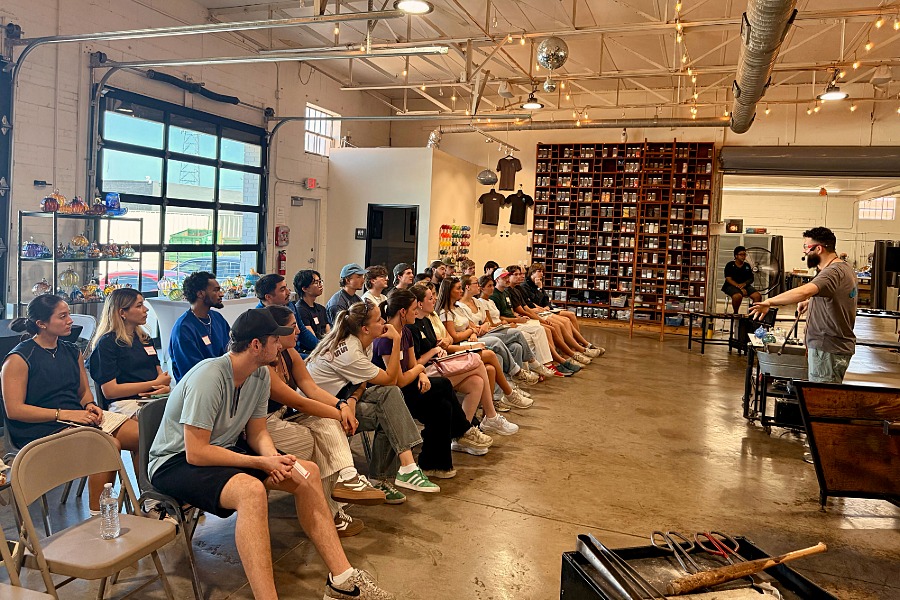
On November 19, 2025, Gibbs College of Architecture hosted a panel focused on how artificial intelligence can be integrated into the University of Oklahoma’s (OU) and College’s policies and practices, as well as its teaching and research efforts. The well-attended event created space for faculty and staff to hear directly from colleagues involved in campus AI workgroups and to consider what these developments mean for planning, design, and construction-related fields. The session was organized by Angela Person, Associate Dean for Research and External Engagement, with support from Hannah Williamson.
Tammy McCuen, professor of Construction Science, began by sharing updates from the AI Governance & Policy Workgroup, which is developing university-wide guidance for responsible AI use. For Gibbs, this work will help provide clearer expectations for students and faculty as AI becomes more common in curricula, research processes, and administrative tasks. The principles emerging from this group—such as transparency, fairness, and accountability—will support the College as it navigates questions around authorship, academic integrity, and ethical use of tools.
Mia Kile, associate professor of Interior Design, offered perspective from the AI Healthcare Implementation Workgroup, where conversations about data governance, cross-campus collaboration, and AI literacy have strong relevance for design disciplines as well. Whether the topic is urban data, building performance simulations, or construction analytics, similar questions arise: Who controls the data? What are the risks? How do we prepare students to use these tools responsibly? The group’s focus on long-term infrastructure and training aligns with the needs of departments across Gibbs.
Suchi Bhattacharjee, Associate Dean for Research and Administration and associate professor of Interior Design, and Kofi Asare, assistant professor of Construction Science, presented on the AI Education: Training and Teaching Workgroup, emphasizing both the opportunities and challenges the group is seeing across campus. For the College, their work reinforces the importance of clear syllabus policies, consistent guidance for students, and faculty training—especially in learning environments where AI-generated content can blur lines around process, originality, and evaluation. A subset of this group is also developing new General Education learning outcomes around AI literacy, which would help OU students build foundational skills before entering discipline-specific coursework.
Ladan Mozaffarian, assistant professor of Regional & City Planning, shared updates from the AI Research Workgroup, whose efforts support the growing number of OU faculty and students using AI in climate modeling, material research, visualization, planning, and more. The workgroup is organizing and exploring seed funding, discussion boards, hands-on workshops, and internal consulting services to create new opportunities for campus researchers. Their work on computing needs, data management, and interdisciplinary collaboration will help strengthen the College’s capacity to take on AI-enabled projects.
René Peralta, the College’s AI Liaison and lecturer of Architecture, closed the session by discussing ongoing efforts within Gibbs itself. He shared early findings from a summer survey that showed faculty interest in AI paired with practical concerns about transparency, learning fundamentals, and how AI should be introduced in the curriculum. He also reflected on national conversations from the Association of Collegiate Schools of Architecture AI Design Practices Conference, held September 25–27, 2025, which explored how design programs are moving beyond image generation to focus more on authorship, ethics, and critical literacy. His upcoming work—which includes forming a Gibbs AI Workgroup, continuing to coordinate with Division leadership, launching a newsletter, and supporting the creation of AI literacy guidelines—aims to support faculty and students as they navigate these developments.
Looking ahead, Gibbs College will draw on these insights, together with industry perspectives and emerging best practices, as it refreshes its strategic plan in Spring 2026.
Gibbs College is pleased to present the exhibition 200 Digital Drawings by Professor Tiziana Proietti, currently on display in the Gould Hall Living Room.
Gibbs College of Architecture Professors Amber Brown and Amy Leveno led 29 students to Dallas, Texas, in September for a learning experience as part of their Design 7 Studio course.
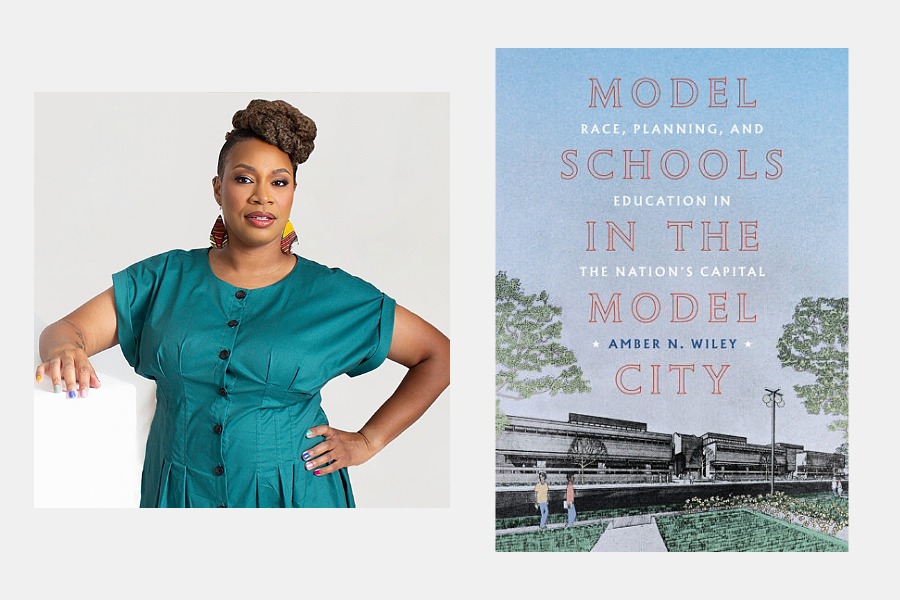
Christopher C. Gibbs College of Architecture professor and Institute for Quality Communities Director Dr. Amber N. Wiley’s book, Model Schools in the Model City: Race, Planning, and Education in the Nation’s Capital, has received two major honors from the Urban History Association.