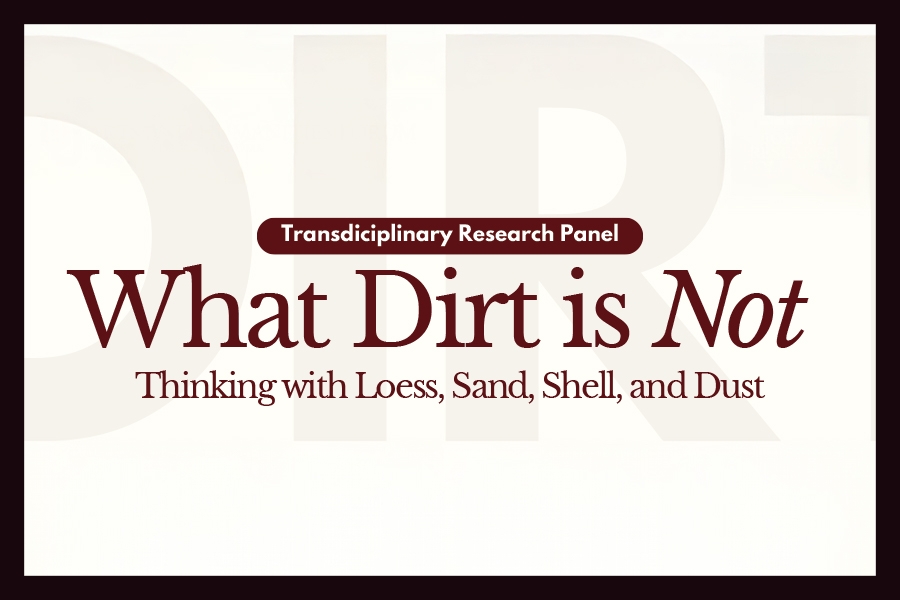
Associate professor of Architecture Tamar Zinguer recently contributed to a dynamic, multidisciplinary conversation as part of the University of Oklahoma Arts & Humanities Forum’s 2025–26 theme year, “Dirt.” The event—“What Dirt Is Not: Thinking with Loess, Sand, Shell, and Dust”—brought together scholars from across the OU and beyond to examine how different kinds of earth and sediment shape environments, histories, and cultural narratives.
This program marked the second event in the Forum’s four-part public series. Moderated by Kim Marshall, Director of the Arts & Humanities Forum at OU, the discussion featured perspectives from Geosciences, Anthropology, Architecture, and the Oklahoma Oral History Research Program. Together, the speakers explored how materials such as loess, sand, shell, and dust carry scientific, social, and symbolic meaning—and how they challenge our assumptions about what “dirt” is and is not.
The panel featured presentations by:
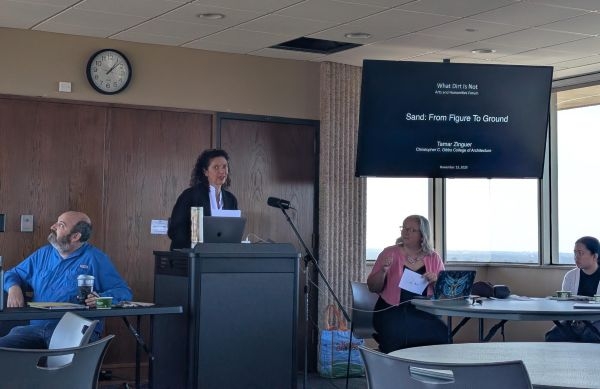
Tamar Zinguer's presentation. Photo credit: Donovan Linsey.
Zinguer’s forthcoming book is titled Sandbox: An Architectural History (MIT Press), and her presentation on the panel explored the “imagination that is engendered by sand.”
A full recording of the panelist’s presentations and discussion is available as a podcast episode on OUAH.FM, a collection of podcasts and audio resources created by the Arts & Humanities Forum.
The 2025–26 Forum series will continue throughout the year with additional public talks, community-focused programs, and a faculty fellows initiative that invites deeper reflection on how “dirt”—in all its forms—shapes our landscapes, our stories, and our shared sense of place.
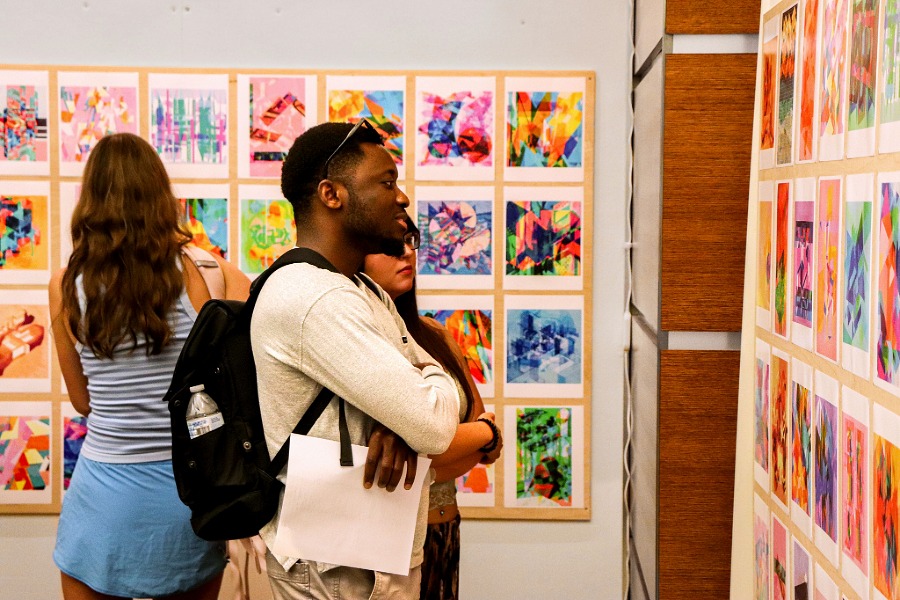
Gibbs College is pleased to present the exhibition 200 Digital Drawings by Professor Tiziana Proietti, currently on display in the Gould Hall Living Room.
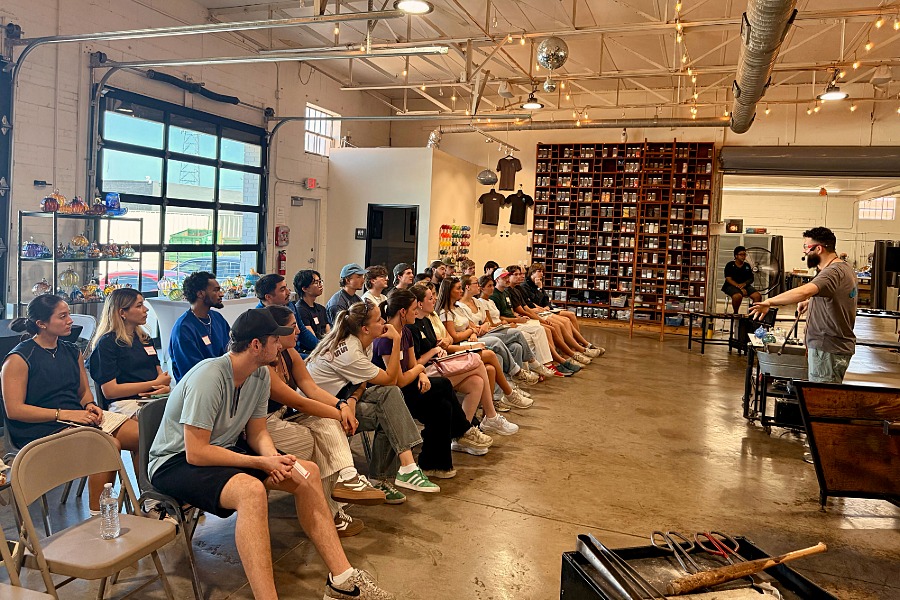
Gibbs College of Architecture Professors Amber Brown and Amy Leveno led 29 students to Dallas, Texas, in September for a learning experience as part of their Design 7 Studio course.
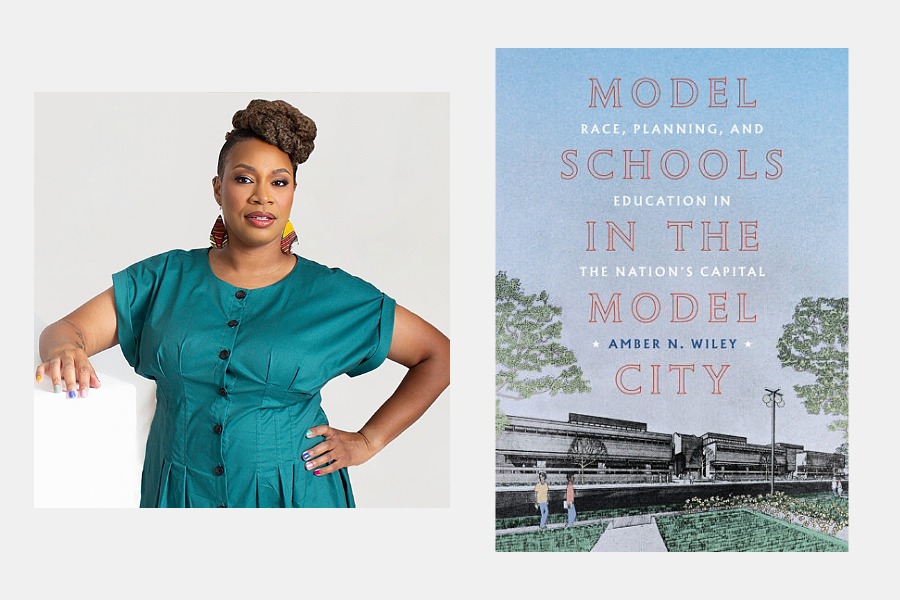
Christopher C. Gibbs College of Architecture professor and Institute for Quality Communities Director Dr. Amber N. Wiley’s book, Model Schools in the Model City: Race, Planning, and Education in the Nation’s Capital, has received two major honors from the Urban History Association.