Date
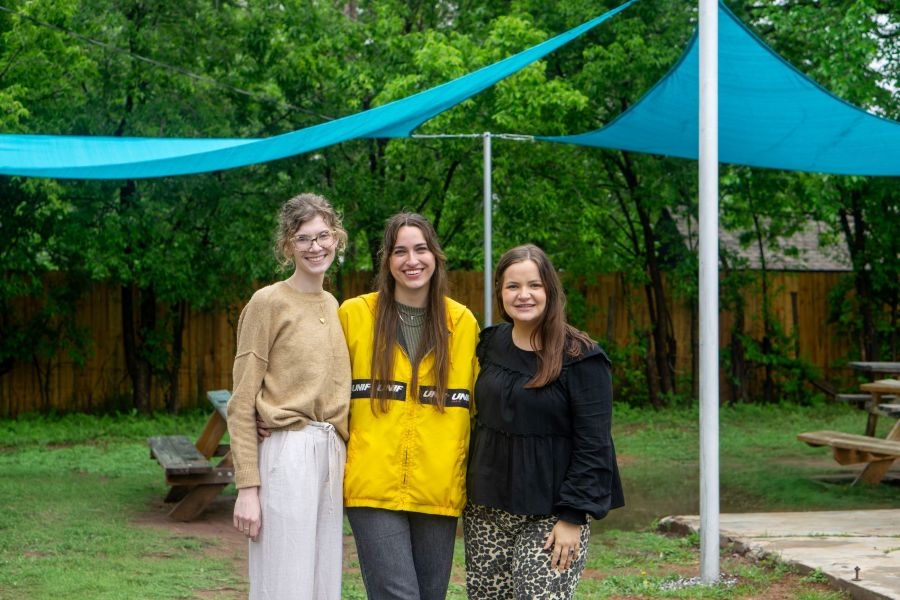
Three students from the OU Christopher C. Gibbs College of Architecture had the opportunity to gain professional experience and positively impact their community through the Gibbs Design in Action Award, a grant initiative supporting student-led design and research projects. The Gibbs Design in Action Award is organized by Dr. Wanda Liebermann. The students—Emma Eitzen, Jordan Hughes, and Gracie Kimbrell—worked with Sisu Youth Services in Oklahoma City to design a shade pavilion for Sisu’s clients. Christopher Loofs served as the students’ mentor.
The students began their collaboration in the fall of 2023, and on April 26, 2025, they celebrated the opening of their installation. Eitzen notes, “Due to the shelter only being accessible during certain hours, the clientele would congregate in multiple different places, specifically seeking shade in the summertime. We also had a secondary goal of creating a communal space that could act as a connecting point to the surrounding community – creating interest and starting a conversation about Sisu Youth Services. Ideally, this conversation and the block party that we threw in celebration of the pavilion would be the start of donations to help Sisu in being able to erect their architectural add-on that will one day take the place of the temporary pavilion that we designed.”
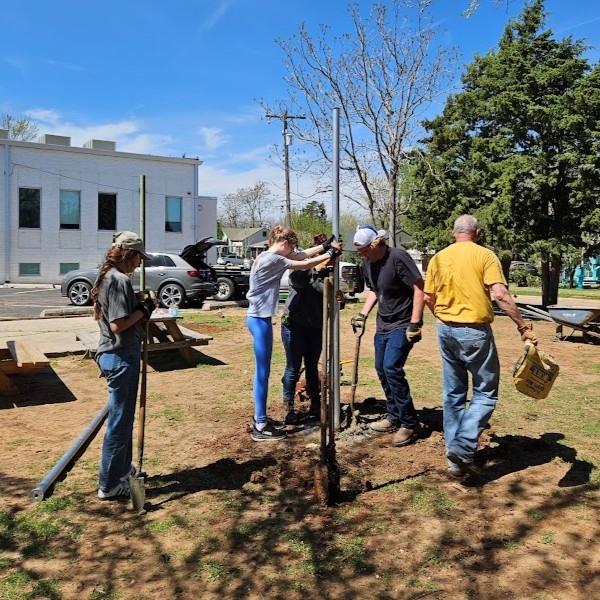
Construction of the Sisu pavilion. Courtesy of Emma Eitzen.
Hughes offers additional insight into the pavilion design and the team’s collaboration with Sisu:
How would you describe the purpose and design of the pavilion?
The pavilion’s design is intentionally simple, featuring two large shade structures over an empty lot adjacent to the Sisu facility. Despite its simplicity, the pavilion serves a significant purpose. It transforms a previously unused space into a welcoming gathering area for the youth served by Sisu, providing them with a sense of identity and a safe, protected environment from the elements. Additionally, the presence of the pavilion addresses concerns from neighboring residents about youth congregating in the area. By establishing a designated, purposeful space, the structure communicates that these young individuals are valued members of the community. Importantly, the pavilion is designed as a temporary installation, aligning with Sisu’s ongoing efforts to raise funds for a new, permanent facility.
What does this project mean to you personally?
This project has been an invaluable learning experience that extended beyond traditional academic instruction. From grant writing and design development to hands-on construction and collaborative teamwork, it has provided a comprehensive understanding of the multifaceted nature of architectural practice. It has also deepened my appreciation for the role of architecture in addressing social issues and fostering community well-being.
What did you learn from working with Sisu and the community?
One of the most profound lessons we learned is that small, thoughtful interventions can have a significant impact. There were moments when we questioned whether the pavilion would make a meaningful difference. However, during the construction phase, we were frequently approached by youth expressing their gratitude and sharing how much the space meant to them. These interactions reinforced the importance of community engagement and the value of even modest contributions.
How do you hope this pavilion will impact the youth Sisu serves?
I hope the pavilion offers the youth a sense of belonging and recognition within their community. By creating a dedicated space for them, we aim to affirm their presence and importance.
Featured image courtesy of Jordan Loofs.
Gibbs College is pleased to present the exhibition 200 Digital Drawings by Professor Tiziana Proietti, currently on display in the Gould Hall Living Room.
Gibbs College of Architecture Professors Amber Brown and Amy Leveno led 29 students to Dallas, Texas, in September for a learning experience as part of their Design 7 Studio course.
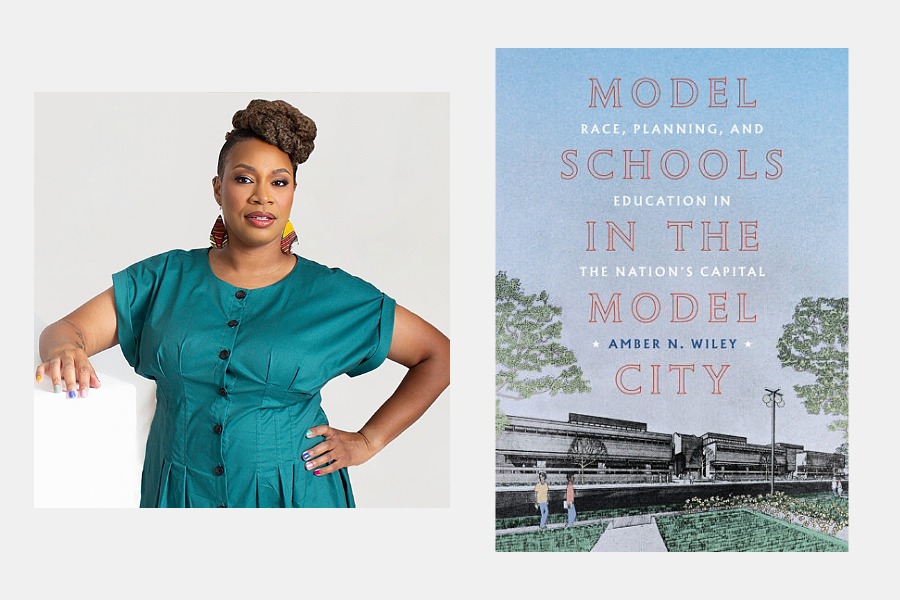
Christopher C. Gibbs College of Architecture professor and Institute for Quality Communities Director Dr. Amber N. Wiley’s book, Model Schools in the Model City: Race, Planning, and Education in the Nation’s Capital, has received two major honors from the Urban History Association.