Recently, PLAD instructor LaTasha Timberlake led 16 students enrolled in the Environmental Design Practicum course, providing them with an opportunity to connect classroom learning with practical application. The course is designed to help students apply their skills and theories to community projects, including work with grassroots organizations in northeast Oklahoma City, an area experiencing urban changes.
Students participated in research, community collaboration, and fieldwork, while also documenting their findings through artistic and written methods. This approach aims to prepare students to address challenges in planning and design with thoughtful and collaborative strategies.
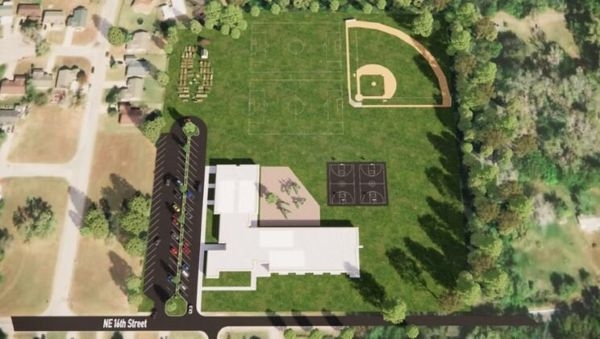
Rendering of the full Garden Oaks Community Center property. Photo courtesy of the Alpha Community Foundation of Oklahoma.
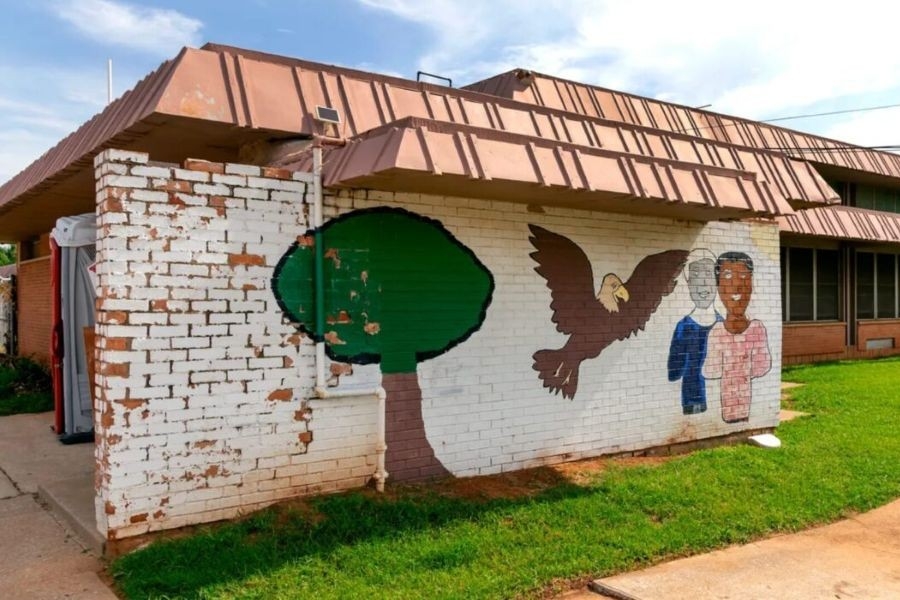
This semester’s project focused on the Garden Oaks Community Center and its surrounding neighborhoods, Garden Days and Garden Oaks. The practicum is part of a collaboration with the Alpha Community Foundation, a nonprofit affiliate of the Alpha Phi Alpha Fraternity. The foundation purchased the former Garden Oaks Elementary School—a 27,500-square-foot structure built in 1954 and left vacant after its closure in 2002—and has been renovating it into a community hub since 2021. The center has been partially open to the community following a ribbon-cutting ceremony earlier this year.
Students explored questions about protecting and maximizing assets in underserved communities while challenging traditional planning and design methods. Their work also addressed topics such as cultural preservation, environmental sustainability, and economic development.
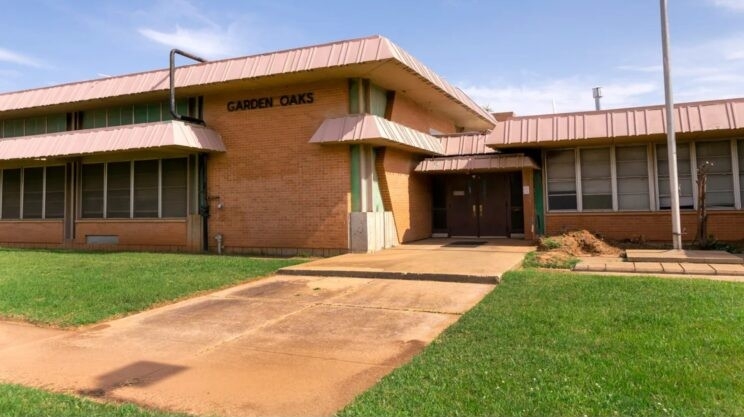
The former Garden Oaks Elementary School. Photo courtesy of Chris Landsberger.
During the semester, students worked with key stakeholders and community members to guide their research and develop recommendations. A primary objective was to explore reuse models for the Garden Oaks Community Center, aiming to ensure that the site serves as an equitable and functional space for the community. Through this engagement, students gained insights into the social, cultural, and economic dynamics of the area.
“What I enjoy most about this course is the ability for students to “Reimagine” spaces without being limited and confined to traditional norms. They are given the freedom to use stakeholder feedback and personal perspective to create spaces for the future while honoring the spirit of the past," said Timberlake.
The Environmental Design Practicum demonstrates how education can extend beyond the classroom to engage with pressing societal issues. By participating in projects like the Garden Oaks Community Center, students develop a deeper understanding of how they can contribute to the revitalization of underserved neighborhoods.
Construction Industry Speaker Series welcomed Stephen Evans from the Oklahoma City National Memorial & Museum to give a lecture on better conversations and relationship building.
The University of Oklahoma Christopher C. Gibbs College of Architecture Hall of Fame recognizes a select number of high-character individuals who have made a significant and lasting positive impact on Gibbs College, its students, staff, faculty, alumni and/or to communities across the globe. The impact may have been, or continues to be, in the form of service and mentorship, sustained professional excellence, and/or advancement and financial support. Joseph Edgar Smay is part of the 2025 Hall of Fame class.
Christopher C. Gibbs College of Architecture congratulates three architecture students who were recognized in the 2026 AIA Dallas Student Design Awards.