Date
In their first ten days of school, first-year Architecture students collaborated on designing, making and flying air vessels, or kites. The students were led by Architecture faculty Tamar Zinguer, Shooka Motamedi, Dayton Clark, Jordan Loofs, Hunter Read, Ted Reeds and Chris Morrey.
In order to create a successful air vessel, students had to design in terms of lightness and lift. Unlike most works of architecture which are heavy and anchored to the ground, the success of a kite is measured primarily by its ability to be airborne. Their kites also needed to be visible from the ground and responsive to wind and the hand pulling it.

An Architecture student with their kite.
When designing their air vessels, students looked at kites designed by a variety of different scientists for inspiration. Specially, they examined the large tetrahedral kites designed by Alexander Graham Bell. While kites are typically viewed as objects of play, many designers have adapted them to a variety of purposes. For generations, kites have also been used to carry messages, measure the direction and force of wind and mimic birds and planes.

An Architecture student releasing their kite.
This project allowed first-year Architecture students to have fun while simultaneously planning and thinking critically about design. Zinguer expressed her excitement for the project, “Despite the unusual lack of wind in Oklahoma, we all witnessed a few successful designs. Most successful was the sense of collaboration that the project initiated from the very first days of the semester.”
Gibbs College is pleased to present the exhibition 200 Digital Drawings by Professor Tiziana Proietti, currently on display in the Gould Hall Living Room.
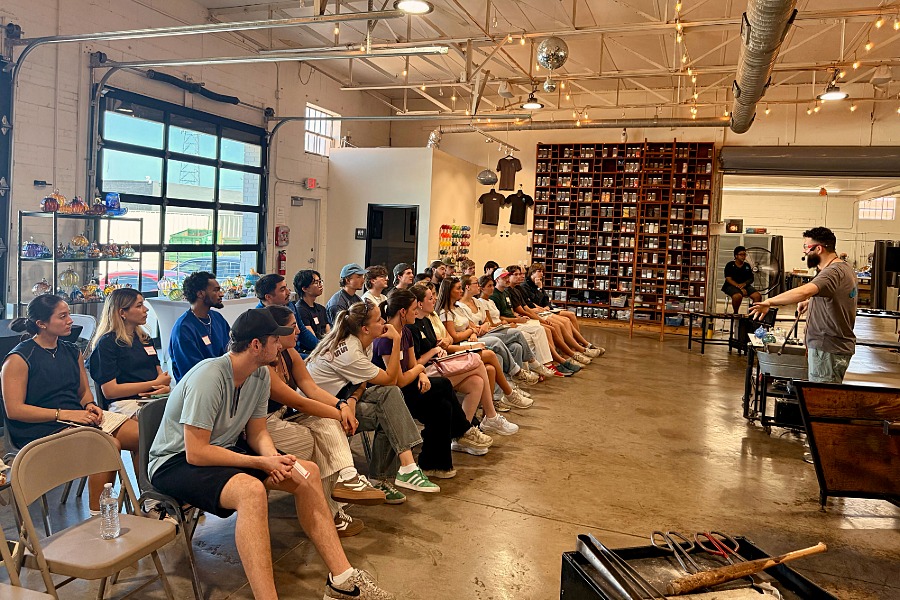
Gibbs College of Architecture Professors Amber Brown and Amy Leveno led 29 students to Dallas, Texas, in September for a learning experience as part of their Design 7 Studio course.
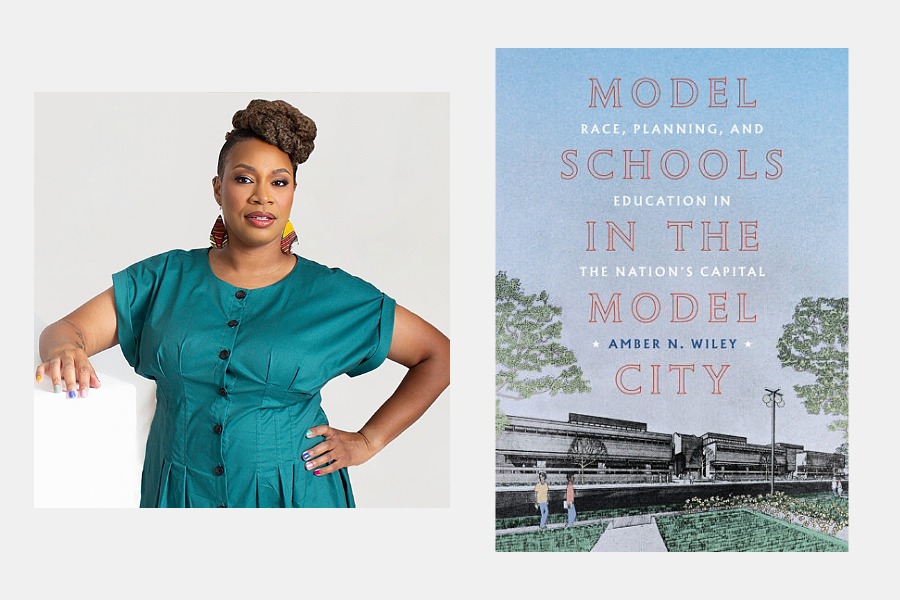
Christopher C. Gibbs College of Architecture professor and Institute for Quality Communities Director Dr. Amber N. Wiley’s book, Model Schools in the Model City: Race, Planning, and Education in the Nation’s Capital, has received two major honors from the Urban History Association.