The OU Data Institute for Societal Challenges (DISC) has awarded $2,410.95 in seed money to support a research team that includes Shu Sun, an instructor and Ph.D. student in the Division of Landscape Architecture. The team is conducting the project “Urban Landscape: Eco-social interactions and park configurations influencing human exposure to ticks in Oklahoma City.”
The project aims to bridge knowledge gaps surrounding neighborhood park exposure and risk to tick-borne disease. The team will investigate how tick abundance relates to different landscape composition and configurations in parks. The project will also estimate the potential risk of human-tick exposure based on human behavior in parks.
Shu Sun and her team will be carrying out their research in 16 park sites in Oklahoma, where ticks are known vectors of human disease. The seed grant from DISC will allow the team to purchase ethanol, microcentrifuge tubes, and dry ice for tick preservation and storage. The team will also be purchasing insect repellent for engaging with park visitors and providing tick-borne disease education.
The project has until August to use their funding and will receive monthly support and progress check-ins from their assigned DISC mentor.
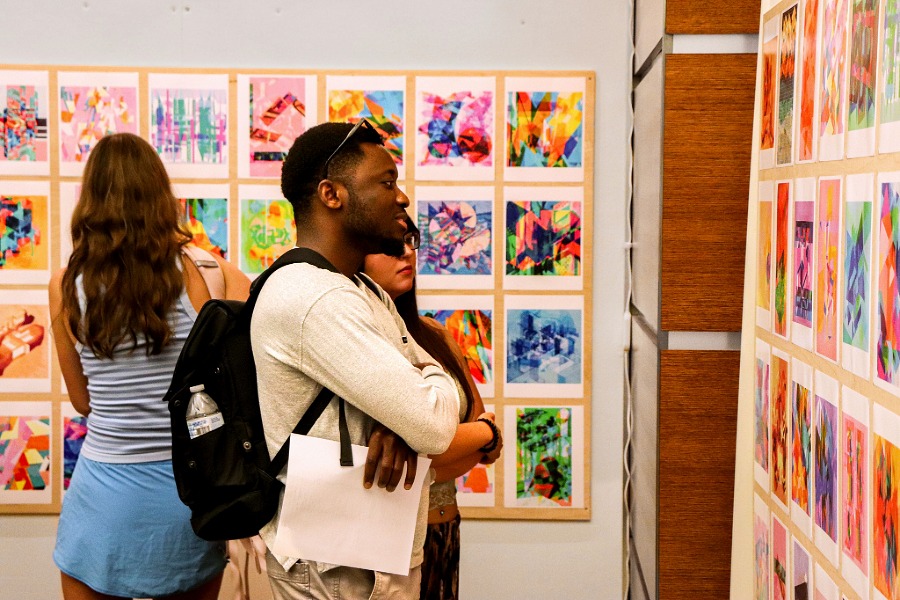
Gibbs College is pleased to present the exhibition 200 Digital Drawings by Professor Tiziana Proietti, currently on display in the Gould Hall Living Room.
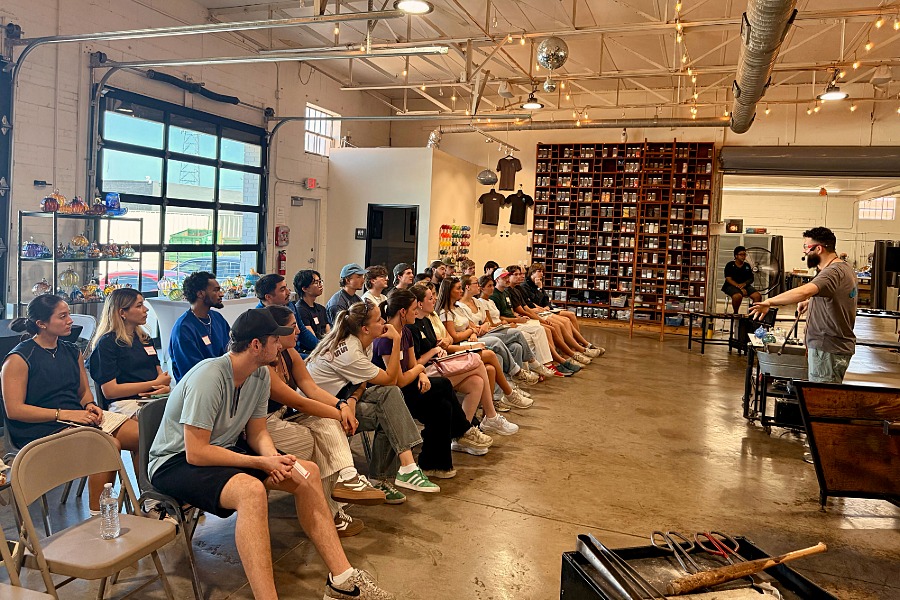
Gibbs College of Architecture Professors Amber Brown and Amy Leveno led 29 students to Dallas, Texas, in September for a learning experience as part of their Design 7 Studio course.
Christopher C. Gibbs College of Architecture professor and Institute for Quality Communities Director Dr. Amber N. Wiley’s book, Model Schools in the Model City: Race, Planning, and Education in the Nation’s Capital, has received two major honors from the Urban History Association.