The Christopher C. Gibbs College of Architecture is pleased to announce the creation of the new Division of Planning, Landscape Architecture and Design.
The new PLAD division was created through the administrative consolidation of four separate Gibbs College divisions and programs: Environmental Design, Landscape Architecture, Regional and City Planning, and Urban Design. By consolidating these programs into one division, Gibbs College seeks to foster a stronger teaching, research and service setting, facilitate more collaborations involving faculty and students and optimize administrative and operational efficiencies.
The process that led to the creation of PLAD emerged from a multi-part, participatory process: a survey, a series of meetings with related faculty and staff, discussions with students and a review of similar programs and departments across the U.S. The formal proposal to create PLAD also earned support from Gibbs College academic directors, as well as members of Gibbs College’s professional advisory boards and the OU Provost’s Office. The new division was formally approved by the OU Board of Regents in January 2023.
Hans E. Butzer, Gibbs College dean, is looking forward to the interdisciplinary collaborations that will be reinforced through the creation of the new division. “PLAD presents exciting opportunities by uniting two of the college’s oldest and most storied programs, Regional and City Planning and Environmental Design, with two of its newest members, Landscape Architecture and Urban Design, into one multidisciplinary division,” Butzer said.
PLAD will be led by associate professor John Harris, who was recently appointed interim director of the division. Harris said, “Bringing together these four degree programs into a single administrative unit allows us to double down our strengths—collaboration, community engagement, student training and research—on how we bring about just and sustainable communities for everyone.” He also highlighted that the merger “allows us to grow the interdisciplinary connections between graduate and undergraduate education and expand the professional networks available to students and alumni. We are excited for our future.”
Associate professor Ron Frantz, who works closely with Environmental Design students, is excited about the benefits that the PLAD division will afford EnD students. Frantz explained, “The new PLAD division will give the Environmental Design program an ‘academic’ home division while we will continue to maintain our incredible working relationship with the OU Institute for Quality Communities.” Frantz continued, “This combination of partnerships will provide incredible educational, community outreach and service-learning experiences for all of our Environmental Design students.”
According to associate professor Shawn Schaefer, who directs the Tulsa-based Urban Design Studio, “As our world becomes increasingly globalized and connected, future environmental designers, planners and managers need to work together to address climate change, the inequitable distribution of resources and the recreation of human centered cities, towns and neighborhoods. PLAD allows students to study in multidisciplinary undergraduate, graduate and certificate programs without barriers to collaboration and creative inquiry.”
Sarah Little, associate professor of Landscape Architecture said, “The merger of PLAD harnesses the creative powers of planners, landscape architects and urban designers to cultivate spaces that not only adapt to changing conditions caused by severe weather but also empower communities to actively shape their futures. Together, we build a harmonious balance between nature, the built environment, culture and society, fostering resilient environments that endure the test of time and stand as a testament to the profound impact of collaborative vision and purpose.”
Butzer summarized the benefits of PLAD for students and faculty: “Students who benefit from new interdisciplinary classroom settings will likely shape convergence practice models post-graduation, benefiting communities across the globe. Similarly, faculty research will blossom through intentional and serendipitous overlaps of agendas, advancing the university’s mission and Lead On Plan.”
Gibbs College is pleased to present the exhibition 200 Digital Drawings by Professor Tiziana Proietti, currently on display in the Gould Hall Living Room.
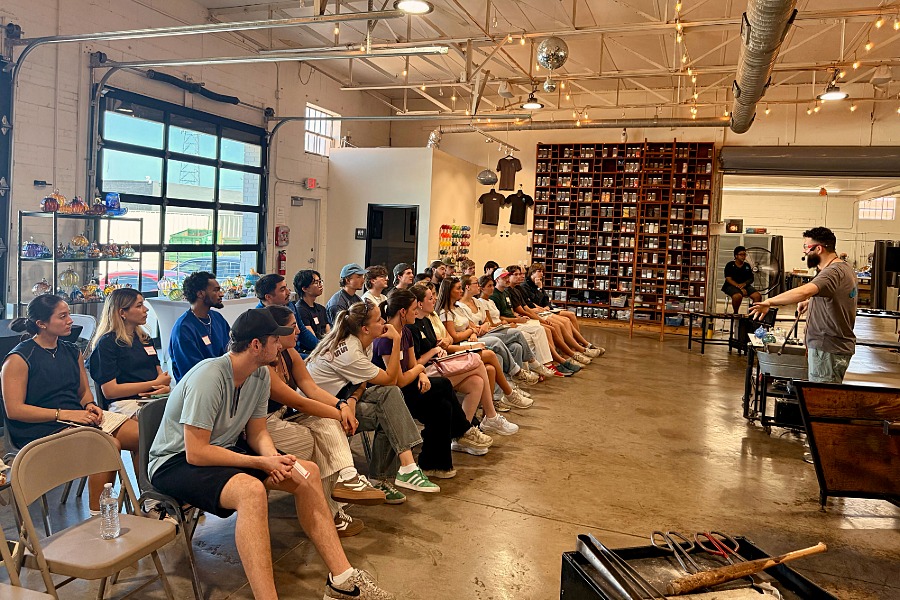
Gibbs College of Architecture Professors Amber Brown and Amy Leveno led 29 students to Dallas, Texas, in September for a learning experience as part of their Design 7 Studio course.
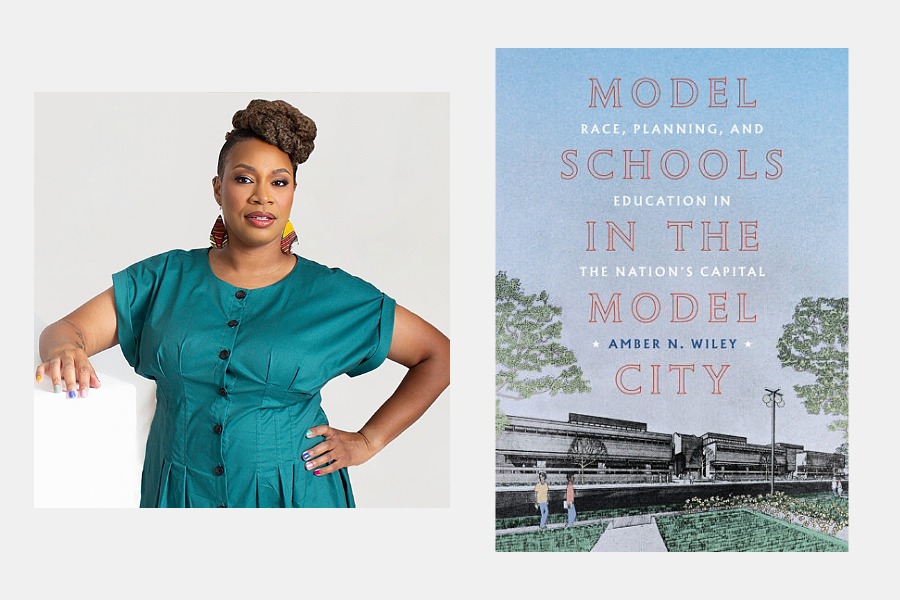
Christopher C. Gibbs College of Architecture professor and Institute for Quality Communities Director Dr. Amber N. Wiley’s book, Model Schools in the Model City: Race, Planning, and Education in the Nation’s Capital, has received two major honors from the Urban History Association.