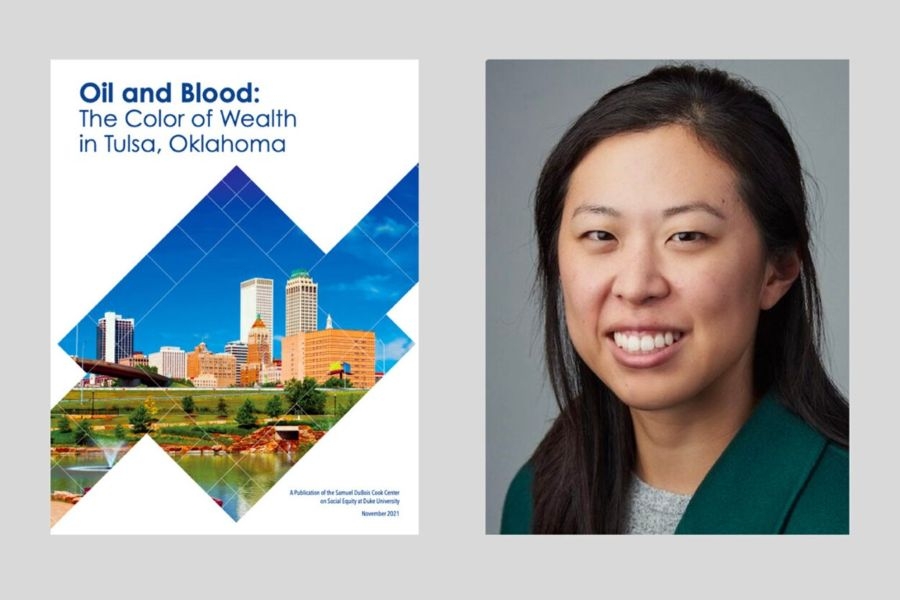
Dr. C. Aujean Lee, an Assistant Professor in the Regional + City Planning Division, is the first author on the report Oil and Blood: The Color of Wealth in Tulsa, Oklahoma. This report is part of a series of reports that investigates the modern racial wealth gap in six major U.S. cities published by the Samuel DuBois Cook Center on Social Equity at Duke University.
Oil and Blood explains how the Tulsa Massacre destroyed the economic gains previously attained by Black residents of Tulsa in the wake of the oil boom at the turn of the twentieth century. While Tulsa was once home to a thriving “Black Wall Street” in the Greenwood district, it now has the largest Black-white wealth gap in the six cities the Samuel DuBois Cook Center has studied. The average Black household in Tulsa possesses just 9% of the wealth of the average white household. The report finds that the specific Black-white wealth gap in Tulsa stems largely from differences in the rate of entrepreneurship and homeownership between the two groups. The differences in entrepreneurship and homeownership are likely the long-lasting effects of the 1921 Tulsa Massacre during which many businesses and homes of Black residents were destroyed.
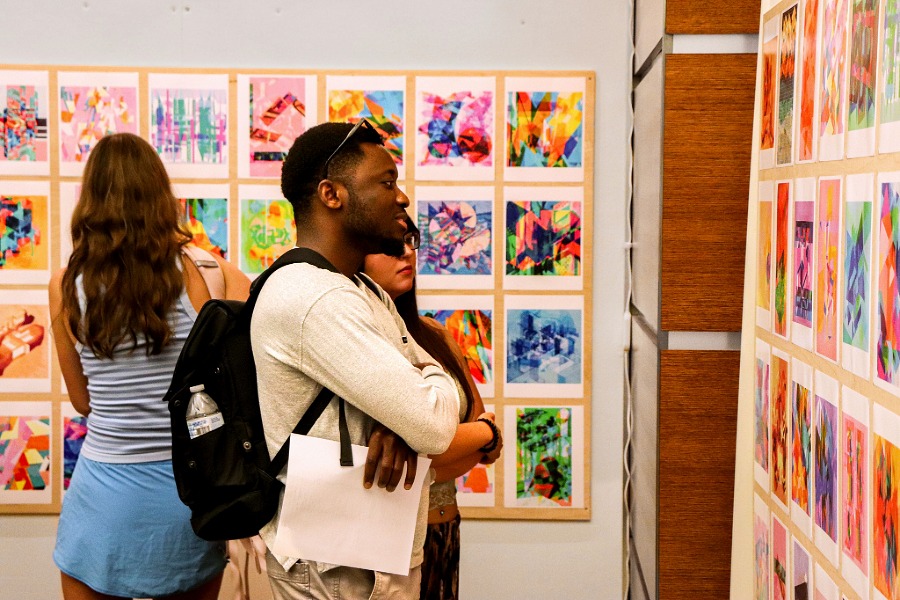
Gibbs College is pleased to present the exhibition 200 Digital Drawings by Professor Tiziana Proietti, currently on display in the Gould Hall Living Room.
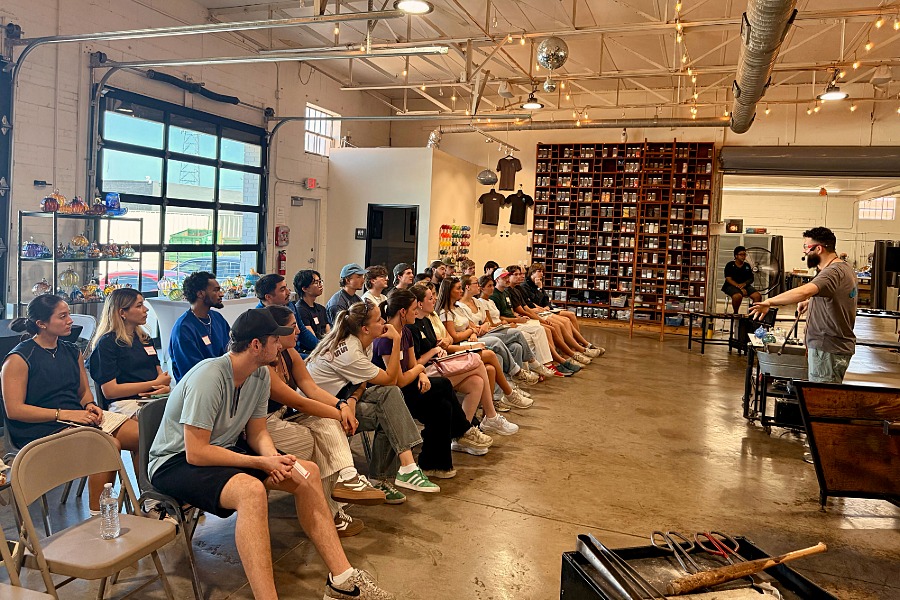
Gibbs College of Architecture Professors Amber Brown and Amy Leveno led 29 students to Dallas, Texas, in September for a learning experience as part of their Design 7 Studio course.
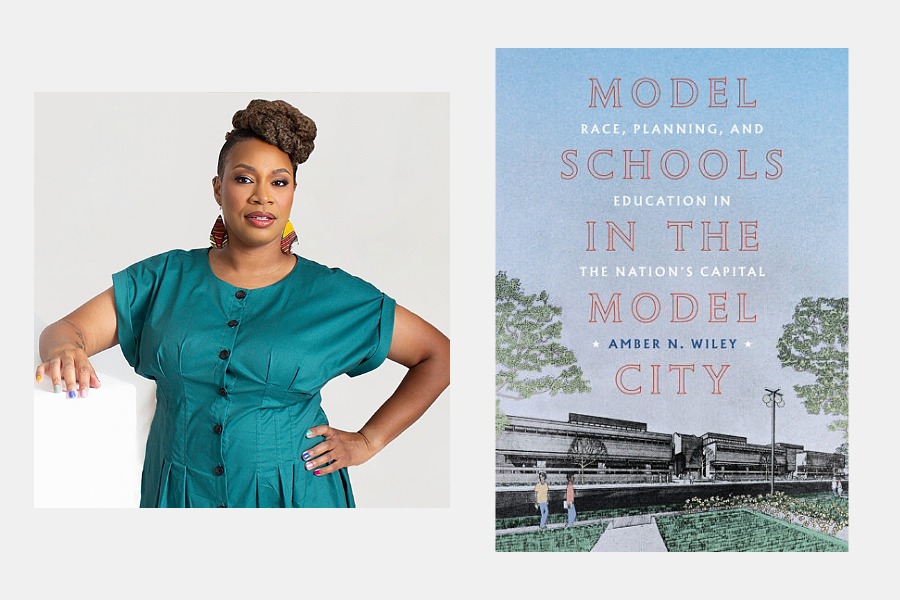
Christopher C. Gibbs College of Architecture professor and Institute for Quality Communities Director Dr. Amber N. Wiley’s book, Model Schools in the Model City: Race, Planning, and Education in the Nation’s Capital, has received two major honors from the Urban History Association.