David Boeck, an associate professor with the Division of Architecture, has been collaborating with the City of Norman and the Norman Police Department in order to implement “Crime Prevention Through Environmental Design” (CPTED) into the design standards of Norman.
Crime Prevention Through Environmental Design (CPTED) is a design concept that promotes the use of urban and architectural design and management of natural areas to deter criminal activity. Implemented in cities like Aliso Viejo, California, CPTED heavily focuses on access and visibility. Boeck explains, “You want to look at where the stairs are, the entrance points, the elevators and the lighting, because visual access improves safety. It’s all about creating a safer community and a safer city.”
CPTED has been incorporated into many aspects of the built environment in Norman over the years, even unintentionally. Public art installations like the bike rack sculptures that line Main Street or a conversion to brighter, outdoor LED lights are both actions in Norman that help promote CPTED.
The Norman Police Department has been working with apartment complexes in Norman for nearly a decade to incorporate CPTED and receive a Crime Free Multi-Housing certification. An example of a design suggestion in place for the Crime Free certification is to plant a dagger plant outside of first-floor windows to deter burglaries.
While CPTED has not been implemented into Norman’s building codes, Norman City Manager Darren Pyle recognizes the merits of CPTED and sees a future for its further implementation in Norman, especially as the city grows.
This article was adopted from an article in the Norman Transcript, subscription is required.
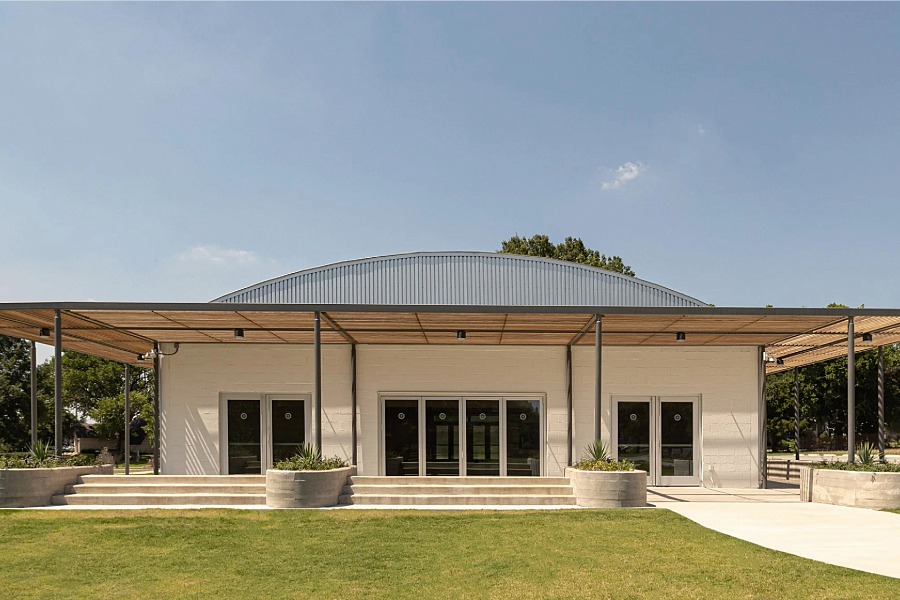
Christopher C. Gibbs College of Architecture assistant professor Amy Leveno and Mark Leveno, co-founders of OFFICIAL Design, have received a 2026 AIA Central States Region Design Award for the firm’s Granger Annex Community Center project in Garland, Texas.
Construction Industry Speaker Series welcomed Stephen Evans from the Oklahoma City National Memorial & Museum to give a lecture on better conversations and relationship building.
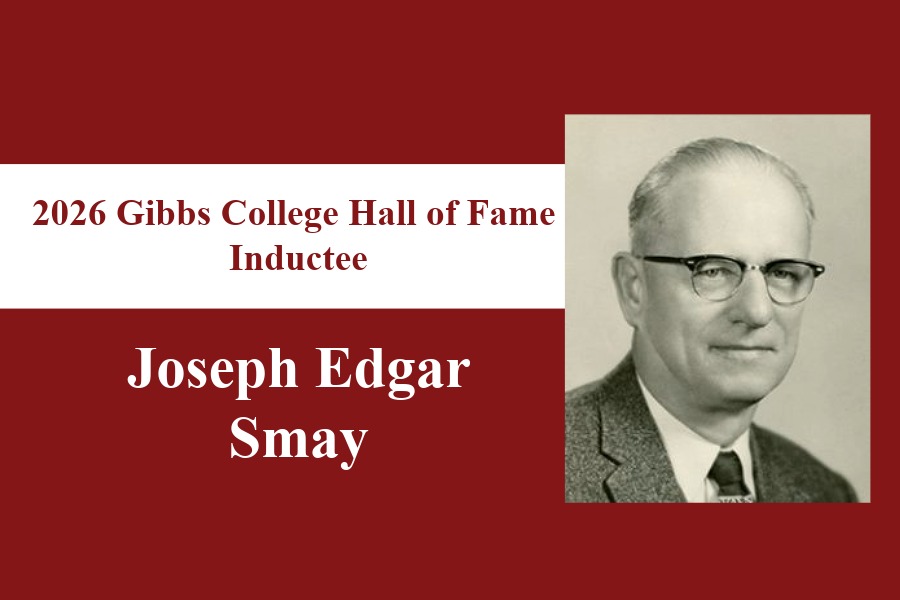
The University of Oklahoma Christopher C. Gibbs College of Architecture Hall of Fame recognizes a select number of high-character individuals who have made a significant and lasting positive impact on Gibbs College, its students, staff, faculty, alumni and/or to communities across the globe. The impact may have been, or continues to be, in the form of service and mentorship, sustained professional excellence, and/or advancement and financial support. Joseph Edgar Smay is part of the 2025 Hall of Fame class.