Is there a connection between neuroscience and design? In an interview with The Colorado Sun newspaper, Christopher C. Gibbs College of Architecture (GCA) alumnus Don Ruggles presents his theory that “the human brain seeks certain timeless patterns without which we lack equilibrium and a sense of well-being.” Ruggles believes these patterns are ones found in classical architecture and design rather than modern and contemporary designs.
In his book, titled Beauty, Neuroscience and Architecture, Ruggles explains that beauty has a direct impact on a person’s health and can “induce calmness and relaxation.” He argues that the most instinctive part of the human brain reacts significantly to different aesthetic styles. Ruggles applied his theories during a tour of Denver with the newspaper staff. They visited Cheesman Pavilion, the WeckbaughMansion, and the Clyfford Still Museum.
Ruggles is the President of Ruggles Mabe Studio, a firm specializing in residential, commercial, and interiors in Denver, Colorado. Earlier this year, Ruggles was a panelist at GCA’s Neuroscience, Beauty and Design Symposium. There, he and other scholars and practitioners provided insights into architectural history, architectural theory and new research to better understand geometry, proportion, neuroscience and well-being. Associate professor emerita at the University of Michigan and GCA professor Dr. Tiziana Proietti also participated in the Symposium.
Featured image: Architect Don Ruggles. (Marvin Anani, Special to The Colorado Sun)
Gibbs College is pleased to present the exhibition 200 Digital Drawings by Professor Tiziana Proietti, currently on display in the Gould Hall Living Room.
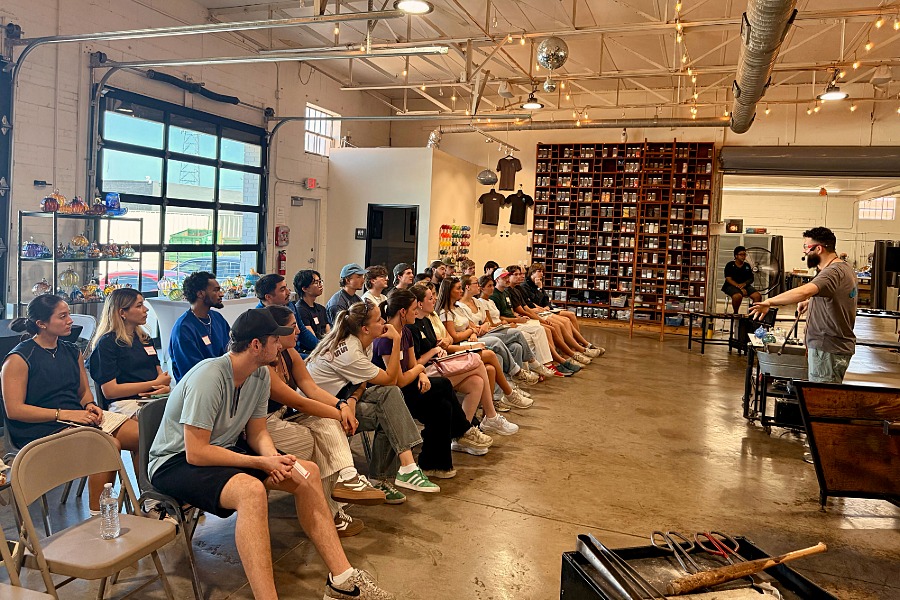
Gibbs College of Architecture Professors Amber Brown and Amy Leveno led 29 students to Dallas, Texas, in September for a learning experience as part of their Design 7 Studio course.
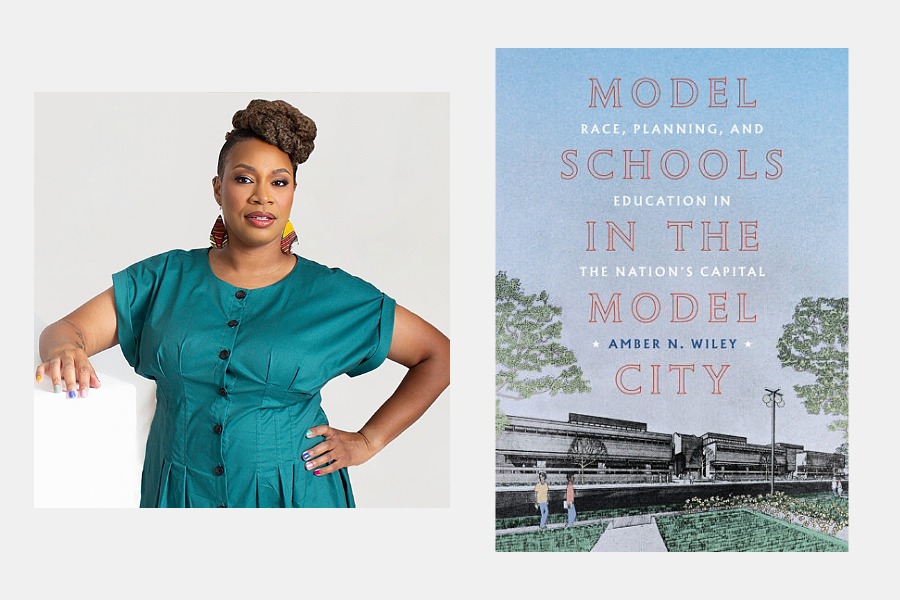
Christopher C. Gibbs College of Architecture professor and Institute for Quality Communities Director Dr. Amber N. Wiley’s book, Model Schools in the Model City: Race, Planning, and Education in the Nation’s Capital, has received two major honors from the Urban History Association.