
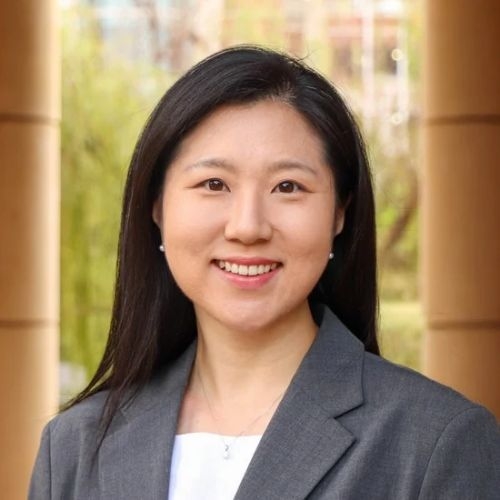
Dr. Kijin Seong is an Assistant Professor of Regional and City Planning in the Division of Planning, Landscape Architecture, and Design at the University of Oklahoma. She studies how climate extremes and infrastructure stress fall unevenly across people and places, and what planning can do about it. Her research combines spatial analytics with policy and equity analysis, with the goal of turning complex spatial risk into decisions that planners, agencies, and communities can act on.
Her current research addresses three connected areas. The first examines the resilience of energy and digital infrastructure under extreme weather, including how the rapid growth of data centers reshapes land use and demands on the electric grid. The second investigates urban heat, health, and the built environment, tracing how heat exposure translates into emergency care needs across urban and rural communities. The third looks at legacy risk and environmental inequity, examining how past planning and housing policies continue to shape which communities live with hazard exposure today. At OU, she is extending this agenda into Oklahoma and the broader Great Plains, where tornado, flood, heat, and grid stress converge in the same communities.
Her work has been supported by the National Science Foundation, the National Institute of Standards and Technology, and the City of Austin, and her research on floodplain buyouts and urban heat has been featured by Austin PBS and the Texas Standard. A certified planner (AICP), she works across planning, public health, engineering, and data science, and much of her research is built in partnership with city governments, emergency service agencies, and community organizations, bridging analytical research and planning practice.
She teaches GIS for Land Use Planning and is committed to project-based learning in which students work with real planning problems and real data. Through teaching and mentoring at both the undergraduate and graduate levels, she aims to help students build the analytical skills needed in contemporary planning practice.
1) Choi, S. J., Seong, K.*, & Jiao, J. (2026). Investigating data center site planning of major ICT companies in the US: A spatial and methodological framework. Cities, 107509. DOI: 10.1016/j.cities.2026.107509
2) Seong, K.*, Van Zandt, S., Peacock, W. G., & Newman, G. (2026) Racial and Ethnic Change in Floodplain Buyout Neighborhoods: Twenty-five Years of Evidence from Houston. Journal of Planning Education and Research. DOI: 10.1177/0739456X25139731
3) Seong, K.*, Jiao, J., Lewis, R. H., Farahi, A., Navratil, P., Casebeer, N., Jones, J., & Niyogi, D. (2025). Towards a Digital Twin for Smart Resilient Cities: Real-time fire and smoke tracking and prediction platform for community awareness (FireCom). Computational Urban Science, 5, 49. DOI: 10.1007/s43762-025-00212-x
4) Seong, K., Choi, S.*, & Jiao, J. (2025). IoT sensors as a tool for assessing spatiotemporal risk to extreme heat. Journal of Environmental Planning and Management. 1-23. DOI: 10.1080/09640568.2024.2320257
5) Jiao, J., Seong, K.*, Sammer, M., Lewis, R. H., Reese, A., Olvera, N., Gronseth, SL., Anderson-Fletcher, E. & Kakadiaris, I. (2025). Developing a healthy food access index (HFAI): Web-based mapping and future directions for AI integrations. Cities, 161, 105908. DOI: 10.1016/j.cities.2025.105908
6) Seong, K.*, Jiao, J., Mandalapu, A., & Niyogi, D. (2024). Spatio-Temporal Patterns of Heat Index and Heat-Related Emergency Medical Services (EMS). Sustainable Cities and Society, 111, 105562. DOI: 10.1016/j.scs.2024.105562
7) Lewis, R. H.*, Jiao, J., Seong, K., Farahi, A., Navrátil, P., Casebeer, N., & Niyogi, D. (2024). Fire and smoke digital twin – A computational framework for modeling fire incident outcomes. Computers, Environment and Urban Systems, 110, 102093. DOI: 10.1016/j.compenvurbsys.2024.102093
8) Seong, K.* & Jiao, J. (2024). Is a Smart City Framework the Key to Disaster Resilience? A Systematic Review. Journal of Planning Literature. DOI: 10.1177/08854122231199462
9) Seong, K.*, Jiao, J., & Mandalapu, A. (2023). Hourly Associations between Heat Index and Heat-Related Emergency Medical Service (EMS) Calls in Austin-Travis County, Texas. International Journal of Environmental Research and Public Health. 20(19), 6853. DOI: 10.3390/ijerph20196853
10) Seong, K.*, Jiao, J., & Mandalapu, A. (2023). Effects of Urban Environmental Factors on Heat-related Emergency Medical Services (EMS) Response Time. Applied Geography. 155, 102956. DOI: 10.1016/j.apgeog.2023.102956
11) Seong, K.*, Jiao, J., & Mandalapu, A. (2022). Evaluating the effects of heat vulnerability on heat-related emergency medical service incidents: Lessons from Austin, Texas. Environment and Planning B: Urban Analytics and City Science. 50(3), 776–795. DOI: 10.1177/23998083221129618
12) Seong, K.*, Losey, C., & Gu, D. (2022). Naturally Resilient to Natural Hazards? Urban-Rural Disparities in Hazard Mitigation Grant Program Assistance. Housing Policy Debate. 32(1), 190-210. DOI: 10.1080/10511482.2021.1938172
13) Seong, K.*, Losey, C., & Van Zandt, S. (2021). To Rebuild or Relocate? Long-term Mobility Decisions of the Hazard Mitigation Grant Program (HMGP) Recipients. Sustainability. 2021; 13(16), 8754. DOI: 10.3390/su13168754
