
Highlights from World Anthropology Union congress, 3-8 November 2025, Antigua, Guatemala
Dr. Laura Phillips (Canadian/British) chaired the panel entitled ‘Community Centered Exhibitions – Turning over Authority’. Panelists included:
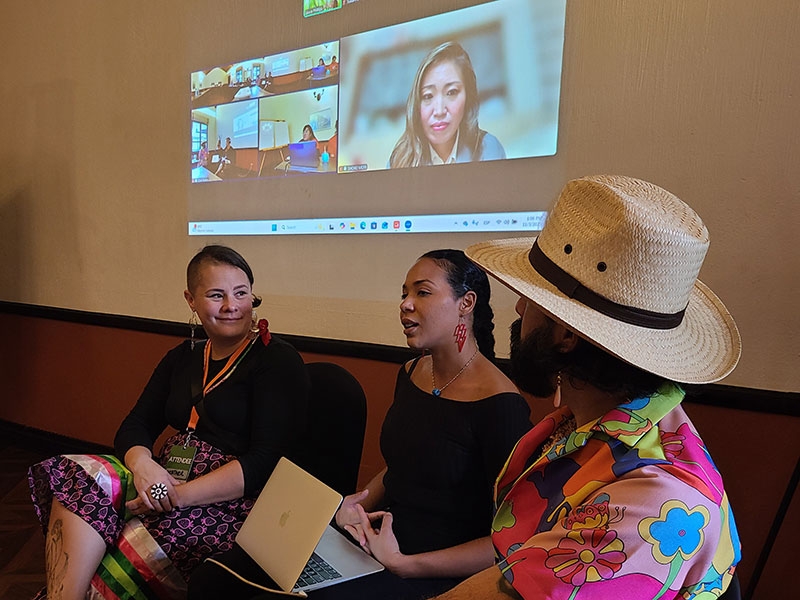
An group photo of the panel for ‘Community Centered Exhibitions – Turning over Authority.
• Heather George (Kanienʼkehá꞉ka/Euro), Executive Director of Woodland Cultural Centre, Six Nations of the Grand River & PhD Candidate, University of Waterloo (Canada)
• Armando Perla (Nahua/Euro Latinx), PhD Candidate, Concordia University (Canada)
• Raven Spiratos (Canadian/Greek), Independent Curator (Canada)
• Diego Ventura Puac Coyoy (Maya Kiche), artist, curator, timekeeper, Chichicastenango (Guatemala)
• Shoko Mori (Japanese), PhD Candidate, Tokyo Metropolitan University & Lecturer, Aoyama Gakuin University (Japan)
Her participation in the conference panel Community-Centered Exhibitions: Turning Over Authority aligns closely with the University of Oklahoma and the School of Library and Information Studies (SLIS) mission to promote inclusive knowledge systems, community engagement, and ethical information stewardship. The panel examined how museums and cultural institutions can shift from traditional, top-down curatorial models to collaborative approaches that empower communities to tell their own stories.
This work is significant because it challenges long-standing practices in museum interpretation and the complicated relationship between anthropology, museums and Indigenous communities. Today we aim to foster more equitable relationships between institutions and the peoples represented within collections and exhibitions. The panel demonstrated how cultural professionals can act as facilitators and allies/accomplices rather than gatekeepers, ensuring that public knowledge reflects community voices and lived experiences.
Around the conference schedule we had time to travel to visit Diego’s family exhibition space in Chichicastenango, Coffeeshop Cofrades & art space (espacio/C arte+memoria), where they put our panel topic into action, centering the work of Indigenous artists in 2 exhibition spaces.
We met Oralia Chopén from TRAMA TEXTILES – this organization was formed by Maya women whose husbands were killed in the genocides of past decades as a means to support themselves and their families. We were reminded of the pain of migration – at a church where families go to pray for loved ones who have migrated in search of better situations as well as on some of the art on display and the theme of remembering.
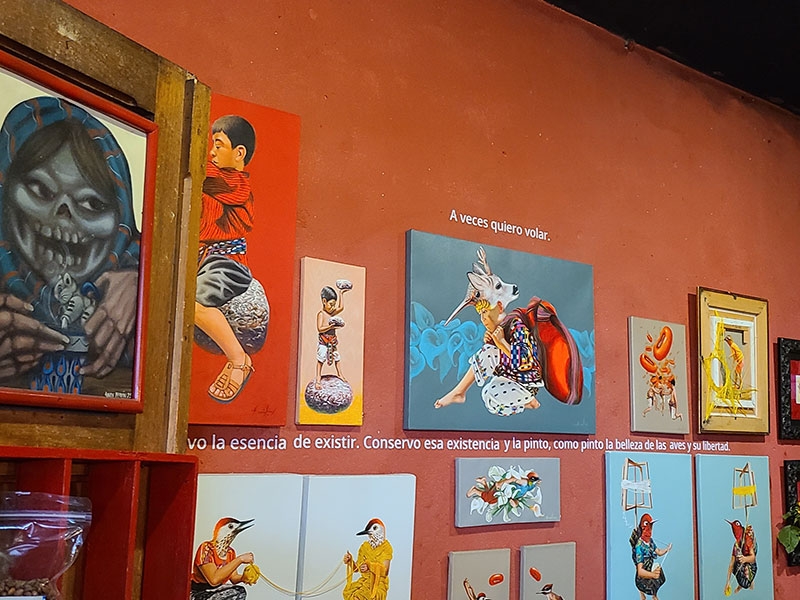
Exhibition space in Chichicastenango, Coffeeshop Cofrades & art space.
By contributing to the growing field of community-based collaborations, interpretation and exhibition practices, our presentation and community interactions strengthened the research base on participatory curation and ethical representation. The experience also provided me with valuable opportunities to connect with scholars, curators, artists and other practitioners working to redefine museum and information practices in socially responsive ways. Overall, this conference participation reinforces SLIS’s commitment to inclusive, community-centered approaches to information, culture, and heritage.
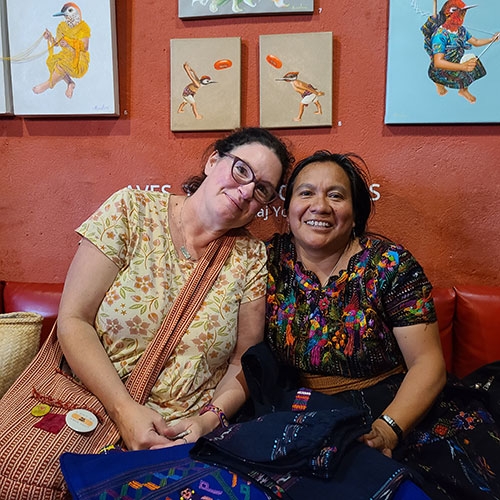
Dr. Laura Phillips with Oralia Chopén from TRAMA TEXTILES
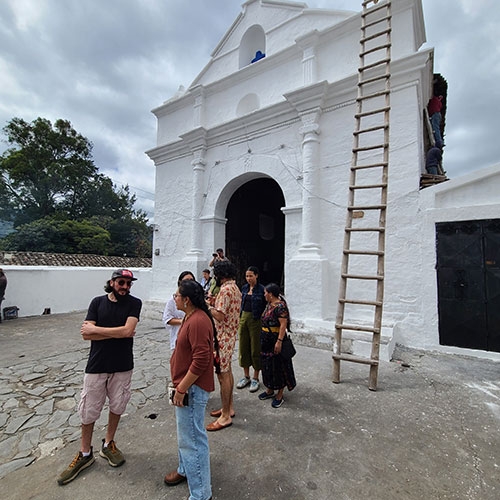
Visiting a church where families go to pray for loved ones who have migrated in search of better situations.
