
The Han NBS Lab advances ecosystem restoration by leveraging nature-based solutions (NBS) to develop resilient, long-term strategies for environmental challenges. Our goal is to create sustainable ecosystems that benefit both people and the planet.
Our interdisciplinary research integrates biology, ecology, hydrology, pedology, and engineering. We focus on using natural infrastructure in ecological engineering design, emphasizing nature’s capacity for self healing. Our methods include field trials, lab experiments, and spatial modeling.
At the Han NBS Lab, our research spans several key areas that apply nature-based strategies to solve pressing environmental challenges
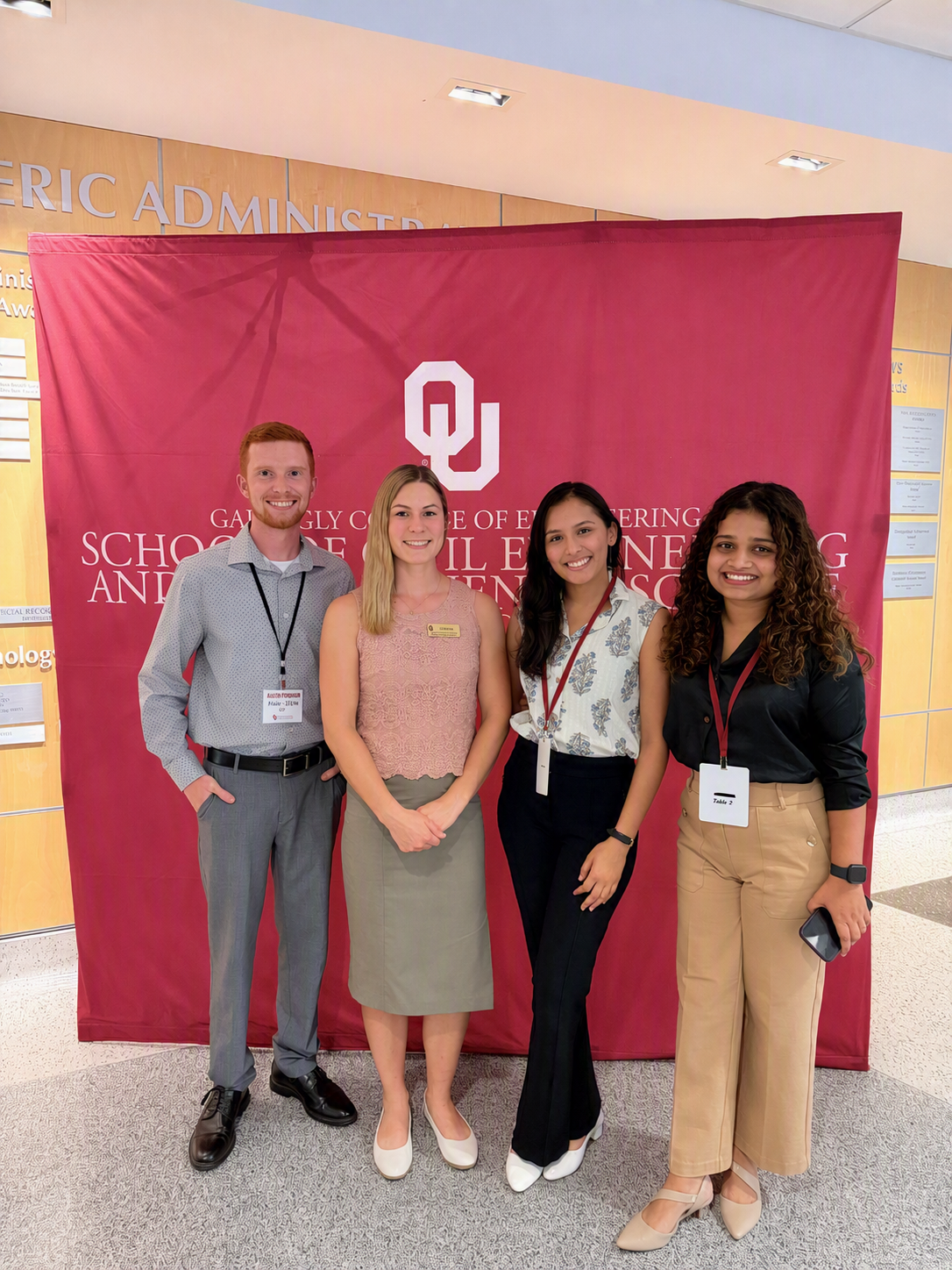
Han NBS Lab members as of Spring 2026 (four of six, missing Ian Erwin and Xavier Williams).

Professional Services Grant, Department of Environmental Quality
July 2026 - June 2027
In partnership with DEQ’s Solid Waste and Land Management Divisions, this project investigates the potential of Eastern redcedar-derived biochar to remove per- and polyfluoroalkyl substances (PFAS) from landfill leachate at the Norman Landfill Environmental Research Site (NLERS) in Norman, Oklahoma.
PFAS are persistent and mobile contaminants that can accumulate in groundwater and pose environmental and health risks. At the same time, the spread of Eastern redcedar has created large amounts of woody biomass that need to be managed. Converting this biomass into biochar could provide a nature-based approach to capture PFAS from contaminated water while giving excess redcedar biomass a useful purpose. This approach will help to improve water quality while addressing a local land management problem.
The project focuses on:
This project will serve as a component of a PhD-level project and will contribute to our understanding of mechanisms of PFAS absorption and is expected to result in a peer-reviewed publication.
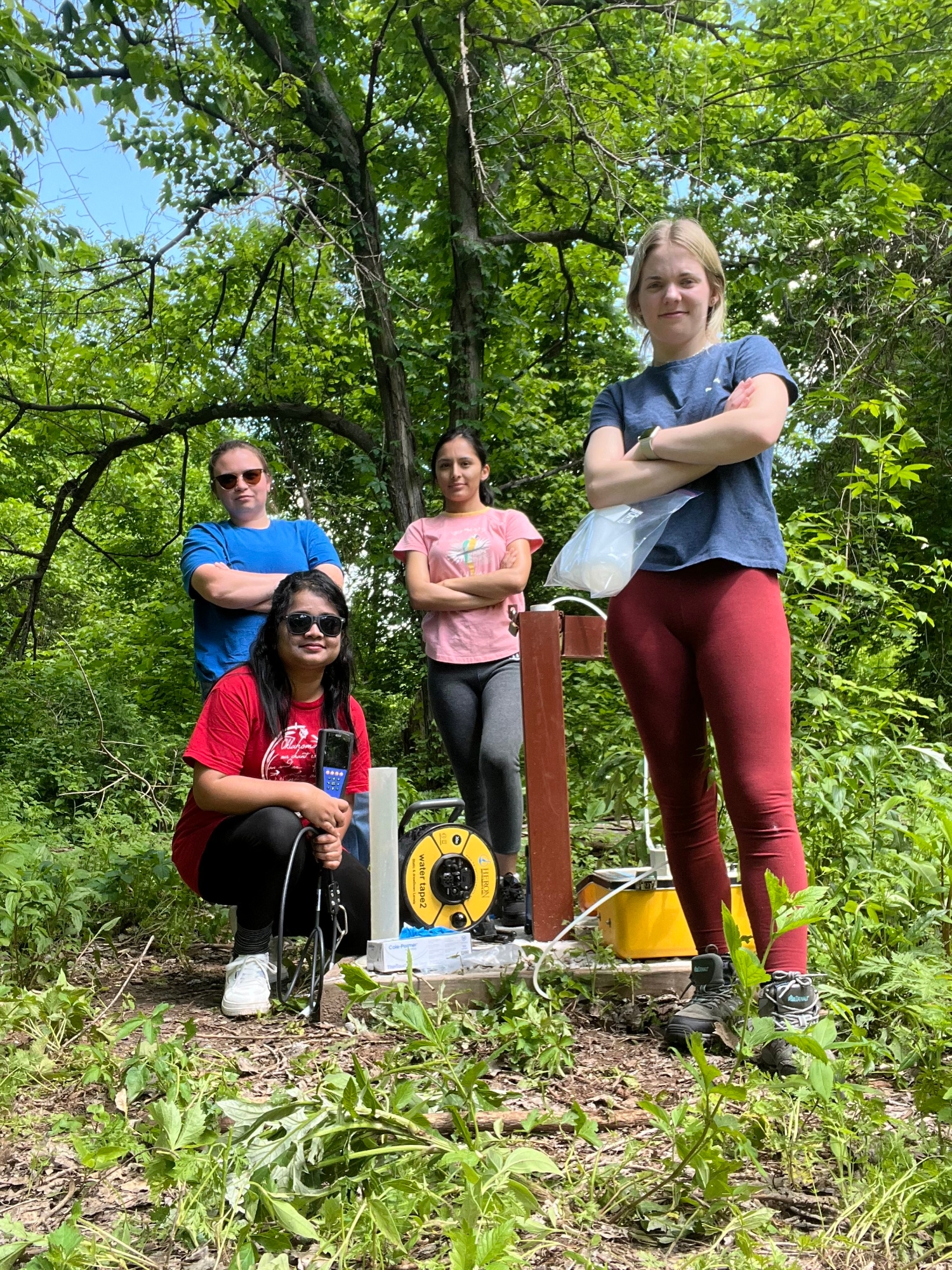
Nethmi and Han NBS Lab members at NLERS.
Student Support Agreement | Grand River Dam Authority (GRDA)
August 2026 - May 2028
In collaboration with the Grand River Dam Authority, this project examines how prescribed fire, mastication, and native planting can help restore degraded bottomland hardwood forests in northeastern Oklahoma. These forests occupy previously abandoned agricultural land and have become increasingly dominated by a small number of overdominant native tree species.
The project has three primary goals:
This masters-level thesis project will contribute to sustainable forest management practices and is expected to result in a peer-reviewed publication.
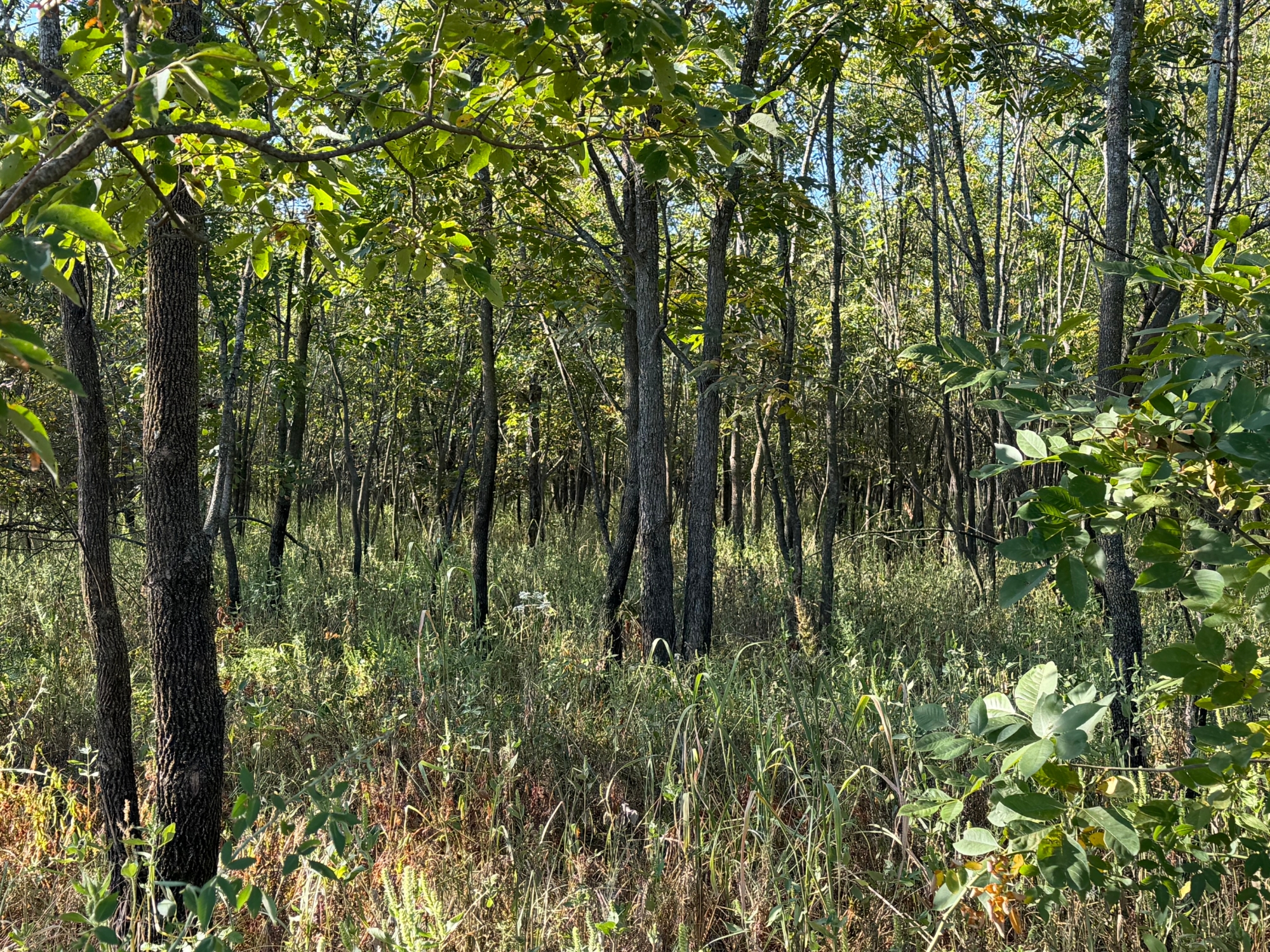
Regenerated Neosho River bottomland hardwood forest dominated by green ash trees.
Centers of Excellence for Stormwater Control Infrastructure Technologies Grant Program | Environmental Protection Agency (EPA)
August 2025 - May 2027
The nature of this master's-level thesis project is to develop an GIS-based decision support tool capable of to determining the viability of potential sites within rural Great Plains communities for the construction of GSI. This assessment will utilize multi-criteria based site evaluations that account for priority issues as well as social and economic dimensions. This project will use a combination of pre-existing GIS datasets and community surveys to gather sufficient information for our tool to rank order suggested practices.
The project has three primary goals:
The development of a GIS method capable of carrying out multi-criteria site assessments
Community involvement aimed at gathering information on which factors need greater weight in site assessment
Performing a pilot test of the tool on a smaller scale, largely focused on a subset of small rural communities in Oklahoma and Kansas
This project will contribute to the establishment of a technology-based methodology to support local communities, and is expected to result in a peer-reviewed publication.
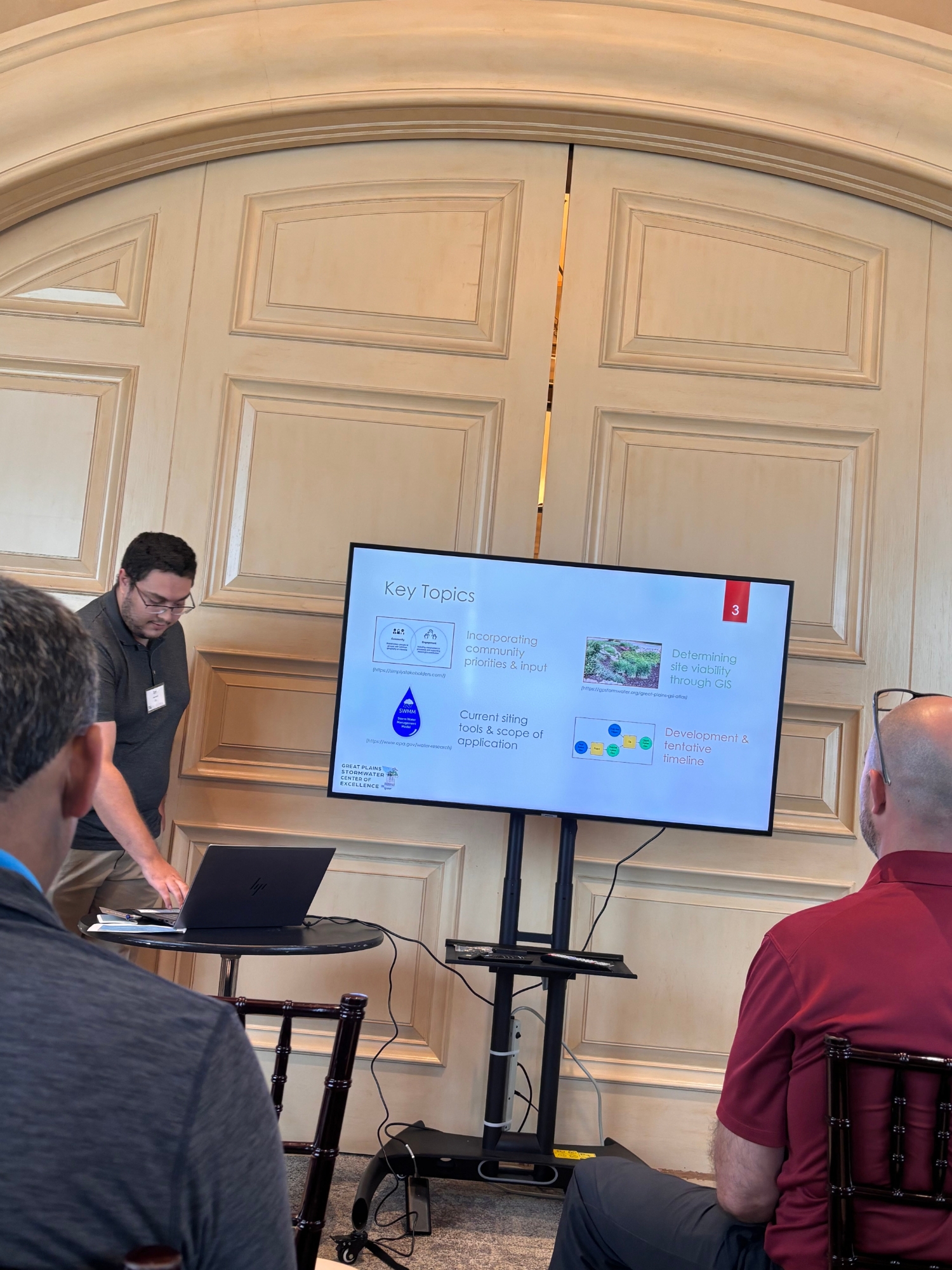
Ian Erwin giving a presentation on his research project.
Oklahoma Water Survey | University of Oklahoma
August 2025 – May 2027
This master’s-level thesis project for the Oklahoma Water Survey builds upon work by Andrea Tavera, M.S., a former student of Dr. Jason Vogel, who developed a stormwater model aimed at mitigating peak runoff flow using Low Impact Development (LID) techniques. In collaboration with municipal officals, the current study evaluates the performance of the as-built system compared to the original model predictions implemented at the neighborhood scale. Nitu is assessing the post-construction performance of an as-built bioretention cell (BRC) system with an arch-chamber subsurface storage component in the Sunnymeade watershed, Oklahoma City. This work combines developing a hydraulic-hydrologic model in the InfoDrainage software with field monitoring — including level logger installation — to assess how the BRC system attenuates stormwater across a range of storm.
The project includes three core components:
This research will contribute to the innovative use of LID for flood control and is expected to result in a peer-reviewed publication.
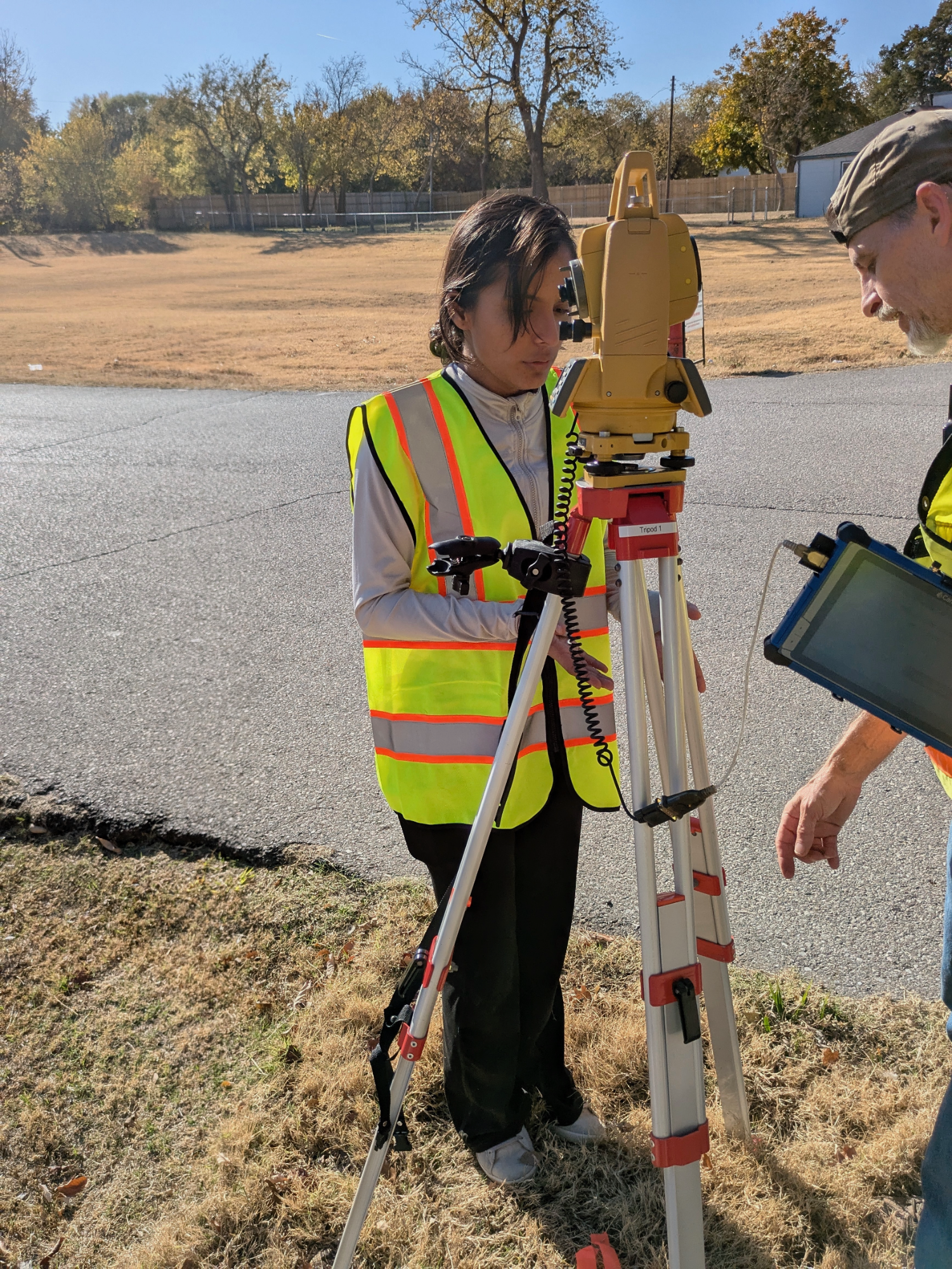
Nitu Adhikari performing land survey at research field site.

Professional Services Grant | Oklahoma Department of Environmental Quality
Dec 2024 – June 2025
In partnership with DEQ’s Solid Waste and Land Management Divisions, this project evaluates the risk of PFAS contamination from landfill leachate to Oklahoma’s groundwater. The project delivers:
This work began as an undergraduate honors thesis and will continue as a graduate research project in July 2026.
Seed Funding | Data Institute for Societal Challenges (DISC)
Feb. 2024 – Feb. 2025
This undergraduate research project, supported by DISC, focused on preparing the GIS database needed to adapt the Prioritize, Target, and Measure Application (PTMApp) - a watershed modeling tool originally developed in Minnesota—for use in Oklahoma.
The project involved acquiring and generating key natural resource GIS layers to support future applications of PTMApp in agricultural landscapes, helping to identify optimal locations for best management practices (BMPs). Technical support was provided by Houston Engineering, Inc., one of the tool’s original developers.
The project successfully produced a complete input dataset, laying the groundwork for future modeling and pursuing external funding opportunities.
Professional Services Grant, Department of Environmental Quality
July 2025 - June 2026
This masters-level thesis project will contribute to our understand of contaminant dispersal and is expected to result in a peer-reviewed publication.
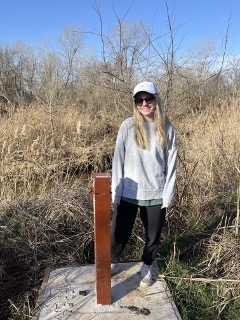
Sydney Nordquist standing next to landfill leachate collection well.
Student Support Agreement | Grand River Dam Authority (GRDA)
August 2024 - May 2026
In collaboration with the Grand River Dam Authority, this graduate research project investigates how forest thinning and prescribed fire affects the ecological health of bottomland hardwood forests in the Neosho Bottoms of Northeastern Oklahoma. These floodplain areas, once cleared for agriculture and later abandoned, have become overrun with invasive-like tree species.
The project focuses on three key goals:
This masters-level thesis project will contribute to sustainable forest management practices and is expected to result in a peer-reviewed publication.
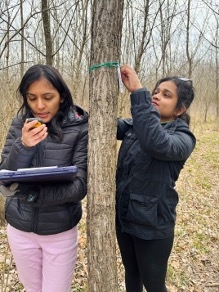
Nitu Adhikari (left) and Nethmi Wickrama Gunarathne (right) taking GPS coordinates and tagging trees.
Faculty Start-Up Project | University of Oklahoma
August 2024 – May 2026
Funded by the University of Oklahaoms through faculty start-up support provided to Dr. Lori Han, this graduate research project explores the use of Eastern Redcedar biochar—produced from an invasive tree species in Oklahoma—as a nature-based filter for removing excess nitrate and phosphate from natural waters.
The project has three primary goals:
This masters-level thesis project will contribute to sustainable water management practices and is expected to result in a peer-reviewed publication.
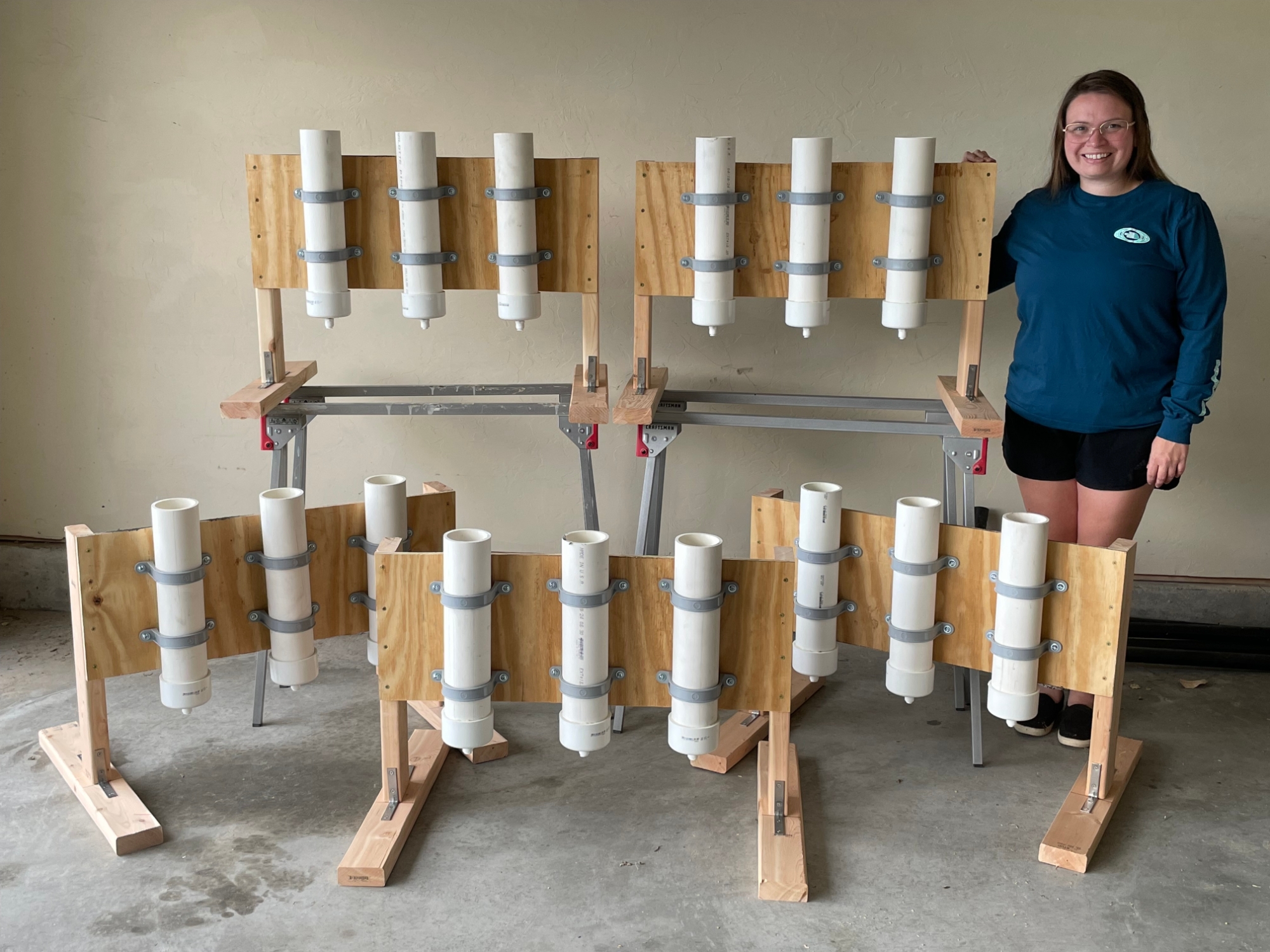
Jessica Burke standing next to her experimental columns.
