
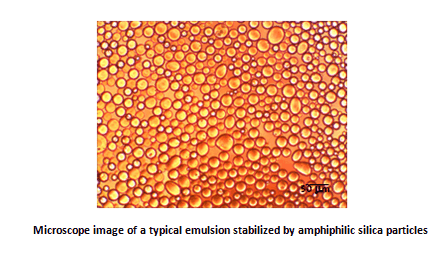
 We have recently observed that the nanohybrids composed of CNT fused to metal oxides are able to stabilize Pickering emulsions and catalyze reactions at the water-oil interface, taking advantage of the higher interfacial area in the emulsion system.
In this context, new materials have been developed to achieve the same two objectives as the nanohybrids: materials that can stabilize Pickering emulsions and serve as support for catalysts in biofuel upgrade reactions.
In order to accomplish this aim, Janus particles based on silica oxide and iron oxide nanoparticles have been produced. First of all, a study of the properties of the emulsion (droplet size, type of emulsion, emulsion fraction,…) has been carried out for each of the different materials produced, and under different conditions (varying water/oil ratio, pH, temperature, amount of particles, etc.). Then, once these materials have been proved to stabilize emulsions, they have been used to catalyze reactions at the water-oil interface in emulsions systems. Also, other type of amphiphilic silica particles has been studied with the same goal in mind.


Collaborations among:
